
White House Targets CNN Reporter After Trump Clash — Why the Attack on Her Children Is Drawing Fresh Backlash
White House Targets CNN Reporter After Trump Clash — Why the Attack on Her Children Is Drawing Fresh Backlash A confrontation between President Donald Trump and CNN White House correspondent Kristen Holmes has escalated beyond a tense exchange over policy, with the White House’s subsequent attack on the journalist personally — including references to her...
TheBusinessNow
Aug 18, 2026 · 8 min Read
Key Highlights
- President Trump clashed publicly with CNN reporter Kristen Holmes during a White House event.
- Holmes pressed Trump over questions surrounding his administration and the USS Abraham Lincoln.
- Trump accused CNN of producing "fake news" and repeatedly told Holmes to be quiet.
- The White House's rapid-response account subsequently attacked Holmes personally.
- The White House comments went further by referencing Holmes' children, escalating the controversy beyond a normal dispute over journalism.
- CNN strongly defended Holmes and said journalists should be able to ask difficult questions without becoming targets of personal attacks.
White House Targets CNN Reporter After Trump Clash — Why the Attack on Her Children Is Drawing Fresh Backlash
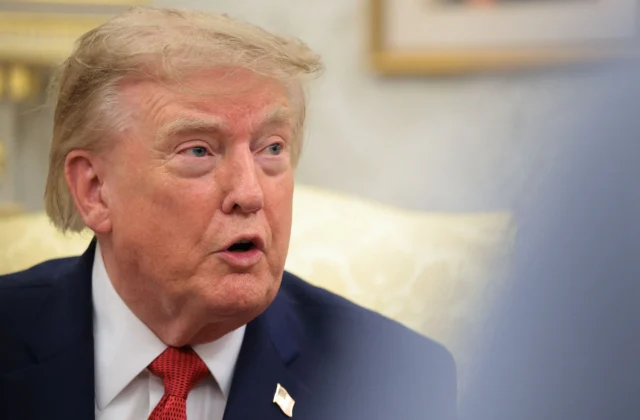
A confrontation between President Donald Trump and CNN White House correspondent Kristen Holmes has escalated beyond a tense exchange over policy, with the White House’s subsequent attack on the journalist personally — including references to her children — triggering a new debate over presidential treatment of the press.
The incident unfolded Monday as Trump faced questions from reporters about his administration’s policies and criticism surrounding the USS Abraham Lincoln, the aircraft carrier that has remained deployed in the Middle East for an unusually long period.
Trump dismissed criticism of conditions aboard the carrier and attacked the reporting as “fake news.” When Holmes continued pressing him, the exchange became increasingly confrontational.
The controversy intensified after the White House’s rapid-response operation continued the attack on social media, moving from criticism of Holmes’ question to personal comments that invoked her children. CNN subsequently defended its correspondent and condemned the White House’s conduct.
What Happened Between Trump and CNN’s Kristen Holmes?
The confrontation began when Holmes questioned Trump during a White House appearance.
Trump was already facing questions about criticism surrounding the USS Abraham Lincoln, which has been deployed for more than 250 days without a port call, according to reporting cited by The Guardian. Reports have raised concerns about supplies, water and plumbing, as well as the mental-health strain associated with the prolonged deployment.
Trump rejected those concerns.
He characterized the reporting as false and defended the condition of the carrier, saying he had received assurances about the ship’s maintenance. That position contrasts with reporting from military-focused publications documenting problems aboard the vessel.
Holmes continued questioning the president.
Trump then turned his criticism toward the reporter herself, calling CNN “fake news” and repeatedly telling her to be quiet.
What happened afterward became the bigger story.
Why Did the White House Bring Up the Reporter’s Children?
The White House’s rapid-response account continued the confrontation after the exchange.
Instead of limiting its criticism to Holmes’ question or CNN’s reporting, the account made a personal reference to her children, warning that they could eventually encounter the question and criticizing Holmes’ conduct as a parent.
That move immediately changed the nature of the controversy.
Political officials and administrations frequently challenge journalists’ reporting.
They can dispute facts, criticize headlines, release alternative evidence or argue that a reporter’s characterization is inaccurate.
Invoking a journalist’s children is fundamentally more personal.
That is why the response has attracted attention well beyond the original disagreement over the USS Abraham Lincoln.
CNN Fires Back at the White House
CNN did not leave Holmes to respond alone.
The network defended its correspondent and argued that Holmes was performing the basic responsibility of a White House reporter: asking the president a difficult question on a matter of public interest.
CNN said officials are entitled to challenge reporting they disagree with, but argued that personal attacks against journalists for asking questions cross a different line.
CNN colleagues also publicly supported Holmes.
Several journalists described her as an experienced White House correspondent and objected specifically to bringing her children into the political dispute.
The response demonstrates how quickly an individual press-room confrontation can become an institutional battle between a major news organization and the White House.
The USS Abraham Lincoln Controversy Behind the Clash
The argument wasn’t happening in isolation.
The USS Abraham Lincoln has been at the center of growing debate over the cost and strain of the United States’ prolonged military operations connected to the Iran war.
According to recent reporting, the carrier has remained at sea for more than 250 days and has faced concerns involving supplies, plumbing and sailor welfare. Families of sailors have also criticized the administration for dismissing their concerns.
The Pentagon has been rotating aircraft carriers as the conflict continues.
The Wall Street Journal reported that the USS George Washington is replacing the Lincoln, highlighting the logistical burden of maintaining carriers in the region for extended periods.
That background helps explain why questions about the Lincoln have become politically sensitive.
For the administration, criticism of the ship can be viewed as criticism of the broader war effort.
For lawmakers, military families and journalists, however, questions about sailors’ working conditions are matters of legitimate public interest.
Why This Is Bigger Than a Trump-CNN Argument
Trump’s relationship with CNN has been confrontational for years.
But the latest episode is attracting particular attention because the dispute moved through several stages:
Question → presidential confrontation → official White House social-media attack → reference to journalist’s children → network response.
That progression matters.
A president criticizing a news organization is not unusual.
A government communications operation targeting an individual journalist personally creates a different set of concerns about the boundaries between political messaging and official government communication.
The episode therefore raises a broader question:
How should government officials respond when they believe journalists are reporting unfairly?
There is an obvious answer available to any administration: challenge the reporting with facts.
The administration can release documents, provide evidence, dispute specific claims and explain its position.
The more personal the response becomes, the more attention can shift away from the underlying issue and toward the government’s treatment of the journalist.
Trump’s Continuing Tension With the Press
The latest confrontation fits into a broader pattern of highly combative interactions between Trump and journalists.
Trump has frequently criticized media organizations that he believes report unfairly about his administration.
CNN has often been one of his most frequent targets.
Recent incidents have also involved other female journalists. The Daily Beast reported that Trump’s confrontation with Holmes follows a wider pattern of attacks involving women in the White House press corps.
The White House’s use of social media has made these confrontations particularly visible.
An argument that once might have ended when a press conference ended can now continue for hours through official accounts, reposts and political commentary.
That makes every confrontation potentially much larger.
What Does This Mean for the White House Press Corps?
The incident could have consequences beyond Holmes herself.
White House reporters have to ask questions that administrations often don’t want to answer.
That’s the nature of the job.
Questions about wars, military deployments, government spending, presidential decisions and national security are inherently contentious.
If journalists expect personal retaliation every time they ask an uncomfortable question, critics argue that the atmosphere surrounding presidential press access could become more intimidating.
The administration, on the other hand, is likely to argue that it has the right to defend itself aggressively against what it considers hostile or inaccurate coverage.
That tension isn’t going away.
Could This Escalate Further?
The controversy could continue for several reasons.
First, the USS Abraham Lincoln remains a major story while U.S. military operations in the Middle East continue.
Second, CNN is likely to keep covering the dispute because one of its own correspondents has become part of the story.
Third, the White House’s social-media response means the original exchange can continue circulating long after the event itself.
And fourth, the confrontation comes at a time when debates over press freedom, presidential power and government communication are already highly polarized.
The next stage will likely depend on whether the White House expands its criticism, whether Trump discusses Holmes again publicly, and whether additional information emerges about the conditions aboard the Lincoln.
BusinessNow Outlook
The most important takeaway isn’t simply that Trump and CNN clashed again.
The bigger story is the growing collision between presidential communication, political messaging and independent journalism.
The original dispute involved a substantive issue: the condition of a U.S. aircraft carrier involved in an extended military deployment.
But once the argument became personal, the underlying military questions risked being overshadowed.
That could ultimately work against everyone involved.
For the administration, the strongest response to criticism about the USS Abraham Lincoln would be transparent evidence about the ship’s condition, deployment schedule and sailor welfare.
For journalists, the challenge is to continue asking difficult questions while maintaining rigorous standards of accuracy.
And for the public, the most important task is separating the underlying facts about the military deployment from the political fight surrounding the reporter.
The controversy is therefore likely to remain relevant well beyond one White House exchange.
❓ FAQs
Who is the CNN reporter involved?
The reporter is Kristen Holmes, a CNN White House correspondent who questioned President Trump during the recent White House exchange.
Why did Trump clash with Kristen Holmes?
Holmes pressed Trump with questions connected to his administration and criticism surrounding the USS Abraham Lincoln. Trump became confrontational, criticized CNN and repeatedly told her to be quiet.
What did the White House say about Holmes?
The White House’s rapid-response account criticized Holmes personally after the exchange and made references to her children, which significantly escalated the controversy.
How did CNN respond?
CNN defended Holmes and condemned the personal attacks, arguing that journalists should be able to ask challenging questions without being personally targeted.
What is the USS Abraham Lincoln controversy about?
The carrier has been deployed for an unusually long period amid the Iran war. Reporting has raised concerns about supplies, plumbing, sailor welfare and the strain of prolonged deployment.
Is the USS Abraham Lincoln being replaced?
The Pentagon is rotating aircraft carriers in the region, with the USS George Washington replacing the Lincoln according to recent reporting.
Is this the first time Trump has clashed with CNN?
No. Trump and CNN have had a long-running adversarial relationship, with repeated disputes over the network’s coverage of his administration.
Why is the White House attack significant?
The controversy has drawn attention because the response moved beyond criticism of a journalist’s reporting and included personal references to her children. That has intensified the debate over appropriate boundaries between government officials and the press.
🔗 Key Resources
Associated Press — Latest Trump administration developments
The Washington Post — White House attacks CNN reporter
The Guardian — Trump clashes with CNN reporter over USS Lincoln
Keep reading
Related Articles
 Commodities
Oil Nears $95: Could the Iran War Trigger a New U.S. Inflation Shock?
Oil at $95 Is Not the Real Story A crude-oil headline is easy to write: “Oil prices rise as Iran tensions escalate.” Reuters, Bloomberg, CNBC and WSJ can publish that story within minutes. But for TheBusinessNow, that isn’t enough. The bigger question is: What happens to the American economy if oil stays near $95 —...
 Economy
U.S. National Debt Hits $40 Trillion: Why Treasury Yields Are Rising Again
The $40 Trillion Number Is Not the Whole Story The United States has crossed a psychological and financial milestone. $40 trillion. But simply writing “America owes $40 trillion” misses the more important story. The real question for markets is: Who is willing to finance America’s growing debt — and at what interest rate? That question...
 Commodities
Strait of Hormuz Standoff: The Oil Shock That Could Hit the U.S. Economy Next
Strait of Hormuz Standoff: Why the Oil Market Is Getting Nervous Again The oil market is being forced to price a problem that seemed to be easing only weeks ago: the Strait of Hormuz is still not reliably functioning as a normal commercial shipping route. On August 19, Brent crude was trading around $91.20 a...
Comments (0)