
Oil Nears $95: Could the Iran War Trigger a New U.S. Inflation Shock?
Oil at $95 Is Not the Real Story A crude-oil headline is easy to write: “Oil prices rise as Iran tensions escalate.” Reuters, Bloomberg, CNBC and WSJ can publish that story within minutes. But for TheBusinessNow, that isn’t enough. The bigger question is: What happens to the American economy if oil stays near $95 —...
TheBusinessNow
Aug 20, 2026 · 9 min Read
Key Highlights
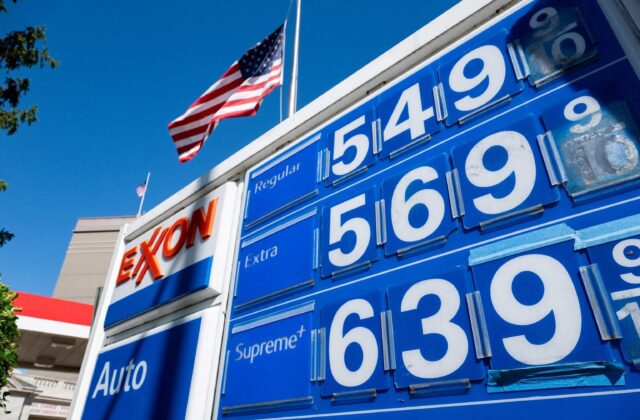
- Brent crude climbed to about $94.42 a barrel on August 20, its highest level since July 24, while WTI also moved sharply higher. Oil has now gained for five consecutive sessions.
- The latest rally is being driven by continued uncertainty surrounding the Iran war and shipping through the Strait of Hormuz.
- The Strait of Hormuz is one of the world's most important oil chokepoints.
- U.S. inflation is already above the Federal Reserve's 2% objective: July CPI rose 3.4% year over year, while energy prices were up 14.7%.
- The Federal Reserve's own July monetary-policy report said oil and gasoline prices had risen sharply after the Middle East conflict disrupted shipping through Hormuz.
- The key U.S. risk is stagflation: higher energy prices could push inflation higher while simultaneously weakening consumer spending and economic growth.
Oil at $95 Is Not the Real Story
A crude-oil headline is easy to write:
“Oil prices rise as Iran tensions escalate.”
Reuters, Bloomberg, CNBC and WSJ can publish that story within minutes.
But for TheBusinessNow, that isn’t enough.
The bigger question is:
What happens to the American economy if oil stays near $95 — or goes significantly higher?
Because oil doesn’t stay inside commodity markets.
It moves through the economy.
Crude oil
↓
Gasoline + diesel
↓
Transportation costs
↓
Food + logistics + manufacturing
↓
Consumer prices
↓
Inflation
↓
Federal Reserve
↓
Interest rates
↓
Mortgages + loans + stocks
That is the story investors should be watching.
📈 Oil Is Approaching $95 Again
On August 20, Brent crude for October delivery rose to roughly $94.42 per barrel, while U.S. WTI also climbed sharply. Both benchmarks reached their highest levels since July 24 and extended a five-session winning streak.
That is significant because the market had previously shown signs that geopolitical risk might ease.
Instead, traders are increasingly pricing in the possibility that the conflict and disruption around Hormuz could last longer.
Reuters reported that tanker traffic through the strait has fallen sharply, while conflicting signals from Washington and Tehran have made the reopening of normal shipping difficult to assess.
And that’s what the oil market hates:
uncertainty + disrupted supply + no clear diplomatic resolution.
🌊 Why the Strait of Hormuz Matters So Much
The Strait of Hormuz is a narrow maritime passage between Iran and Oman connecting the Persian Gulf with the Gulf of Oman and Arabian Sea.
It is effectively a gateway for a huge amount of Middle Eastern energy.
EIA has described Hormuz as the world’s most important oil chokepoint. In 2022, approximately 21 million barrels per day of petroleum liquids moved through the strait — around 21% of global petroleum-liquids consumption at the time.
That creates a simple market equation:
If Hormuz works normally:
Oil supply → global market
If Hormuz becomes severely restricted:
Oil supply ↓
Shipping costs ↑
Risk premium ↑
Crude prices ↑
And if the disruption lasts long enough, the problem moves from a financial-market story into the real economy.
🛢️ This Is Now a Refining Problem Too
This distinction is extremely important.
Investors often focus on:
“How much crude oil is available?”
But consumers buy:
gasoline
diesel
jet fuel
heating oil
—not barrels of crude.
Reuters reported on August 20 that the Iran war has pushed the global oil-refining industry toward the brink, raising concerns over gasoline and diesel supply.
That means even if headline crude production doesn’t collapse, refined-product shortages and logistics disruptions can still hurt consumers.
🇺🇸 The U.S. Inflation Problem Is Already Here
This is where today’s oil rally becomes particularly important for Americans.
The latest U.S. CPI data show:
July 2026 inflation
Headline CPI: +3.4% year over year
Core CPI: +2.5%
Energy: +14.7%
Food: +3.0%
So the U.S. isn’t entering this oil shock from a 2% inflation environment.
It is entering it with inflation already above the Fed’s target.
That changes the equation dramatically.
⛽ The Gasoline Transmission Mechanism
The most obvious path is gasoline.
Imagine Brent moves:
$85 → $95
That doesn’t mean gasoline automatically rises by exactly the same percentage.
Refining margins, inventories, taxes, seasonal demand, distribution costs and regional differences all matter.
But persistent crude increases can eventually filter into fuel prices.
And when Americans pay more at the pump, they have less money available for other spending.
The chain:
Oil ↑
↓
Gasoline ↑
↓
Household transportation costs ↑
↓
Disposable income ↓
↓
Retail spending pressure ↑
That is precisely why Walmart’s latest earnings were so interesting.
Walmart reported slower U.S. comparable-sales growth and pointed to consumer pressure from higher gasoline costs.
Oil and Walmart are therefore part of the same economic story.
🛒 Oil → Walmart → U.S. Consumer
This is one of the most valuable connections for TheBusinessNow.
Higher oil prices don’t just affect Exxon, Chevron or oil traders.
They affect:
- Walmart
- Amazon
- airlines
- trucking companies
- logistics firms
- manufacturers
- restaurants
- retailers
- consumers
A household that spends more on:
gasoline
has less available for:
clothing + electronics + restaurants + travel + discretionary shopping.
That’s why a commodity price can eventually become a consumer-confidence story.
🍔 Food Could Feel the Shock Too
Oil affects the food economy through multiple channels.
Farm machinery needs fuel.
Trucks need diesel.
Ships need fuel.
Warehouses consume energy.
Packaging uses petroleum-derived materials.
Air freight consumes fuel.
So a prolonged oil shock can create pressure across the supply chain.
The result isn’t necessarily:
“$95 oil = food inflation immediately.”
The actual transmission takes time.
But sustained energy prices can increase the cost base across multiple industries.
✈️ Airlines Could Be Another Pressure Point
Airlines are especially exposed to fuel costs.
If jet fuel becomes more expensive:
Fuel expense ↑
↓
Airline margins ↓
↓
Ticket prices may rise
↓
Travel demand may weaken
This makes airlines one of the sectors investors should monitor if oil remains elevated.
🏭 Manufacturing Faces the Same Problem
Manufacturers can get hit from several directions:
Input costs
Energy becomes more expensive.
Transportation
Shipping and trucking costs increase.
Consumer demand
Households become more cautious.
So companies can experience the worst combination:
Costs ↑
while
Demand ↓
That’s a classic margin squeeze.
🧨 The Stagflation Risk
This is the word Wall Street needs to watch.
STAGFLATION
It combines:
High inflation
Weak economic growth
The oil shock can theoretically push both in the wrong direction.
Higher oil:
Inflation ↑
but also:
Consumer spending ↓
and:
Business costs ↑
which can lead to:
Economic growth ↓
That’s why an oil shock is more dangerous than an ordinary commodity rally.
🏦 And Then Comes the Federal Reserve
This is where the oil story becomes a monetary-policy story.
The Federal Reserve wants inflation to move toward its 2% objective.
But higher energy prices can make that job harder.
The Fed’s July Monetary Policy Report explicitly noted that oil and gasoline prices had risen sharply following the Middle East conflict and disruptions through Hormuz.
And Reuters reported on August 19 that Fed policymakers’ inflation concerns had increased, with several officials indicating that higher rates could become necessary if inflation failed to decline toward the 2% target.
So the market faces a difficult question:
What if oil keeps rising while the Fed is trying to lower rates?
📊 The Fed’s Worst-Case Scenario
Imagine this:
Oil:
$95 → $105 → $115
Gasoline:
↑
Inflation:
↑
Consumer spending:
↓
Corporate costs:
↑
Economic growth:
↓
Now the Fed has a problem.
It wants to support growth.
But inflation is moving in the opposite direction.
Cut rates?
Could support growth, but potentially make inflation harder to control.
Keep rates high?
Could restrain inflation, but increase pressure on consumers, housing and businesses.
This is why oil prices can influence markets far beyond the energy sector.
📈 What Happens to Treasury Yields?
This is where the oil story connects to our previous $40 trillion U.S. debt analysis.
Higher inflation expectations can push investors to demand greater yields on longer-term bonds.
That means:
Oil ↑
→ inflation expectations ↑
→ Treasury yields can face upward pressure
→ mortgage rates can stay elevated
→ borrowing costs remain high.
The Federal Reserve’s own analysis has already highlighted the link between the Middle East conflict, oil prices and financial conditions.
🏠 Why Americans With Mortgages Should Care
Oil prices might seem unrelated to a 30-year mortgage.
They’re not.
Suppose an oil shock causes inflation expectations to rise.
Bond investors demand higher yields.
Long-term Treasury yields rise.
Mortgage rates can remain higher.
So:
Iran war
→
oil
→
inflation
→
Treasury yields
→
mortgage rates
→
housing affordability
That’s the type of macroeconomic connection TheBusinessNow should specialize in.
📉 What Could Happen to U.S. Stocks?
Not every stock reacts the same way.
Potential winners
🛢️ Energy producers
Higher oil prices can improve revenue and cash-flow expectations for some producers.
⛽ Oil-service companies
Higher drilling and production economics can support demand for certain services.
Potential losers
✈️ Airlines
Higher fuel costs.
🚚 Transportation
Higher diesel costs.
🏭 Manufacturers
Higher energy and logistics costs.
🛍️ Retailers
Consumers have less discretionary income.
💻 High-growth technology stocks
Higher yields can put pressure on expensive valuations.
🥇 Who Could Benefit From $95 Oil?
The obvious group is energy producers.
But investors should distinguish between:
oil price ↑
and
energy stock ↑.
A company’s production volumes, hedging strategy, operating costs, debt and geopolitical exposure all matter.
Therefore:
$95 oil is supportive for the energy sector broadly, but it doesn’t guarantee every energy stock will outperform.
🌎 What About the U.S. Becoming an Energy Superpower?
The U.S. produces a huge amount of oil domestically, which provides some insulation compared with heavily oil-import-dependent economies.
But oil is traded in a global market.
So U.S. producers don’t operate in a sealed domestic price system.
If global crude rises sharply, U.S. consumers can still face higher petroleum-product prices.
That’s one reason the U.S. economy can be both:
an oil producer
and
an oil-price victim.
🇨🇳 China and the Global Demand Problem
There is another side to this equation.
High oil prices eventually hurt demand.
EIA reported that China’s crude-oil imports fell in the second quarter of 2026 following higher oil prices caused by disrupted flows through Hormuz. Lower Chinese imports reduced global demand and helped limit some of the upward price pressure.
This creates a potential counterweight:
Higher oil
→ demand destruction
→ economic slowdown
→ less oil consumption
→ downward pressure on prices.
So the oil market isn’t a one-way staircase.
At some point, high prices can create their own demand problem.
🔮 Three Oil Scenarios for the U.S. Economy
🟢 Scenario 1 — Diplomacy Returns
If the U.S.-Iran conflict de-escalates and Hormuz shipping normalizes:
Oil ↓
→ gasoline pressure ↓
→ inflation pressure ↓
→ Fed flexibility ↑
→ Treasury yields could ease
→ consumer confidence improves.
This would be the cleanest outcome for markets.
🟡 Scenario 2 — Oil Stays Around $90–$100
This may be the most complicated scenario.
Oil doesn’t explode.
But it doesn’t fall either.
The result:
- persistent gasoline pressure
- inflation remains uncomfortable
- Fed cuts become harder
- consumer spending slows
- energy stocks remain supported
- airlines/transportation face pressure.
This is potentially a slow-burn inflation problem.
🔴 Scenario 3 — Hormuz Disruption Gets Worse
This is the major tail risk.
If tanker traffic deteriorates further or additional Middle Eastern production is disrupted:
Oil could rise substantially beyond $95.
That could generate:
Fuel shock
Inflation shock
Growth shock
Monetary-policy shock
That is the scenario markets are trying to price before it happens.
📊 The 10 Indicators Investors Should Watch
| Indicator | Why it matters |
|---|---|
| Brent crude | Global oil benchmark |
| WTI crude | Key U.S. benchmark |
| Gasoline prices | Direct consumer impact |
| Diesel prices | Transportation & logistics |
| Strait of Hormuz traffic | Supply-chain risk |
| U.S. CPI | Inflation impact |
| Core CPI | Underlying inflation |
| 10Y Treasury yield | Long-term financial conditions |
| Fed rate expectations | Monetary-policy response |
| U.S. retail sales | Consumer health |
🚨 The Number I Would Watch More Than $95
Everyone is talking about:
$95
But the more important question is:
How long does oil stay there?
A short-lived spike can fade.
A sustained $95–$100 oil environment can become embedded into:
- gasoline
- freight
- airline costs
- manufacturing
- food
- inflation expectations
- wages
- monetary policy.
Duration matters.
$105 for three days is very different from:
$95 for six months.
That’s the distinction many quick news articles miss.
🧠 TheBusinessNow Analysis
The current oil rally is not simply a commodity-market event.
It is a test of how resilient the U.S. economy is to another energy shock.
The timing is uncomfortable.
U.S. headline CPI is already 3.4%, energy prices are up 14.7% year over year, and Fed policymakers have recently shown increased concern about persistent inflation.
At the same time, the U.S. consumer is showing signs of becoming more selective, while longer-term Treasury yields remain elevated.
That creates a potentially dangerous chain:
Iran war → Hormuz disruption → oil → gasoline → inflation → Fed → yields → mortgages → consumer spending → stocks
That is the real story behind oil near $95.
The question isn’t whether $95 oil hurts.
The question is whether it lasts long enough to change U.S. monetary policy.
🇺🇸 What This Means for Americans
If oil remains elevated, Americans could eventually feel the impact through:
⛽ Gasoline
Higher prices at the pump.
🛒 Groceries
Potential transportation and production cost pressure.
✈️ Travel
Higher airline fuel costs.
🏠 Mortgages
Potential pressure through longer-term yields and inflation expectations.
💳 Loans
Higher-for-longer interest-rate conditions could persist.
📈 Retirement portfolios
Energy stocks may benefit while rate-sensitive growth stocks can face valuation pressure.
💼 Jobs
A prolonged oil shock can squeeze businesses and weaken demand.
📌 THE BUSINESSNOW MARKET CHECKLIST
🛢️ Oil
Brent: ~$94–95
🇺🇸 U.S. inflation
CPI: 3.4%
⛽ Energy inflation
14.7% YoY
🏦 Federal Reserve
Inflation remains above target
🌊 Hormuz
Shipping disruption remains a major risk
📈 Stocks
Watch energy vs. consumer/transport sectors
🏠 Housing
Watch Treasury yields + mortgage rates
🔗 Read More on TheBusinessNow
US-Iran Tensions Escalate After Military Strikes: Global Markets Brace for Rising Geopolitical Risk
Read the previous TheBusinessNow U.S.-Iran market analysis
🪙 A Word From GoldPriceNow.in
Oil, inflation, interest rates and geopolitical risk don’t exist in separate boxes.
When energy prices rise and markets reassess inflation and geopolitical risk, investors also watch precious metals.
Tracking the other side of the macro trade? Follow live gold prices and precious-metals market analysis at GoldPriceNow.in.
GoldPriceNow.in — Gold prices and market analysis
📚 Key Resources
For this article, prioritize primary data + high-authority reporting rather than making the page another rewritten commodity story.
🇺🇸 U.S. Energy Information Administration
EIA — Strait of Hormuz oil chokepoint analysis
EIA’s analysis explains why Hormuz is strategically important to global oil markets.
🛢️ EIA — Short-Term Energy Outlook
EIA — Short-Term Energy Outlook
Useful for global oil supply, demand and price outlooks.
🇺🇸 U.S. Inflation — BLS
Primary source for U.S. inflation and energy-price data.
🏦 Federal Reserve
Federal Reserve — July 2026 Monetary Policy Report
The Fed’s own assessment of the oil shock and its inflation implications.
📰 Reuters — Latest Oil Move
Reuters — Oil hits three-week high amid Iran war uncertainty
📰 Reuters — Energy Crisis
Reuters — Iran war pushes global refining system toward the brink
📰 Financial Times — Inflation Impact
Financial Times — Oil-price shock and U.S. growth/inflation
📰 MarketWatch — Latest Oil Reaction
MarketWatch — Oil prices jump after Trump’s Iran announcement
❓ FAQs
Why is oil near $95?
Brent crude has risen toward $95 as investors price the risk of continued disruption to Middle Eastern oil flows amid the unresolved U.S.-Iran conflict and uncertainty surrounding Strait of Hormuz shipping.
Could oil reach $100?
It is possible, but not inevitable. A sustained escalation or deeper disruption to Middle Eastern supply could push prices higher, while diplomatic progress, restored shipping and weaker demand could pull them lower.
Why does the Strait of Hormuz matter to oil prices?
Hormuz is one of the world’s most important oil chokepoints. EIA estimates that about 21 million barrels per day of petroleum liquids passed through the strait in 2022, equivalent to about 21% of global petroleum-liquids consumption.
Will $95 oil increase U.S. inflation?
It can. Higher crude prices can feed into gasoline and other energy costs, which can then affect transportation, production and consumer prices. The U.S. already has elevated energy inflation, with the July energy index up 14.7% year over year.
Could the Fed raise interest rates because of oil?
If higher oil prices generate persistent inflation, they could make monetary easing more difficult and potentially increase pressure for a tighter policy stance. Recent Fed minutes showed increased concern about inflation.
Could oil prices cause a recession?
A severe and prolonged oil shock can weaken consumer spending and increase business costs, creating a risk to economic growth. It does not automatically cause a recession.
Which U.S. sectors benefit from higher oil?
Some oil and gas producers and energy-service companies can benefit from higher crude prices, depending on their costs, production levels and hedging strategies.
Which sectors could suffer?
Airlines, transportation, logistics, manufacturers and consumer-facing businesses can face pressure because of higher fuel or operating costs.
Does $95 oil mean gasoline will immediately rise?
Not necessarily. Retail gasoline prices depend on crude costs, refining margins, inventories, taxes, transportation and regional market conditions. The impact can also occur with a lag.
What is stagflation?
Stagflation describes an environment where inflation remains elevated while economic growth weakens. A prolonged oil shock can increase that risk because it raises energy costs while potentially reducing household spending.
What should investors watch next?
Watch Brent, WTI, gasoline and diesel prices, Hormuz shipping activity, U.S. CPI, inflation expectations, Treasury yields, Fed policy expectations and U.S. retail sales.
Keep reading
Related Articles
 Economy
U.S. National Debt Hits $40 Trillion: Why Treasury Yields Are Rising Again
The $40 Trillion Number Is Not the Whole Story The United States has crossed a psychological and financial milestone. $40 trillion. But simply writing “America owes $40 trillion” misses the more important story. The real question for markets is: Who is willing to finance America’s growing debt — and at what interest rate? That question...
 Commodities
Strait of Hormuz Standoff: The Oil Shock That Could Hit the U.S. Economy Next
Strait of Hormuz Standoff: Why the Oil Market Is Getting Nervous Again The oil market is being forced to price a problem that seemed to be easing only weeks ago: the Strait of Hormuz is still not reliably functioning as a normal commercial shipping route. On August 19, Brent crude was trading around $91.20 a...
 Business
Japan’s Bond Market Is Sending a Warning: 10-Year Yields Near 3% Put the BOJ and Government Under Pressure
Japan’s Bond Market Is Sending a Warning: 10-Year Yields Near 3% Put the BOJ and Government Under Pressure Japan’s once-unthinkably low borrowing costs are disappearing. As the 10-year Japanese government bond yield approaches 3%, investors are reassessing inflation, government spending, the yen and the next move from the Bank of Japan. Japan’s bond market is...
Comments (0)