
Trump Signals Major Tariff Shake-Up: Existing Penalties Could Be Reversed as New Import Duties Loom
Trump Signals Major Tariff Shake-Up: Existing Penalties Could Be Reversed as New Import Duties Loom Global markets are once again watching President Donald Trump’s trade strategy after he indicated that existing tariff penalties could be “entirely reversed” while also suggesting that substantial new tariffs may be introduced at the earliest possible opportunity. The comments immediately...
TheBusinessNow
Jul 24, 2026 · 3 min Read
Key Highlights
- 🌍 Donald Trump has indicated that existing tariff penalties could be reversed while signaling new import duties.
- 📈 Markets are closely watching for details that could affect inflation, trade, and corporate earnings.
- 🚢 New tariff policies may reshape global supply chains and international trade flows.
- 🏭 Manufacturers and exporters could face major changes depending on the final policy.
- 💵 Import costs, consumer prices, and inflation expectations may shift if tariffs are adjusted.
- 📦 Businesses may once again diversify suppliers to reduce trade-related risks.
- 📊 Financial markets often react strongly to major U.S. trade policy announcements.
- 🌐 Trading partners could respond with policy changes of their own.
- ⚖️ The announcement highlights the growing importance of trade policy in global economic strategy.
Trump Signals Major Tariff Shake-Up: Existing Penalties Could Be Reversed as New Import Duties Loom
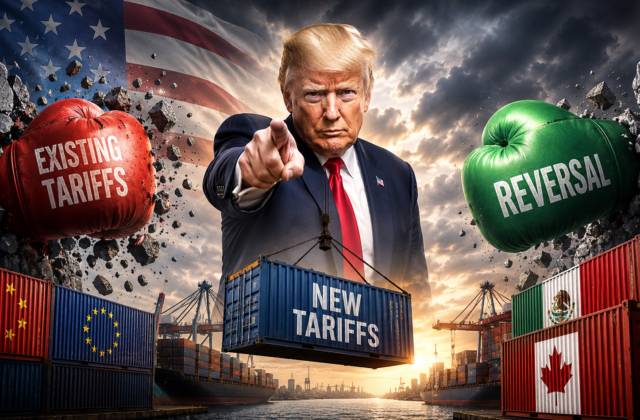
Global markets are once again watching President Donald Trump’s trade strategy after he indicated that existing tariff penalties could be “entirely reversed” while also suggesting that substantial new tariffs may be introduced at the earliest possible opportunity.
The comments immediately drew attention from investors, exporters, manufacturers, and economists because changes in U.S. tariff policy can affect everything from inflation and supply chains to corporate profits and financial markets.
Although the details of the proposal have yet to be formally announced, the remarks suggest that another significant shift in American trade policy could be approaching.
What Trump Said
According to public statements, Trump indicated that:
- Existing tariff penalties could be fully reversed.
- A new and substantial tariff could be imposed soon.
- The administration intends to move quickly on the revised trade strategy.
While specific products and countries have not yet been officially outlined, the statement has fueled speculation about a broader restructuring of U.S. import policy.
Why Tariffs Matter
Tariffs are taxes imposed on imported goods.
Governments generally use tariffs to:
- Protect domestic industries.
- Encourage local manufacturing.
- Reduce trade imbalances.
- Increase government revenue.
- Apply economic pressure during trade disputes.
However, tariffs can also increase import costs for businesses, which may ultimately raise prices for consumers.
Why Existing Penalties Might Be Reversed
Trade policies often evolve as economic priorities change.
Reversing certain tariffs could potentially:
- Lower costs for businesses importing raw materials.
- Ease supply-chain pressures.
- Reduce prices for selected imported goods.
- Improve trade negotiations with specific partners.
At the same time, replacing older tariffs with new targeted measures could allow policymakers to pursue different strategic objectives.
New Tariffs Could Target Strategic Imports
Although no official list has been released, analysts believe any future tariffs may focus on sectors considered strategically important.
Possible areas include:
- Advanced manufacturing
- Electronics
- Critical minerals
- Steel and aluminum
- Automotive components
- Technology products
Such measures would likely aim to strengthen domestic production while reducing reliance on foreign supply chains.
Impact on Inflation
Tariffs often have mixed effects on inflation.
If import costs rise:
- Retail prices may increase.
- Manufacturing expenses can climb.
- Supply-chain costs may grow.
However, if certain existing tariffs are removed simultaneously, some sectors could experience lower costs.
The overall inflation impact would depend on which tariffs are removed and which are introduced.
How Financial Markets Could React
Investors generally monitor trade policy closely because it influences corporate earnings.
Potential market reactions include:
Manufacturing
Domestic producers may benefit from increased protection.
Retail
Companies dependent on imported products could face higher costs.
Technology
Supply-chain adjustments may affect production expenses.
Logistics
Shipping and freight firms could experience changing demand patterns.
Global Trade Implications
The United States remains one of the world’s largest importers.
Any significant tariff changes may influence:
- International trade flows.
- Export strategies.
- Currency markets.
- Commodity prices.
- Global manufacturing decisions.
Trading partners may also respond with policy adjustments of their own.
Businesses May Need to Adapt Again
Companies operating internationally have already spent years adjusting supply chains following earlier trade disputes.
Another policy shift could encourage businesses to:
- Diversify suppliers.
- Expand domestic production.
- Increase inventory planning.
- Reevaluate pricing strategies.
Many multinational corporations now treat trade uncertainty as a permanent business risk.
Could This Affect Consumers?
Consumers may notice changes if tariffs alter the prices of imported products.
Possible effects include:
- Higher prices on selected goods.
- Changes in product availability.
- Increased emphasis on domestically produced alternatives.
The magnitude of these effects would depend on the scope of any future tariff measures.
Why Investors Are Paying Attention
Trade policy directly influences:
- Inflation expectations.
- Corporate profitability.
- Federal Reserve policy outlook.
- Stock market sentiment.
- Commodity markets.
Because of these connections, even preliminary policy signals from Washington can trigger significant market reactions.
What Happens Next?
Markets are now waiting for:
- Official policy announcements.
- Details regarding which tariffs could be removed.
- Information about any new import duties.
- Reactions from major trading partners.
- Responses from businesses and financial markets.
Until additional details emerge, uncertainty is likely to remain elevated.
Final Analysis
President Donald Trump’s indication that existing tariff penalties could be reversed while new import duties may soon be introduced signals the possibility of another major shift in U.S. trade policy. Although many questions remain unanswered—including which products or trading partners may be affected—the comments have already drawn the attention of businesses, investors, and policymakers around the world.
If implemented, the changes could reshape supply chains, influence inflation, affect corporate earnings, and alter global trade patterns. As with previous tariff initiatives, the full impact will depend on the final policy details and how businesses and international trading partners respond. For now, markets are likely to remain focused on every new announcement as the administration’s trade strategy continues to evolve.
❓ Frequently Asked Questions (FAQs)
1. What did Donald Trump say about U.S. tariffs?
Donald Trump stated that existing tariff penalties could be entirely reversed, while also indicating that a new and substantial tariff could be imposed in the near future. Details of any formal policy have not yet been officially released.
2. Why are tariffs important for the global economy?
Tariffs affect international trade by changing the cost of imported goods. They can influence inflation, corporate profits, manufacturing costs, consumer prices, and global supply chains.
3. How could new tariffs affect businesses?
Companies that depend on imported raw materials or finished products could face higher costs, while some domestic manufacturers may benefit from reduced foreign competition.
4. Will tariffs increase inflation?
They can. Higher import duties may raise production costs, which businesses sometimes pass on to consumers through higher prices. The overall impact depends on which goods are affected.
5. How do financial markets react to tariff announcements?
Markets often respond quickly because tariffs can affect corporate earnings, economic growth, inflation expectations, currency markets, and investor sentiment.
6. Which industries could be most affected?
Manufacturing, automotive, technology, retail, logistics, steel, electronics, and agriculture are among the sectors that often feel the greatest impact from major trade policy changes.
7. Why are investors closely watching Trump’s trade policy?
Trade decisions by the United States can influence global commerce, supply chains, commodity prices, and stock market performance, making tariff policy a major market-moving factor.
🌍 About The Business Now
The Business Now delivers trusted coverage on:
- 🌎 Global Politics & Geopolitics
- 📈 Stock Markets & Investing
- 💼 Business & Economy
- 🛢️ Gold, Oil & Commodities
- 🤖 Artificial Intelligence
- 💹 Forex & Global Trade
- 🚀 Technology & Innovation
Our mission is to provide fact-based journalism, market intelligence, and in-depth analysis that helps readers understand the events shaping the global economy.
The Business Now — Global News. Business Intelligence. Market Insights.
🟡 Gold Price Now
Track the latest precious metals prices on GoldPriceNow.in:
- 🟡 Live 24K Gold Price
- 🟠 Live 22K Gold Price
- 🟤 Live 18K Gold Price
- ⚪ Live Silver Price
- 🌍 International Spot Gold Rates
- 📊 Live Gold Charts
- 🧮 Gold Investment Calculator

Keep reading
Related Articles
 Commodities
Oil Nears $95: Could the Iran War Trigger a New U.S. Inflation Shock?
Oil at $95 Is Not the Real Story A crude-oil headline is easy to write: “Oil prices rise as Iran tensions escalate.” Reuters, Bloomberg, CNBC and WSJ can publish that story within minutes. But for TheBusinessNow, that isn’t enough. The bigger question is: What happens to the American economy if oil stays near $95 —...
 Economy
U.S. National Debt Hits $40 Trillion: Why Treasury Yields Are Rising Again
The $40 Trillion Number Is Not the Whole Story The United States has crossed a psychological and financial milestone. $40 trillion. But simply writing “America owes $40 trillion” misses the more important story. The real question for markets is: Who is willing to finance America’s growing debt — and at what interest rate? That question...
 Commodities
Strait of Hormuz Standoff: The Oil Shock That Could Hit the U.S. Economy Next
Strait of Hormuz Standoff: Why the Oil Market Is Getting Nervous Again The oil market is being forced to price a problem that seemed to be easing only weeks ago: the Strait of Hormuz is still not reliably functioning as a normal commercial shipping route. On August 19, Brent crude was trading around $91.20 a...
Comments (0)