
Trump’s New Childhood Vaccine Order Sparks Fierce U.S. Health Fight — What Changes for Parents Now?
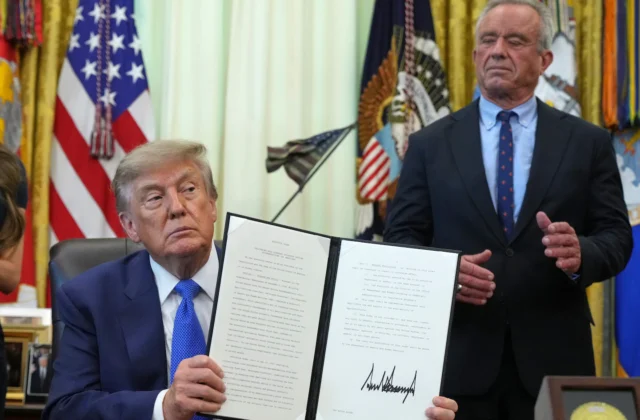
Trump’s New Childhood Vaccine Order Sparks Fierce U.S. Health Fight — What Changes for Parents Now? President Donald Trump has signed an executive order directing a major overhaul of the federal approach to childhood vaccines, including a narrower list of vaccines recommended for all children and changes to how some shots are administered. The move...
Linda
Aug 11, 2026 · 3 min Read
Key Highlights
- Trump signed the executive order on August 10, 2026, directing changes to the federal childhood vaccine framework.
- The administration is moving toward 11 core childhood vaccinations recommended for all children.
- Vaccines including hepatitis B, influenza and COVID-19 would no longer be universally recommended under the revised framework, according to Reuters.
- The administration wants the MMR vaccine separated into three individual shots rather than given as a combined vaccine.
- The order promotes greater flexibility over timing and sequencing of childhood immunizations.
- Medical groups have challenged the administration's approach and warned that changes could affect vaccination rates and disease protection.
Trump’s New Childhood Vaccine Order Sparks Fierce U.S. Health Fight — What Changes for Parents Now?
President Donald Trump has signed an executive order directing a major overhaul of the federal approach to childhood vaccines, including a narrower list of vaccines recommended for all children and changes to how some shots are administered. The move has triggered an immediate clash between the administration and medical organizations, while raising questions about school requirements, insurance coverage and what parents should actually do next.
President Donald Trump’s latest vaccine order is putting the U.S. childhood immunization schedule at the center of a new political and public-health battle.
The executive order, signed August 10, directs federal agencies toward a narrower approach to the vaccines considered part of the U.S. core childhood schedule. The administration’s position follows a federal review comparing the American schedule with vaccination practices in other developed countries.
According to reporting from Reuters and other outlets, the administration is moving toward 11 core childhood vaccinations, while vaccines such as hepatitis B, influenza and COVID-19 would no longer be recommended universally for all children under the revised framework.
The policy has quickly become controversial because it also calls for changing how combination vaccines are administered, including separating the measles, mumps and rubella vaccine into individual shots.
Medical organizations and public-health experts have strongly criticized the move, while the administration argues that the federal government should give parents and doctors greater flexibility.
🇺🇸 What Exactly Did Trump Change?
The most important distinction is between an executive order and an immediate nationwide change to every child’s medical care.
The order directs federal agencies to work toward changes in the federal vaccine recommendations. The May 2026 executive order already directed HHS, CDC and the Advisory Committee on Immunization Practices to review the childhood schedule and consider updates based on the administration’s assessment.
The administration’s January assessment concluded that the United States recommended more childhood vaccines than peer developed countries and proposed a narrower set of core recommendations.
The latest action pushes that policy further.
The administration says the goal is to align U.S. recommendations with what it describes as evidence and practices in comparable developed countries while preserving parental choice and access to vaccines.
Critics argue that changing federal recommendations could undermine confidence in established vaccination guidance.
💉 The Biggest Flashpoint: The MMR Vaccine
One of the most controversial elements involves MMR, the combined vaccine protecting against measles, mumps and rubella.
The administration is calling for the three components to be administered separately.
That would mean children could receive:
Measles → Mumps → Rubella
rather than receiving the three protections through one combined MMR vaccination.
The change has drawn criticism from medical organizations because the combined MMR vaccine has been used for decades and scientific evidence does not support the claim that the MMR vaccine causes autism.
That scientific point is particularly important because vaccine policy and autism claims have become intertwined with the political debate surrounding the administration.
🧪 What Does Science Say About Vaccines and Autism?
This is one area where the evidence is clear.
High-quality scientific evidence has not established that vaccines cause autism.
The MMR-autism controversy originated decades ago from research that was subsequently discredited, and numerous studies have failed to establish a causal connection between vaccination and autism.
The current political debate should therefore be separated from the established scientific evidence.
The executive order’s policy arguments about the number and timing of vaccines are different from the question of whether vaccines cause autism.
Those are not the same scientific question.
🏫 Will Your Child Still Need Vaccines for School?
This is one of the biggest practical questions for American parents.
Not necessarily changed immediately.
School vaccination requirements are largely determined at the state level, rather than being directly imposed by the federal government.
That means a change in federal recommendations does not automatically erase an individual state’s requirements.
For example, reporting following the order indicated that Washington state’s school vaccination requirements were not changing immediately despite Trump’s action.
Parents therefore need to check their state health department and school district rather than assuming the federal announcement automatically changes their child’s school requirements.
💰 What About Health Insurance and Vaccine Costs?
This is another area where the distinction between recommendations and implementation matters.
The administration’s earlier executive order stated that vaccines remaining on the ACIP-recommended schedule and adopted by CDC should continue to receive coverage under relevant federal programs, including Medicaid, CHIP and the Vaccines for Children Program.
However, as the federal recommendations evolve, questions about coverage for vaccines moved into different categories could become increasingly important.
Parents should check their insurer, pediatrician and relevant government programs before assuming that a particular vaccine has become unavailable or uncovered.
⚠️ Why Doctors Are Worried
Medical organizations’ objections aren’t simply about politics.
Their concern centers on what could happen if vaccination rates fall.
Vaccination programs depend partly on high population coverage.
If fewer children receive protection against highly contagious diseases, outbreaks can become easier to sustain.
Measles is particularly concerning because it spreads extremely efficiently among susceptible populations.
The AP reported that medical experts have warned the policy could contribute to vaccine hesitancy at a time when vaccination rates have already been declining and measles outbreaks have returned.
That makes the timing of the policy especially significant.
🏛️ Trump Administration’s Argument
The White House’s position is substantially different.
The administration argues that the United States should examine why its childhood vaccination schedule differs from other developed nations and whether every vaccine should remain universally recommended.
The federal assessment released in January said the U.S. schedule contained more childhood vaccines than those of peer countries and sought to identify a core group consistently recommended across those nations.
The administration also emphasizes:
- parental authority;
- flexibility;
- comparisons with other developed countries;
- medical decision-making between doctors and families;
- and continued access to vaccines.
The dispute is therefore not simply about whether vaccines exist.
It is about which vaccines should be universally recommended, when they should be administered and who should determine the schedule.
🔥 Why This Could Become a Major Political Fight
The vaccine order puts the Trump administration directly against major medical organizations and some lawmakers within Trump’s own political coalition.
The AP reported criticism from the American Academy of Pediatrics and Republican Sen. Bill Cassidy, a physician, among others.
That makes the issue politically unusual.
It is not simply a traditional Democratic-versus-Republican dispute.
The deeper disagreement is about:
federal authority vs. state authority
parental choice vs. standardized recommendations
public-health policy vs. individual medical decision-making
and
how scientific evidence should shape government recommendations.
📉 Could This Affect Pharmaceutical Stocks?
The policy could also become relevant for healthcare investors.
Companies involved in vaccines and pediatric healthcare could face changes in demand if federal recommendations materially change.
However, investors should avoid assuming that a change in federal guidance automatically translates into an immediate collapse in vaccine sales.
There are several layers between federal recommendations and actual vaccine demand:
Federal recommendations → state policies → doctors → insurers → parents → vaccination decisions
State mandates, private healthcare decisions and high-risk recommendations can all continue to support demand.
For investors, the more important question is whether the policy becomes a lasting change in U.S. vaccination behavior.
🧭 What Parents Should Do Now
Parents should not make medical decisions based solely on headlines about the executive order.
Instead:
- Speak with your child’s pediatrician.
- Check your state’s current school vaccination requirements.
- Ask whether your child’s vaccination schedule has actually changed.
- Check your insurance coverage.
- Use official health-agency information when evaluating vaccine recommendations.
- Keep your child’s vaccination records updated.
Most importantly, the executive order does not mean parents should independently stop, delay or rearrange their child’s vaccinations.
The appropriate schedule for an individual child can depend on age, medical history, risk factors and other circumstances.
🔮 What Happens Next?
The biggest question is implementation.
The executive order directs federal agencies toward a new framework, but the process of changing federal recommendations involves agencies, advisory bodies and legal constraints.
The May order specifically instructed CDC and ACIP to review scientific data and take appropriate steps to update the schedule to the extent permitted by law.
That means the political announcement is only one part of a longer process.
The next developments to watch include:
1. CDC and ACIP action
Will federal vaccine recommendations formally change, and how?
2. State responses
Will individual states maintain their existing requirements?
3. Court challenges
Could medical organizations, states or other parties challenge implementation?
4. Insurance coverage
Will insurers change coverage for vaccines moved out of the core category?
5. Vaccination rates
Will parental behavior actually change?
6. Measles and other outbreaks
Any significant change in vaccination coverage could make infectious-disease trends an important measure of the policy’s real-world impact.
🟢 The Bull Case for Trump’s Policy
Supporters argue that the federal government should:
- give parents greater choice;
- reduce unnecessary interventions;
- compare U.S. practices with other developed countries;
- allow doctors and families greater flexibility;
- and investigate vaccine safety questions more aggressively.
From that perspective, the order represents a move toward individualized medical decision-making rather than one national schedule applied broadly.
🔴 The Risk Case
Critics argue that the policy could:
- increase vaccine hesitancy;
- reduce vaccination coverage;
- complicate childhood immunization;
- create confusion for parents;
- increase the risk of outbreaks;
- and weaken confidence in public-health institutions.
The biggest test will therefore not be the political reaction.
It will be the real-world health data that emerges after implementation.
🏆 Bottom Line
Trump’s new childhood vaccine executive order represents one of the most consequential changes to U.S. vaccination policy in years.
The administration wants a narrower federal list of universally recommended childhood vaccines and greater flexibility over how immunizations are administered. The policy is rooted in an HHS review comparing the American schedule with those of other developed countries.
But the move is facing strong opposition from medical experts, and the debate has become particularly intense around the MMR vaccine and unsupported claims about vaccines and autism.
For parents, the key point is simple:
A presidential executive order does not automatically rewrite every state’s school requirements or determine the right medical schedule for every child.
The next stage—CDC/ACIP implementation, state responses, legal challenges and vaccination-rate data—will determine how much this order actually changes American childhood healthcare.
❓ FAQs
What did Trump sign on August 10, 2026?
Trump signed an executive order directing federal agencies toward major changes in the U.S. childhood vaccine recommendation framework, including a narrower set of core vaccines and changes to vaccine timing and administration.
How many childhood vaccines will the U.S. recommend?
The administration has moved toward 11 core childhood vaccinations under the revised framework.
Is Trump banning childhood vaccines?
No. The order changes the federal recommendation framework; it does not constitute a blanket ban on childhood vaccines.
Is the MMR vaccine being banned?
No. The policy calls for the measles, mumps and rubella components to be administered separately rather than through the combined MMR shot.
Does the executive order change school vaccine requirements?
Not automatically. States retain authority over many school immunization requirements, so parents need to check their state’s rules.
Do vaccines cause autism?
The scientific evidence does not establish that vaccines cause autism. Claims linking MMR vaccination to autism have been repeatedly rejected by scientific and medical evidence.
Should parents change their child’s vaccination schedule?
Parents should not independently change a child’s vaccination schedule based on news reports. They should discuss the child’s individual situation with a qualified healthcare professional.
Why is the Trump vaccine order controversial?
Critics argue that reducing universal recommendations could lower vaccination rates and increase the risk of outbreaks, while supporters say the policy gives families greater choice and brings U.S. recommendations closer to those in some peer countries.
🪙 Gold Price Today — Live Market Check
For BusinessNow readers tracking gold alongside U.S. policy, inflation and financial markets, the live gold-price widget should be placed here.
I checked GoldPriceNow.in, but the site was not returning accessible live data through the web fetch at the time of publication. I therefore won’t insert an unverified gold price.
Live Gold Price:
GoldPriceNow.in — Check Live Gold Price
This is preferable to publishing a stale or fabricated market quote.
🌐 Key Resources
- The New York Times — Trump Signs Executive Order Calling for Fewer Childhood Vaccines — Background on the executive order and its implications.
- CNN — Reaction to Trump’s Childhood Vaccine Order — Reaction from a former CDC chief.
- The Washington Post — Trump Administration Vaccine Recommendation Changes — Detailed policy coverage.
- Reuters — U.S. Moves Toward 11 Core Childhood Vaccinations — Reporting on the 11-vaccine framework.
- White House — Executive Order on U.S. Core Childhood Vaccine Recommendations — Primary government document outlining the administration’s vaccine-policy framework.
- HHS — Assessment of the U.S. Childhood and Adolescent Immunization Schedule — The administration’s January 2026 assessment underlying the policy.
- GoldPriceNow.in — Live Gold Price & Calculator — Live gold-market reference for BusinessNow readers.
Keep reading
Related Articles
 Commodities
Oil Nears $95: Could the Iran War Trigger a New U.S. Inflation Shock?
Oil at $95 Is Not the Real Story A crude-oil headline is easy to write: “Oil prices rise as Iran tensions escalate.” Reuters, Bloomberg, CNBC and WSJ can publish that story within minutes. But for TheBusinessNow, that isn’t enough. The bigger question is: What happens to the American economy if oil stays near $95 —...
 Economy
U.S. National Debt Hits $40 Trillion: Why Treasury Yields Are Rising Again
The $40 Trillion Number Is Not the Whole Story The United States has crossed a psychological and financial milestone. $40 trillion. But simply writing “America owes $40 trillion” misses the more important story. The real question for markets is: Who is willing to finance America’s growing debt — and at what interest rate? That question...
 Commodities
Strait of Hormuz Standoff: The Oil Shock That Could Hit the U.S. Economy Next
Strait of Hormuz Standoff: Why the Oil Market Is Getting Nervous Again The oil market is being forced to price a problem that seemed to be easing only weeks ago: the Strait of Hormuz is still not reliably functioning as a normal commercial shipping route. On August 19, Brent crude was trading around $91.20 a...
Comments (0)