
Quartz Countertop Crisis: 31 Dead and Nearly 600 California Workers Sickened by Silicosis
Quartz Countertop Crisis: 31 Dead and Nearly 600 California Workers Sickened by Silicosis A growing occupational-health crisis in California is putting the spotlight on an unexpected workplace hazard: engineered quartz countertops. Nearly 600 countertop fabrication workers have been diagnosed with silicosis since 2019, and at least 31 have died, according to newly reported California data....
TheBusinessNow
Aug 16, 2026 · 3 min Read
Key Highlights
- California has identified 592 silicosis cases among engineered-stone countertop workers between January 2019 and June 2026.
- At least 31 workers have died.
- At least 65 workers have required lung transplants.
- The median age at diagnosis was reported at 46.
- The median age at death was approximately 52.
- About half of the identified cases occurred in Los Angeles County.
Quartz Countertop Crisis: 31 Dead and Nearly 600 California Workers Sickened by Silicosis
A growing occupational-health crisis in California is putting the spotlight on an unexpected workplace hazard: engineered quartz countertops. Nearly 600 countertop fabrication workers have been diagnosed with silicosis since 2019, and at least 31 have died, according to newly reported California data.
The numbers are particularly alarming because many of those affected were relatively young workers who spent years cutting, grinding, polishing or otherwise fabricating engineered stone.
California health officials say the disease is progressive and incurable, and the state’s surveillance data may still underestimate the true scale of the problem.
The story is therefore not simply about a countertop material. It is about workplace exposure, respiratory protection, regulation and the human cost of producing a popular construction product.
What Is Happening to California Countertop Workers?
The health crisis is connected to the fabrication of engineered-stone countertops.
Quartz countertops have become extremely popular because they can provide the appearance and durability consumers want while offering manufacturers a highly workable material.
But the finished countertop is very different from the dust created while workers fabricate it.
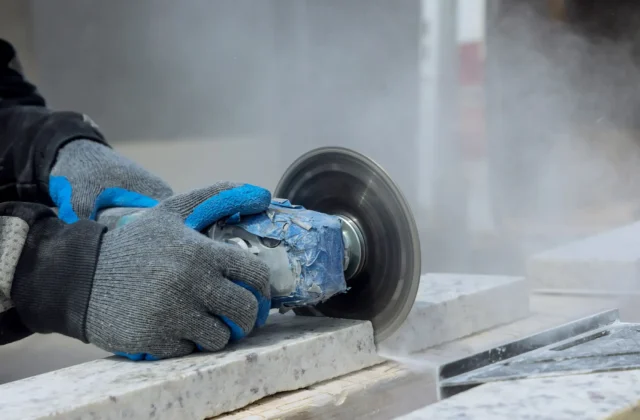
When workers cut, drill, grind, sand, polish or shape engineered stone, tiny particles containing crystalline silica can become airborne.
If workers inhale enough of that dust over time, it can permanently damage lung tissue.
The California Department of Public Health specifically identifies engineered stone as a particularly dangerous material because of its high silica content.
The Number That Has Alarmed Health Officials
The latest reported figure is 592 confirmed silicosis cases among California engineered-stone countertop workers since surveillance began in 2019.
That figure represents cases identified through California’s public-health surveillance system rather than an estimate of every worker who may have the disease.
The distinction matters.
CDPH says its surveillance numbers are likely an underestimate, partly because silicosis can be underdiagnosed and because not every affected worker will necessarily enter the reporting system.
That means the reported 592 cases should not necessarily be interpreted as the complete number of workers affected.
31 Deaths and 65 Lung Transplants
The latest reporting makes the consequences especially stark.
Of the nearly 600 identified workers, 31 have died and 65 have undergone lung transplants.
A lung transplant is an extraordinary intervention that demonstrates how severely the disease can progress.
And the age profile makes the numbers even more striking.
The median age at diagnosis was 46, while the median age at death was reported at approximately 52.
This is not simply a disease affecting people after decades of retirement.
Workers can become seriously ill while they are still in the middle of their working lives.
Why Is Quartz Countertop Dust So Dangerous?
The central problem is crystalline silica.
Silica itself occurs naturally in many materials. The danger arises when workers are exposed to respirable particles small enough to travel deep into the lungs.
Engineered stone is particularly concerning because it can contain very high concentrations of silica.
California health officials say engineered stone can contain more than 90% silica.
During fabrication, the material can generate dust containing respirable crystalline silica.
Once inhaled, those particles can trigger chronic inflammation and scarring in the lungs.
That scarring is what makes silicosis so destructive.
What Is Silicosis?
Silicosis is a progressive lung disease caused by inhaling respirable crystalline silica.
The disease causes permanent scarring of lung tissue.
Over time, affected workers can develop symptoms such as:
- persistent coughing;
- shortness of breath;
- fatigue;
- reduced ability to perform physical activity;
- and worsening respiratory impairment.
Some workers may have few or no symptoms during earlier stages, making early recognition difficult.
California’s public-health guidance also warns that silica exposure can contribute to other serious health problems, including lung cancer, chronic obstructive pulmonary disease, kidney disease and autoimmune disease.
Why Some Workers Are Diagnosed Too Late
One of the challenges surrounding silicosis is that symptoms can resemble other respiratory illnesses.
California health officials have previously reported cases in which workers were initially diagnosed with conditions including pneumonia, tuberculosis, non-tuberculous mycobacterial infections, asthma or sarcoidosis.
That can delay recognition of the occupational exposure.
A worker may visit a doctor because of coughing or breathing difficulties without realizing that years of countertop fabrication could be the critical piece of information needed to identify the underlying problem.
This is why CDPH encourages healthcare providers to ask patients about their current and previous occupations.
Los Angeles County Has Become a Major Hotspot
The problem is not evenly distributed across California.
The latest reporting says approximately half of the identified cases occurred in Los Angeles County.
Earlier CDPH surveillance also showed Los Angeles County carrying the largest concentration of identified cases.
That geographic concentration reflects the presence of countertop fabrication operations and the workforce involved in the industry.
But it should not be interpreted to mean the problem is limited to Los Angeles.
California maintains statewide surveillance because engineered-stone fabrication occurs in multiple communities.
The Worker Safety Problem
The danger does not come from simply owning or using a quartz countertop in a home.
The major occupational exposure occurs when workers fabricate the material and generate dust.
Tasks such as cutting, grinding, drilling, sanding and polishing can create hazardous airborne silica concentrations.
That distinction is important for consumers.
A finished countertop sitting in a kitchen is not the same exposure scenario as an employee spending years cutting and grinding engineered stone inside a fabrication shop.
California Already Has Silica Safety Rules
California has not ignored the problem.
CDPH says Cal/OSHA adopted updated standards designed to protect workers from respirable crystalline silica exposure.
Employers are expected to control exposure through measures including workplace assessment and monitoring, engineering controls and appropriate respiratory protection.
Wet cutting, ventilation and respiratory protection can reduce exposure.
But health officials have also highlighted a major challenge: controlling exposure to sufficiently low levels can be technically difficult and expensive in engineered-stone fabrication environments.
That raises a difficult policy question:
Can workplace controls adequately protect workers from an inherently high-silica material, or does the industry ultimately need safer alternatives?
Australia Already Took a Much More Aggressive Step
California’s debate is happening against the backdrop of Australia’s decision to prohibit engineered-stone products.
Australia became the first country to ban engineered stone after health authorities documented severe occupational silicosis among countertop workers. California health officials have cited Australia’s experience in discussing the issue.
That does not mean California will necessarily adopt the same policy.
But Australia’s decision has changed the international conversation around engineered stone.
It demonstrates that regulators can approach the issue from a completely different direction: instead of attempting to make fabrication safer, they can restrict or eliminate the most hazardous material.
Could California Ban Quartz Countertops?
That remains a policy question rather than an established outcome.
The latest reports indicate that California is considering additional legislative and regulatory responses as the number of identified cases continues to rise.
Possible approaches could include:
- stronger workplace enforcement;
- tighter exposure limits;
- restrictions on high-silica engineered stone;
- greater medical surveillance;
- stronger reporting requirements;
- or restrictions similar to those introduced in Australia.
However, these are policy options, not conclusions that California has already adopted.
Why the Crisis Could Be Bigger Than the Numbers
The 592-case figure should not be interpreted as the final toll.
CDPH explicitly says its surveillance data may underestimate the true burden because cases can go undiagnosed or fail to enter the surveillance system.
That creates an uncomfortable possibility.
If workers develop symptoms years after exposure, leave the industry, lack adequate healthcare coverage or receive another diagnosis, their illness may not immediately be recognized as occupational silicosis.
Consequently, the current numbers could continue rising even if exposure levels improve today.
What This Means for Countertop Businesses
For fabrication companies, the issue goes beyond public relations.
Businesses working with engineered stone need to consider:
Workplace monitoring
Employers need to understand how much respirable silica workers are actually encountering.
Dust control
Cutting and finishing methods need to minimize airborne dust.
Protective equipment
Workers may require appropriate respiratory protection based on workplace conditions and applicable standards.
Training
Employees need to understand why silica dust is dangerous and how exposure occurs.
Medical surveillance
Workers exposed to silica may require occupational-health monitoring under applicable regulations.
CDPH provides dedicated guidance for countertop fabrication employers and workers.
What Workers Should Know
Anyone who currently or previously worked cutting, grinding, sanding, polishing or fabricating engineered stone and has persistent respiratory symptoms should discuss their occupational history with a healthcare professional.
CDPH specifically advises workers to tell doctors about their countertop work and silica exposure.
The department also provides worker resources and information about confidential workplace safety complaints.
This article is not a diagnosis or medical advice. Anyone concerned about possible exposure should consult a qualified healthcare professional.
🔮 Outlook: What Happens Next?
The biggest question is whether California’s response will focus on better controls or a fundamental change in the use of engineered stone.
The current trajectory puts pressure on several groups simultaneously:
Regulators face questions about whether existing protections are sufficient.
Manufacturers face increasing scrutiny over high-silica products.
Countertop businesses face stricter workplace-safety expectations.
Doctors need to recognize occupational silicosis earlier.
Workers need better information about the risks of silica exposure.
And lawmakers face pressure to decide whether existing regulations are strong enough.
The most important statistic may ultimately not be the number of cases already recorded, but whether the number of new cases begins to fall.
🪙 Gold Market Watch
The California silicosis crisis is unlikely to be a direct driver of gold prices.
Gold generally responds much more strongly to factors such as Federal Reserve policy, Treasury yields, the U.S. dollar, inflation expectations and geopolitical risk.
For readers following financial markets alongside major U.S. economic and business developments, you can check GoldPriceNow.in — Live Gold Price.
I was unable to independently retrieve a live price from GoldPriceNow.in during this check, so I have not inserted an unverified price.
❓ FAQs
What is the California quartz countertop silicosis crisis?
It is an occupational-health crisis involving workers who fabricate engineered-stone countertops and are exposed to respirable crystalline silica dust.
How many California workers have been affected?
The latest reporting cited 592 identified silicosis cases between January 2019 and June 2026.
How many workers have died?
At least 31 workers have died, according to the latest reported figures.
How many workers received lung transplants?
At least 65 workers reportedly required lung transplants.
Is silicosis curable?
No. Silicosis is a progressive and incurable lung disease. Treatment can help manage complications and symptoms, but existing lung scarring cannot simply be reversed.
Why is engineered stone dangerous?
Engineered stone can contain very high concentrations of crystalline silica. Cutting, grinding and polishing it can release respirable silica dust.
Are people who own quartz countertops at the same risk?
The major risk described by California health authorities is associated with occupational fabrication work, where workers cut, grind, drill or polish the material and can generate silica-containing dust.
Is California banning quartz countertops?
The sources reviewed indicate that California is examining additional regulatory and legislative responses. They do not establish that California has already implemented a statewide ban.
Does California have workplace silica rules?
Yes. Cal/OSHA has standards covering respirable crystalline silica exposure, and CDPH provides specific guidance for countertop workers and employers.
Can the reported number of cases increase?
Yes. CDPH says its surveillance figures likely underestimate the true burden because of underdiagnosis and limitations in case detection.
Where can workers find official safety information?
The California Department of Public Health provides worker guidance, employer resources and an engineered-stone silicosis surveillance dashboard.
Where can I check the live gold price?
You can check GoldPriceNow.in for current gold-price information.
🌐 Key Resources
- California Department of Public Health — Silica Safety for Countertop Workers
- California Engineered Stone Silicosis Surveillance Dashboard
- CDPH — Silica Safety for Countertop Fabrication Employers
- CDPH — Silicosis Becomes a Reportable Disease in California
- CDPH — California State of Public Health Report 2026
- People — 31 Dead, Nearly 600 Sickened From Silicosis
- GoldPriceNow.in — Live Gold Price
Keep reading
Related Articles
 Commodities
Oil Nears $95: Could the Iran War Trigger a New U.S. Inflation Shock?
Oil at $95 Is Not the Real Story A crude-oil headline is easy to write: “Oil prices rise as Iran tensions escalate.” Reuters, Bloomberg, CNBC and WSJ can publish that story within minutes. But for TheBusinessNow, that isn’t enough. The bigger question is: What happens to the American economy if oil stays near $95 —...
 Economy
U.S. National Debt Hits $40 Trillion: Why Treasury Yields Are Rising Again
The $40 Trillion Number Is Not the Whole Story The United States has crossed a psychological and financial milestone. $40 trillion. But simply writing “America owes $40 trillion” misses the more important story. The real question for markets is: Who is willing to finance America’s growing debt — and at what interest rate? That question...
 Commodities
Strait of Hormuz Standoff: The Oil Shock That Could Hit the U.S. Economy Next
Strait of Hormuz Standoff: Why the Oil Market Is Getting Nervous Again The oil market is being forced to price a problem that seemed to be easing only weeks ago: the Strait of Hormuz is still not reliably functioning as a normal commercial shipping route. On August 19, Brent crude was trading around $91.20 a...
Comments (0)