
Pentagon’s War Bill Is Exploding: Is America Running Out of Money for Global Conflicts?
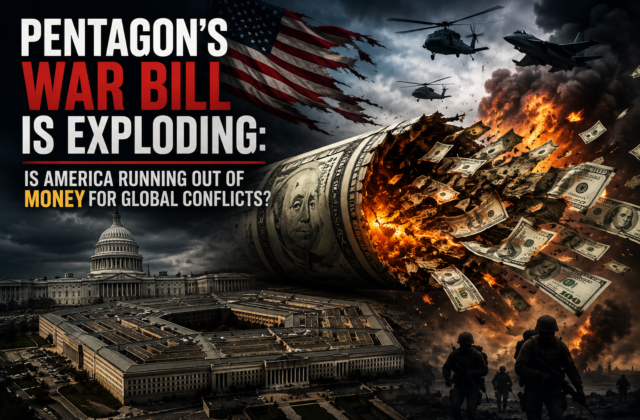
Pentagon’s War Bill Is Exploding: Is America Running Out of Money for Global Conflicts? For decades, the United States has maintained the world’s largest military budget. But recent reports suggest that the cost of responding to escalating tensions in the Middle East is placing fresh pressure on Pentagon finances. According to recent reporting, the Pentagon...
TheBusinessNow
Jul 21, 2026 · 2 min Read
Key Highlights
- 🚨 Pentagon spending has surged amid heightened Middle East operations.
- 💰 Billions of dollars in military costs are fueling new budget debates in Washington.
- 🏛️ Congress is questioning defense leaders over funding needs and long-term strategy.
- 📈 Investors are watching defense stocks, federal borrowing, and fiscal policy.
- 🛢️ Geopolitical tensions continue to keep oil markets on alert.
- 🌍 U.S. defense decisions have far-reaching implications for global security and financial markets.
- 📊 The coming months could determine whether additional military funding reshapes America's budget priorities.
Pentagon’s War Bill Is Exploding: Is America Running Out of Money for Global Conflicts?
For decades, the United States has maintained the world’s largest military budget. But recent reports suggest that the cost of responding to escalating tensions in the Middle East is placing fresh pressure on Pentagon finances.
According to recent reporting, the Pentagon has committed billions of dollars to military operations related to Iran and regional security. At the same time, senior U.S. defense officials—including Defense Secretary Pete Hegseth—have appeared before Congress to answer questions about spending priorities, readiness, and future funding.
The debate is no longer just about military strategy.
It is increasingly about whether the United States can continue financing multiple global security commitments without affecting its fiscal position and long-term defense planning.
Why Pentagon Spending Is Back in the Spotlight
The Pentagon already operates with one of the largest defense budgets in history.
Recent military deployments, missile interceptions, naval operations, logistics, and intelligence activities in the Middle East have added billions of dollars in operational costs.
Unlike long-term procurement programs, combat operations generate immediate expenses:
- Missile interceptors
- Precision-guided weapons
- Naval deployments
- Air operations
- Intelligence surveillance
- Troop logistics
- Equipment maintenance
These costs accumulate rapidly during periods of heightened military activity.
Congress Wants Answers
Recent Senate hearings placed Pentagon leadership under intense scrutiny.
Lawmakers questioned:
- How much current operations are costing.
- Whether emergency funding will be required.
- The impact on military readiness.
- Long-term defense modernization plans.
- Future strategic priorities.
Congress ultimately controls federal appropriations, making these hearings critical for determining whether additional funding is authorized.
Where the Money Is Going
Military operations involve far more than battlefield expenses.
Major spending areas include:
| Category | Cost Driver |
|---|---|
| Missile Defense | Interceptor missiles and air defense systems |
| Navy | Carrier strike groups and destroyer deployments |
| Air Force | Fighter operations and aerial refueling |
| Logistics | Fuel, transportation, and supply chains |
| Intelligence | Surveillance and reconnaissance |
| Maintenance | Equipment repairs and replacement |
Each additional week of sustained operations increases overall expenditure.
Why Investors Are Paying Attention
Defense spending affects more than national security.
Financial markets closely monitor:
- Federal deficits
- Treasury borrowing
- Government spending
- Defense contractors
- Inflation expectations
Large supplemental defense spending packages can influence fiscal policy and investor sentiment.
Could This Affect the U.S. Economy?
Military spending can stimulate certain industries, particularly aerospace and defense manufacturing.
However, prolonged emergency expenditures may also contribute to:
- Higher federal borrowing
- Larger budget deficits
- Increased interest costs
- Fiscal policy debates
Economists continue to debate the long-term economic impact of sustained military operations.
Defense Stocks Could Benefit
Historically, periods of elevated geopolitical risk have increased investor interest in defense companies.
Industries that may attract attention include:
- Missile manufacturers
- Aerospace firms
- Cybersecurity companies
- Intelligence technology providers
- Military logistics businesses
Performance, however, depends on government contracts and broader market conditions.
Oil Markets Are Watching Closely
Middle East tensions often influence energy markets.
Investors continue monitoring:
- Strait of Hormuz shipping activity
- Global crude oil supply
- OPEC+ production decisions
- Regional security developments
Higher energy prices could affect inflation worldwide.
Why This Matters Beyond America
The United States remains deeply integrated into global security alliances.
Changes in American defense spending influence:
- NATO planning
- Indo-Pacific security
- Middle East stability
- Global arms markets
- International financial confidence
As a result, Pentagon budget decisions have worldwide implications.
What Happens Next?
Several developments will shape the coming months:
Congressional Funding Decisions
Lawmakers will determine whether additional defense appropriations are approved.
Strategic Reviews
Military leadership is expected to reassess operational priorities and resource allocation.
Economic Impact
Markets will watch how defense spending affects broader fiscal policy and Treasury borrowing.
Global Security
Future developments in the Middle East could significantly alter defense requirements.
What Investors Should Watch
Professional investors are monitoring:
✅ Pentagon funding requests
✅ Congressional budget negotiations
✅ Defense contractor earnings
✅ Oil price movements
✅ U.S. Treasury borrowing
✅ Inflation expectations
✅ Federal Reserve policy signals
Conclusion
The Pentagon’s rising operational costs highlight the financial realities of maintaining global military commitments.
While the United States retains unmatched defense capabilities, sustained operations inevitably require difficult budgetary decisions.
The key question is not whether America can fund today’s missions—but how prolonged geopolitical tensions may reshape future defense spending, fiscal policy, and global markets.
For investors, policymakers, and businesses alike, Pentagon spending is becoming an increasingly important economic story—not just a military one.
FAQs
Why is Pentagon spending increasing?
Recent military operations and deployments related to Middle East security have added substantial operational costs.
Is the Pentagon running out of money?
Reports indicate that current operations are placing pressure on available funds, leading to discussions about potential additional congressional appropriations.
Could this affect financial markets?
Yes. Defense spending can influence government borrowing, defense-sector stocks, investor sentiment, and inflation expectations.
Why are Senate hearings important?
Congress oversees defense funding, and hearings help lawmakers evaluate spending, readiness, and future budget requirements.
Which sectors benefit from higher defense spending?
Defense manufacturing, aerospace, cybersecurity, logistics, and military technology companies often receive increased investor attention during periods of elevated defense expenditure.
About TheBusinessNow
TheBusinessNow delivers analysis of business, economics, public policy, governance, geopolitics, commodities, and markets. Our reporting focuses on verified information, multiple perspectives, and evidence-based analysis that helps readers understand the forces shaping India and the global economy.
Keep reading
Related Articles
 Commodities
Oil Nears $95: Could the Iran War Trigger a New U.S. Inflation Shock?
Oil at $95 Is Not the Real Story A crude-oil headline is easy to write: “Oil prices rise as Iran tensions escalate.” Reuters, Bloomberg, CNBC and WSJ can publish that story within minutes. But for TheBusinessNow, that isn’t enough. The bigger question is: What happens to the American economy if oil stays near $95 —...
 Economy
U.S. National Debt Hits $40 Trillion: Why Treasury Yields Are Rising Again
The $40 Trillion Number Is Not the Whole Story The United States has crossed a psychological and financial milestone. $40 trillion. But simply writing “America owes $40 trillion” misses the more important story. The real question for markets is: Who is willing to finance America’s growing debt — and at what interest rate? That question...
 Commodities
Strait of Hormuz Standoff: The Oil Shock That Could Hit the U.S. Economy Next
Strait of Hormuz Standoff: Why the Oil Market Is Getting Nervous Again The oil market is being forced to price a problem that seemed to be easing only weeks ago: the Strait of Hormuz is still not reliably functioning as a normal commercial shipping route. On August 19, Brent crude was trading around $91.20 a...
Comments (0)