
France Wildfires Threaten Bordeaux Wine Country as Extreme Heat Raises Alarm for Vineyards and Communities
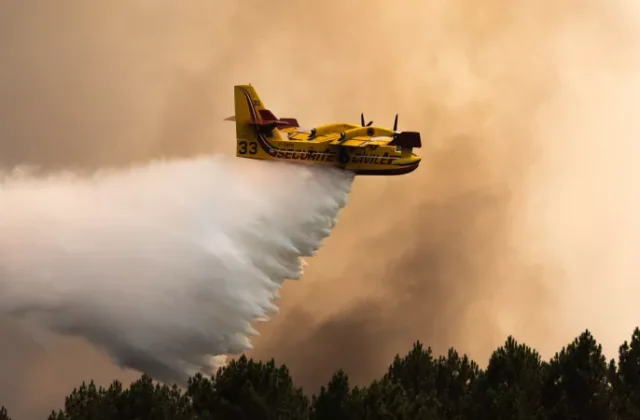
France Wildfires Threaten Bordeaux Wine Country as Extreme Heat Raises Alarm for Vineyards and Communities France is facing another serious wildfire threat as fast-moving fires spread through parts of the country, putting communities, forests and one of the world’s most important wine-producing regions under growing pressure. The latest concerns are particularly significant around Bordeaux and...
James Nathan
Jul 31, 2026 · 3 min Read
Key Highlights
- 🔥 Wildfires are threatening parts of southwestern France.
- 🍷 Bordeaux's famous vineyards face potential economic and environmental consequences.
- 🌡️ Extreme heat and dry conditions are increasing wildfire risks across parts of Europe.
- 🚒 Firefighters are battling rapidly changing conditions as communities remain on alert.
- 🏘️ Questions are being raised about wildfire-prevention rules and enforcement.
- 🌍 The fires highlight the growing economic risks associated with extreme weather.
France Wildfires Threaten Bordeaux Wine Country as Extreme Heat Raises Alarm for Vineyards and Communities
France is facing another serious wildfire threat as fast-moving fires spread through parts of the country, putting communities, forests and one of the world’s most important wine-producing regions under growing pressure.
The latest concerns are particularly significant around Bordeaux and southwestern France, where wildfires are threatening areas surrounded by vineyards and rural communities.
Beyond the immediate danger to residents and firefighters, the fires are raising a much larger economic question:
What happens to France’s world-famous wine industry if extreme heat and wildfires become increasingly common?
Recent reporting has also raised questions about whether wildfire-prevention regulations were adequately enforced in areas hit by the blaze.
Why Bordeaux Is So Important
Bordeaux isn’t simply another French wine region.
It is one of the world’s most recognizable wine-producing areas, famous for estates and appellations producing wines based on varieties such as Cabernet Sauvignon, Merlot and Cabernet Franc.
The region’s wine economy supports:
- Vineyards
- Wineries
- Agricultural workers
- Exporters
- Restaurants
- Tourism
- Logistics companies
- Hospitality businesses
That means a major wildfire isn’t only an environmental disaster.
It can become an economic problem.
When vineyards are directly threatened by fire, the potential damage can include destroyed vines, buildings, equipment and infrastructure.
Even vineyards that escape direct flames can be affected by smoke and extreme heat.
The Smoke Problem Could Be Just as Serious
One of the less visible risks to vineyards comes from wildfire smoke.
Smoke exposure can potentially affect grapes through a phenomenon known as smoke taint, in which compounds from smoke can influence the aroma and flavor profile of wine.
For premium wine producers, that can be a major concern.
A vineyard doesn’t necessarily have to burn down for a wildfire to cause economic damage.
If smoke affects grapes during a sensitive stage of development, producers may face difficult decisions about harvesting and wine production.
Extreme Heat Is Making the Situation More Difficult
Wildfires become more difficult to control when several conditions occur simultaneously.
These can include:
High temperatures
Dry vegetation
Low humidity
Strong winds
Prolonged drought
When vegetation loses moisture, fires can spread more rapidly and become more difficult for firefighters to contain.
That creates a dangerous feedback loop.
Hot weather dries vegetation.
Dry vegetation becomes fuel.
More fuel allows fires to burn more intensely.
And intense fires can generate their own local weather effects.
France’s Wildfire Rules Are Coming Under Scrutiny
The fires have also raised questions about whether existing wildfire-prevention regulations were adequately enforced.
In wildfire-prone areas, authorities can impose restrictions designed to reduce the probability of fires spreading rapidly.
These can include rules involving:
- Vegetation management
- Clearing combustible material
- Access around properties
- Forestry maintenance
- Building restrictions
- Emergency preparedness
The issue becomes particularly sensitive after a major fire.
If regulations existed but were not properly followed or enforced, authorities can face difficult questions about whether more could have been done before the disaster.
Bordeaux’s Wine Industry Faces a New Climate Challenge
The latest fires come as wine producers around the world are already adapting to changing weather patterns.
Climate conditions can influence virtually every stage of wine production.
For vineyards, the timing of:
- Bud development
- Flowering
- Veraison
- Ripening
- Harvest
can be affected by temperature and rainfall.
Extreme heat can accelerate ripening, while drought can place additional stress on vines.
Then there is wildfire.
That creates a difficult combination for producers.
France’s Wine Industry Is an Economic Powerhouse
French wine is a major global export industry.
Bordeaux alone has a powerful international reputation that attracts buyers and collectors from around the world.
The region’s most valuable wines can command extremely high prices, meaning even relatively small disruptions can have an outsized economic impact.
The consequences of wildfire can therefore extend far beyond the immediate area.
A severe event could affect:
Production → exports → tourism → employment → regional income
That is why investors, agricultural businesses and policymakers are watching the situation closely.
Could Wildfires Change Bordeaux Wine?
This is one of the biggest long-term questions.
Climate change doesn’t simply mean that vineyards will become warmer.
It can alter the conditions under which grapes grow.
Warmer temperatures can potentially change grape maturation and the balance between sugar, acidity and other characteristics important to winemaking.
Meanwhile, increased wildfire risk introduces another threat.
That means producers may increasingly need to invest in:
- Irrigation and water management
- Firebreaks
- Vegetation management
- Vineyard monitoring
- Emergency planning
- Alternative grape varieties
- Climate-resistant farming techniques
The Bigger European Wildfire Problem
France is not alone.
Southern Europe has repeatedly faced destructive wildfire seasons in recent years.
Countries including:
🇫🇷 France
🇪🇸 Spain
🇵🇹 Portugal
🇮🇹 Italy
🇬🇷 Greece
have all had to deal with periods of extreme heat, drought and wildfire risk.
For Europe, this is becoming more than an environmental issue.
It is increasingly a question of economic resilience.
Wildfires can affect:
- Tourism
- Agriculture
- Insurance
- Real estate
- Infrastructure
- Electricity networks
- Transportation
- Public finances
Why This Matters to Investors
Investors may initially view wildfires as a local environmental story.
But extreme weather can create broader financial consequences.
Insurance companies may face larger claims.
Agricultural businesses can experience production losses.
Governments may need to increase disaster-response spending.
Tourism can be disrupted.
Supply chains can be affected.
And property values can come under pressure in repeatedly affected areas.
For European markets, increasingly severe weather events represent a risk that businesses and investors cannot simply ignore.
Bordeaux Tourism Could Also Take a Hit
Bordeaux is a major tourism destination.
Visitors travel to the region for:
🍷 Wine tasting
🏰 Historic estates
🌿 Vineyards
🍽️ Food
🏛️ Cultural attractions
A major wildfire can disrupt tourism through road closures, evacuations, poor air quality and concerns about safety.
Even if the vineyards themselves survive, wineries may experience reduced visitor numbers during major fire events.
That can affect smaller producers particularly severely.
What Happens Next?
The immediate priority remains protecting communities and containing fires.
Authorities will also need to assess:
- Burned areas
- Property damage
- Agricultural losses
- Infrastructure damage
- Environmental impacts
- Compliance with wildfire regulations
For vineyard owners, the longer-term challenge will be determining how much of the current season’s crop has been affected by heat and smoke.
Can France Reduce Future Wildfire Risks?
France has already developed wildfire-prevention systems, but the growing intensity of extreme weather could require stronger adaptation.
Potential measures include:
Better vegetation management
Reducing combustible vegetation around vulnerable communities can slow fire spread.
Stronger enforcement
Prevention rules are only effective when property owners and authorities consistently follow them.
Early-warning systems
Faster detection can give firefighters more time to respond before a small fire becomes a major event.
More investment in firefighting
Equipment, aircraft, personnel and local emergency services are critical during severe wildfire seasons.
Climate adaptation
Agriculture and communities will increasingly need strategies designed around hotter and potentially drier conditions.
The Bigger Picture
The Bordeaux fires highlight an uncomfortable reality for France.
The country’s wine industry has survived wars, economic crises, disease outbreaks and changing consumer preferences.
But extreme weather represents a different kind of challenge.
It doesn’t attack only one part of the industry.
It can affect the land, crops, workers, tourism, infrastructure and exports simultaneously.
And as wildfire seasons become more challenging, France’s famous vineyards may increasingly have to adapt to a climate that looks very different from the one in which many of its traditional winemaking practices developed.
Final Thoughts
The wildfires threatening parts of France are much more than a summer disaster story.
For Bordeaux and the country’s wine industry, they represent a warning about the economic consequences of extreme heat, drought and wildfire risk.
The immediate priority is protecting lives, homes and communities.
But once the flames are under control, another battle begins.
France will have to determine how its agricultural regions, cities and businesses can prepare for a future in which extreme weather events may become increasingly difficult to predict and manage.
For Bordeaux’s wine producers, the stakes could hardly be higher.
The world’s most famous wine regions aren’t just fighting today’s fires — they’re preparing for the climate risks of tomorrow.
❓ FAQs
Why are wildfires threatening Bordeaux?
Hot, dry and potentially windy conditions can increase wildfire risk across southwestern France, placing forests, rural communities and vineyards in vulnerable areas at risk.
Can wildfires damage vineyards without burning them?
Yes. Smoke exposure can potentially affect grapes and wine quality through smoke-taint compounds, while extreme heat can also stress vines.
Why is Bordeaux important to the French economy?
Bordeaux is one of the world’s most famous wine-producing regions, supporting agriculture, exports, tourism, hospitality and thousands of businesses.
Can extreme heat affect wine production?
Yes. Heat and drought can influence grape development, ripening, yields and the balance of characteristics important to winemaking.
Are French authorities investigating wildfire prevention?
Questions have been raised about whether wildfire-prevention rules were properly followed and enforced in areas affected by the fires.
Are wildfires becoming a bigger risk in Europe?
Southern and southwestern European countries have increasingly faced periods of extreme heat, drought and severe wildfire conditions.
Could the fires affect Bordeaux wine prices?
Potentially, particularly if significant vineyard production is lost or smoke exposure affects premium wines. However, the actual market impact depends on the scale of damage and future harvests.
📰 About The Business Now
The Business Now delivers coverage of global business, finance, markets, technology, climate, commodities and major international developments with fact-based reporting and analysis.
🪙 Check Live Gold Prices
Track Gold, Silver, Platinum and Palladium prices, historical charts, calculators and daily market updates at:
🌐 External Resources
- The New York Times — Reporting on wildfire rules and enforcement.
- NPR — Coverage of the wider regional impact of the fires.
- CBS News — Reporting on potential consequences for Bordeaux’s wine industry.
- France’s Ministry for Ecological Transition — Official French environmental and wildfire information.
Keep reading
Related Articles
 Commodities
Oil Nears $95: Could the Iran War Trigger a New U.S. Inflation Shock?
Oil at $95 Is Not the Real Story A crude-oil headline is easy to write: “Oil prices rise as Iran tensions escalate.” Reuters, Bloomberg, CNBC and WSJ can publish that story within minutes. But for TheBusinessNow, that isn’t enough. The bigger question is: What happens to the American economy if oil stays near $95 —...
 Economy
U.S. National Debt Hits $40 Trillion: Why Treasury Yields Are Rising Again
The $40 Trillion Number Is Not the Whole Story The United States has crossed a psychological and financial milestone. $40 trillion. But simply writing “America owes $40 trillion” misses the more important story. The real question for markets is: Who is willing to finance America’s growing debt — and at what interest rate? That question...
 Commodities
Strait of Hormuz Standoff: The Oil Shock That Could Hit the U.S. Economy Next
Strait of Hormuz Standoff: Why the Oil Market Is Getting Nervous Again The oil market is being forced to price a problem that seemed to be easing only weeks ago: the Strait of Hormuz is still not reliably functioning as a normal commercial shipping route. On August 19, Brent crude was trading around $91.20 a...
Comments (0)