
ESPN Layoffs Shock the Sports World: Is the Biggest Name in Sports Media Entering a New Era?
ESPN Layoffs Shock the Sports World: Is the Biggest Name in Sports Media Entering a New Era? For decades, ESPN has been the undisputed king of sports broadcasting. Whether it was Monday Night Football, the NBA Finals, Major League Baseball, or breaking NFL news, ESPN defined how millions of fans consumed sports. Now, the network...
TheBusinessNow
Jul 21, 2026 · 3 min Read
Key Highlights
- 🚨 ESPN has announced another round of layoffs amid major operational changes.
- 🏈 The restructuring follows the integration of NFL Network operations.
- 📺 Traditional sports broadcasting continues shifting toward streaming and digital platforms.
- 💰 Rising media rights costs and changing viewer habits are reshaping the industry.
- 📱 ESPN is accelerating its digital-first strategy to reach modern audiences.
- 📊 Investors are closely watching how restructuring affects Disney's long-term media business.
- 🌍 The latest changes signal a broader transformation across the global sports broadcasting landscape.
ESPN Layoffs Shock the Sports World: Is the Biggest Name in Sports Media Entering a New Era?
For decades, ESPN has been the undisputed king of sports broadcasting. Whether it was Monday Night Football, the NBA Finals, Major League Baseball, or breaking NFL news, ESPN defined how millions of fans consumed sports.
Now, the network itself has become the headline.
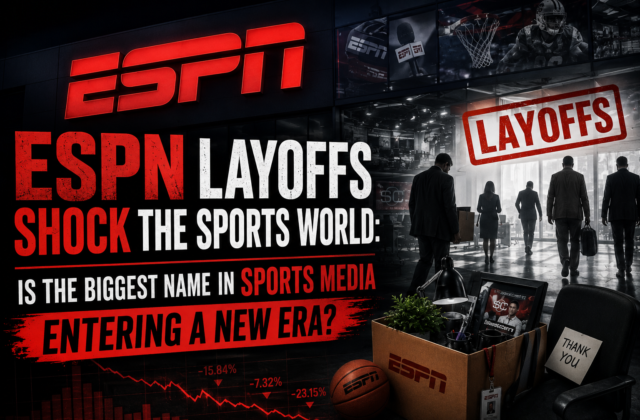
In one of the most significant restructuring moves in recent years, ESPN has announced another round of layoffs following the integration of NFL Network operations. Reports indicate that respected personalities, producers, reporters, and behind-the-scenes staff have been affected, raising fresh concerns about the future of traditional sports broadcasting.
The layoffs aren’t simply about reducing costs—they reflect a broader transformation taking place across the global media industry.
Why Is ESPN Cutting Jobs?
The latest workforce reductions come as ESPN continues integrating NFL Network operations, a move designed to eliminate duplication, streamline production, and improve operational efficiency.
Media companies worldwide are facing similar challenges:
- Rising production costs
- Declining cable television subscribers
- Rapid growth of streaming platforms
- Changing advertising markets
- Increasing investment in digital content
ESPN, despite remaining one of the world’s most valuable sports brands, is adapting to these structural shifts.
Big Names Reportedly Affected
According to multiple reports, several well-known personalities and journalists have been impacted during the latest restructuring.
Among the names widely reported are:
- Karl Ravech
- Tom Pelissero
- Ryan Clark (reported by multiple outlets)
The changes extend beyond on-air talent, affecting producers, editors, technical staff, and operational teams.
For viewers, these names represent familiar voices who have covered major sporting events for years.
The Bigger Story Isn’t the Layoffs
The real story is how rapidly sports broadcasting is changing.
Ten years ago:
Television dominated.
Today:
- YouTube attracts millions of sports viewers.
- Podcasts break news before television.
- Social media delivers highlights instantly.
- Streaming platforms compete aggressively for broadcasting rights.
Sports fans increasingly consume content on mobile devices rather than traditional television.
That shift forces broadcasters to rethink their business models.
ESPN’s Digital Future
Disney has made it clear that ESPN’s future is heavily focused on digital platforms.
The company’s strategy includes:
- Direct-to-consumer streaming
- Expanded ESPN app services
- Premium subscriptions
- Digital-exclusive programming
- Personalized sports content
The objective is simple:
Meet audiences where they already are.
Why Traditional Sports TV Is Under Pressure
Cable television subscriptions continue to decline in several major markets.
This creates a difficult equation.
Sports rights remain incredibly expensive.
Meanwhile:
- Advertising revenues fluctuate.
- Audience habits evolve.
- Younger viewers prefer streaming.
- Competition intensifies.
Networks must either reduce costs or generate new revenue streams.
Often, they attempt both simultaneously.
NFL Network Integration Explained
The merger of certain NFL Network operations with ESPN aims to create efficiencies by reducing overlapping responsibilities.
Potential benefits include:
- Shared production resources
- Unified news gathering
- Lower operational costs
- Expanded programming opportunities
However, integration often leads to duplicate roles becoming unnecessary.
That reality frequently results in workforce reductions.
How Markets React
Wall Street generally views restructuring differently from employees.
Investors often interpret cost-cutting as:
- Improved profitability
- Higher operating efficiency
- Better long-term margins
Employees, however, experience uncertainty and job losses.
Both perspectives exist simultaneously.
The Economics of Sports Media
Live sports remain one of television’s most valuable products.
Unlike scripted entertainment, sports continue attracting large live audiences.
This makes broadcasting rights increasingly expensive.
Networks now compete not only with each other but also with streaming companies.
Every major rights agreement involves billions of dollars.
Balancing these costs requires constant financial adjustments.
What This Means for Fans
Most viewers will likely notice little immediate difference.
Games will continue.
Shows will continue.
Coverage will continue.
But behind the scenes, production models are evolving rapidly.
Artificial intelligence, automation, cloud production, and centralized newsrooms are becoming increasingly common across the broadcasting industry.
Is This the Future of Media?
The ESPN story reflects a much larger trend affecting global media companies.
Traditional broadcasters are transforming into digital-first organizations.
This transition involves:
- Workforce restructuring
- Technology investments
- Streaming expansion
- New content strategies
The goal is long-term sustainability in an industry experiencing unprecedented disruption.
What Happens Next?
Industry analysts will closely monitor:
📺 ESPN’s Streaming Growth
Subscriber numbers will become increasingly important.
💰 Disney’s Financial Performance
Investors will assess whether restructuring improves profitability.
🏈 NFL Coverage
Fans will watch for changes in broadcast quality and programming.
📱 Digital Competition
Platforms like YouTube, Amazon, Netflix, and Apple continue investing heavily in sports rights.
Winners and Losers
| Winners | Challenges |
|---|---|
| Streaming Platforms | Traditional Cable TV |
| Digital Sports Media | Legacy Broadcast Models |
| Technology Providers | Workforce Reductions |
| AI & Cloud Production | Rising Rights Costs |
Why Investors Should Care
Sports media is no longer just entertainment.
It has become a multi-billion-dollar business driven by:
- Advertising
- Streaming subscriptions
- Data analytics
- Sports betting partnerships
- Global broadcasting rights
ESPN’s restructuring offers insight into how legacy media companies are adapting to an increasingly digital economy.
Final Verdict
The latest ESPN layoffs mark another chapter in the transformation of one of the world’s most recognizable sports media brands.
While the immediate headlines focus on job cuts and familiar names leaving the network, the larger story is about an industry reinventing itself for a digital-first future.
Whether this strategy strengthens ESPN’s long-term position will depend on its ability to grow streaming audiences, manage rising sports rights costs, and continue delivering the coverage that made it the global leader in sports broadcasting.
One thing is certain:
The future of sports media is being rewritten—and ESPN is at the center of that change.
Frequently Asked Questions (FAQs)
Why is ESPN laying off employees?
The layoffs are part of ESPN’s restructuring following the integration of NFL Network operations and broader efforts to adapt to changing media consumption and business conditions.
Who has reportedly been affected?
Reports indicate that several on-air personalities and staff members, including Karl Ravech, Tom Pelissero, and Ryan Clark, were among those affected. The full scope of the changes extends beyond these names.
Are these layoffs related to ESPN’s streaming strategy?
They are part of a broader transformation as ESPN and its parent company, Disney, continue investing in direct-to-consumer streaming and digital media.
Will ESPN continue broadcasting major sports?
Yes. ESPN remains one of the world’s leading sports broadcasters with extensive rights across the NFL, NBA, MLB, college sports, and more.
What does this mean for the sports media industry?
The restructuring highlights an industry-wide shift toward digital platforms, changing viewer habits, and new business models for sports broadcasting.
Keep reading
Related Articles
 Commodities
Oil Nears $95: Could the Iran War Trigger a New U.S. Inflation Shock?
Oil at $95 Is Not the Real Story A crude-oil headline is easy to write: “Oil prices rise as Iran tensions escalate.” Reuters, Bloomberg, CNBC and WSJ can publish that story within minutes. But for TheBusinessNow, that isn’t enough. The bigger question is: What happens to the American economy if oil stays near $95 —...
 Economy
U.S. National Debt Hits $40 Trillion: Why Treasury Yields Are Rising Again
The $40 Trillion Number Is Not the Whole Story The United States has crossed a psychological and financial milestone. $40 trillion. But simply writing “America owes $40 trillion” misses the more important story. The real question for markets is: Who is willing to finance America’s growing debt — and at what interest rate? That question...
 Commodities
Strait of Hormuz Standoff: The Oil Shock That Could Hit the U.S. Economy Next
Strait of Hormuz Standoff: Why the Oil Market Is Getting Nervous Again The oil market is being forced to price a problem that seemed to be easing only weeks ago: the Strait of Hormuz is still not reliably functioning as a normal commercial shipping route. On August 19, Brent crude was trading around $91.20 a...
Comments (0)