
China Boosts Diesel and Gasoline Exports in July 2026: What It Means for Global Oil Prices, Asian Markets, and Fuel Supply
China has taken a major step toward easing regional fuel supply concerns by significantly increasing exports of diesel and gasoline for July 2026. The move comes after months of tighter export controls that had reduced the availability of refined fuel across Asia and contributed to market uncertainty. The decision is expected to reshape fuel markets,...
Chung Lee
Jul 8, 2026 · 8 Min Read
Key Highlights
- China Boosts Diesel & Gasoline Exports in July 2026 | Impact on Global Oil Prices
China has taken a major step toward easing regional fuel supply concerns by significantly increasing exports of diesel and gasoline for July 2026. The move comes after months of tighter export controls that had reduced the availability of refined fuel across Asia and contributed to market uncertainty.
The decision is expected to reshape fuel markets, influence global oil prices, improve supply chains, and create fresh opportunities for energy traders, shipping companies, and importing nations.
As one of the world’s largest refiners and exporters of petroleum products, China’s export policy has a direct impact on global energy markets. Any increase or decrease in Chinese fuel exports can quickly affect diesel prices, gasoline costs, refinery margins, and crude oil demand worldwide.
Why Is China Increasing Fuel Exports?
Earlier this year, China limited exports of refined petroleum products as governments around the world monitored rising geopolitical tensions and possible disruptions to energy supplies.
With international conditions becoming more stable and domestic fuel inventories improving, authorities have allowed refiners to increase overseas shipments during July.
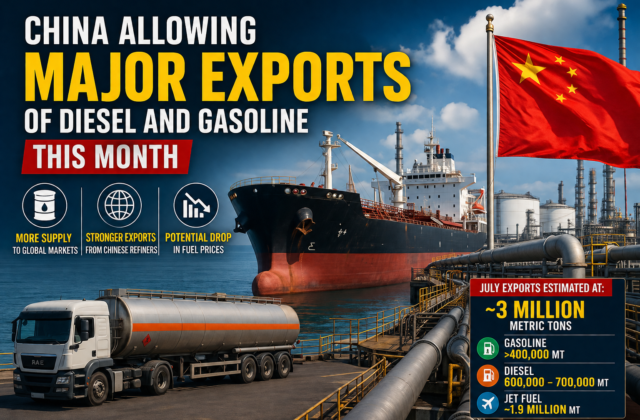
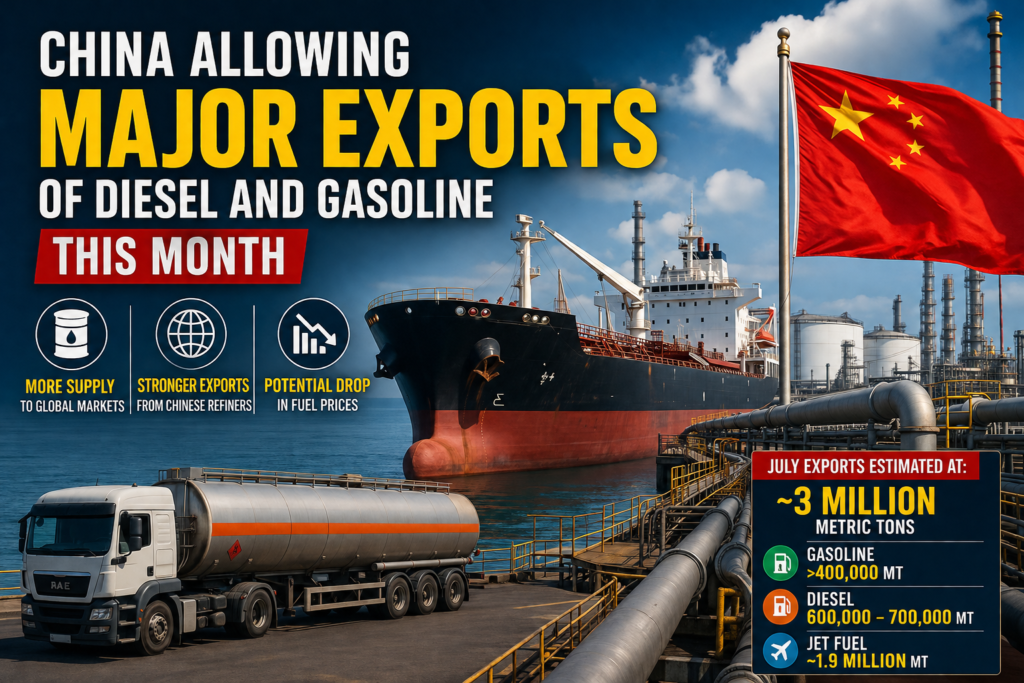
Industry estimates suggest that approximately 3 million metric tons of refined fuel products could be exported this month, making July one of the strongest export months of 2026.
The expected exports include:
- More than 400,000 metric tons of gasoline
- Around 600,000–700,000 metric tons of diesel
- Nearly 1.9 million metric tons of jet fuel
The move also allows several independent Chinese refiners to resume exports after facing restrictions earlier in the year.
How Will This Affect Global Oil Markets?
China’s decision is likely to have a noticeable impact on global energy markets.
A larger supply of diesel and gasoline entering international markets generally increases competition among fuel exporters. As more fuel becomes available, wholesale prices often stabilize or decline, benefiting countries that rely heavily on imports.
Energy analysts believe additional Chinese exports could:
- Improve fuel availability across Asia
- Reduce pressure on regional diesel prices
- Support lower gasoline costs in importing countries
- Increase competition among Asian refiners
- Improve global supply chain stability
For investors, the development may also influence trading activity in crude oil futures, refining companies, and energy-related stocks.
Why Domestic Demand Is Changing
Another reason behind the increase in exports is changing fuel consumption inside China.
The country continues to witness rapid growth in electric vehicle adoption, reducing long-term gasoline demand. Improvements in public transportation, energy efficiency, and industrial restructuring have also moderated domestic fuel consumption.
Rather than allowing excess production to accumulate, refiners are increasingly targeting overseas buyers where demand remains strong.
Impact on Asian Economies
Several Asian countries depend heavily on imported refined petroleum products.
Higher exports from China could benefit nations by improving supply security and reducing fuel procurement costs.
Industries likely to benefit include:
- Airlines
- Logistics companies
- Shipping operators
- Manufacturing businesses
- Public transportation systems
Lower diesel prices can also help reduce operating costs across agriculture, mining, construction, and freight transportation.
What Does This Mean for Crude Oil Prices?
The relationship between refined fuel exports and crude oil prices is complex.
Increased refining activity generally supports crude oil demand because refineries need more crude as feedstock. However, if refined fuel supply grows faster than global demand, diesel and gasoline prices could weaken even while crude prices remain relatively stable.
Market participants will closely watch:
- OPEC+ production decisions
- Global fuel demand
- U.S. crude inventory data
- Chinese refinery operating rates
- Middle East geopolitical developments
These factors will determine whether fuel prices continue to soften during the second half of 2026.
Could Fuel Prices Fall?
Greater exports usually increase market supply.
If demand does not rise at the same pace, importing countries may experience:
- Lower wholesale fuel prices
- More stable gasoline costs
- Improved diesel availability
- Reduced supply shortages
- Better inventory levels
Consumers could eventually benefit if lower wholesale prices are passed through to retail fuel stations.
What Traders Are Watching
Energy traders are monitoring several indicators following China’s announcement:
- Daily export volumes
- Shipping activity from Chinese ports
- Refinery utilization rates
- Asian refining margins
- Singapore fuel benchmarks
- Global crude oil futures
Any unexpected changes in these indicators could quickly influence oil and fuel markets worldwide.
What Happens Next?
While China has expanded exports for July, it remains unclear whether this policy will continue in the coming months.
Future export quotas are expected to depend on:
- Domestic fuel demand
- Global oil prices
- Refinery profitability
- Government energy policy
- International market conditions
If overseas demand remains strong and domestic consumption stays moderate, China could continue allowing higher fuel exports through the remainder of 2026.
Final Thoughts
China’s decision to increase diesel and gasoline exports marks an important development for the global energy sector. The additional supply is expected to ease fuel shortages across Asia, improve market stability, and influence oil prices in the weeks ahead.
For investors, commodity traders, and businesses involved in transportation or manufacturing, China’s export policy will remain one of the key factors shaping global fuel markets during the second half of 2026.
As energy markets continue to evolve, analysts will closely monitor export volumes, refinery operations, and international demand to determine whether this marks the beginning of a sustained increase in Chinese fuel exports or simply a temporary adjustment.
About TheBusinessNow :
TheBusinessNow covers global business, technology, finance, startups, markets, AI, and economic trends, providing fact-based analysis for readers worldwide.
Keep reading
Related Articles
 Commodities
Oil Nears $95: Could the Iran War Trigger a New U.S. Inflation Shock?
Oil at $95 Is Not the Real Story A crude-oil headline is easy to write: “Oil prices rise as Iran tensions escalate.” Reuters, Bloomberg, CNBC and WSJ can publish that story within minutes. But for TheBusinessNow, that isn’t enough. The bigger question is: What happens to the American economy if oil stays near $95 —...
 Economy
U.S. National Debt Hits $40 Trillion: Why Treasury Yields Are Rising Again
The $40 Trillion Number Is Not the Whole Story The United States has crossed a psychological and financial milestone. $40 trillion. But simply writing “America owes $40 trillion” misses the more important story. The real question for markets is: Who is willing to finance America’s growing debt — and at what interest rate? That question...
 Commodities
Strait of Hormuz Standoff: The Oil Shock That Could Hit the U.S. Economy Next
Strait of Hormuz Standoff: Why the Oil Market Is Getting Nervous Again The oil market is being forced to price a problem that seemed to be easing only weeks ago: the Strait of Hormuz is still not reliably functioning as a normal commercial shipping route. On August 19, Brent crude was trading around $91.20 a...
Comments (0)