
Ceuta Border Crisis Explodes as 60,000 Migrants Enter Spain and Dozens Die in Chaotic Breach
Ceuta Border Crisis Explodes as 60,000 Migrants Enter Spain and Dozens Die in Chaotic Breach A dramatic migration crisis has unfolded in Ceuta, Spain’s small North African enclave, after a huge surge of migrants attempted to enter Spanish territory from neighboring Morocco, overwhelming local authorities and triggering the deployment of Spanish military and security forces....
Matthie Rone
Jul 31, 2026 · 4 min Read
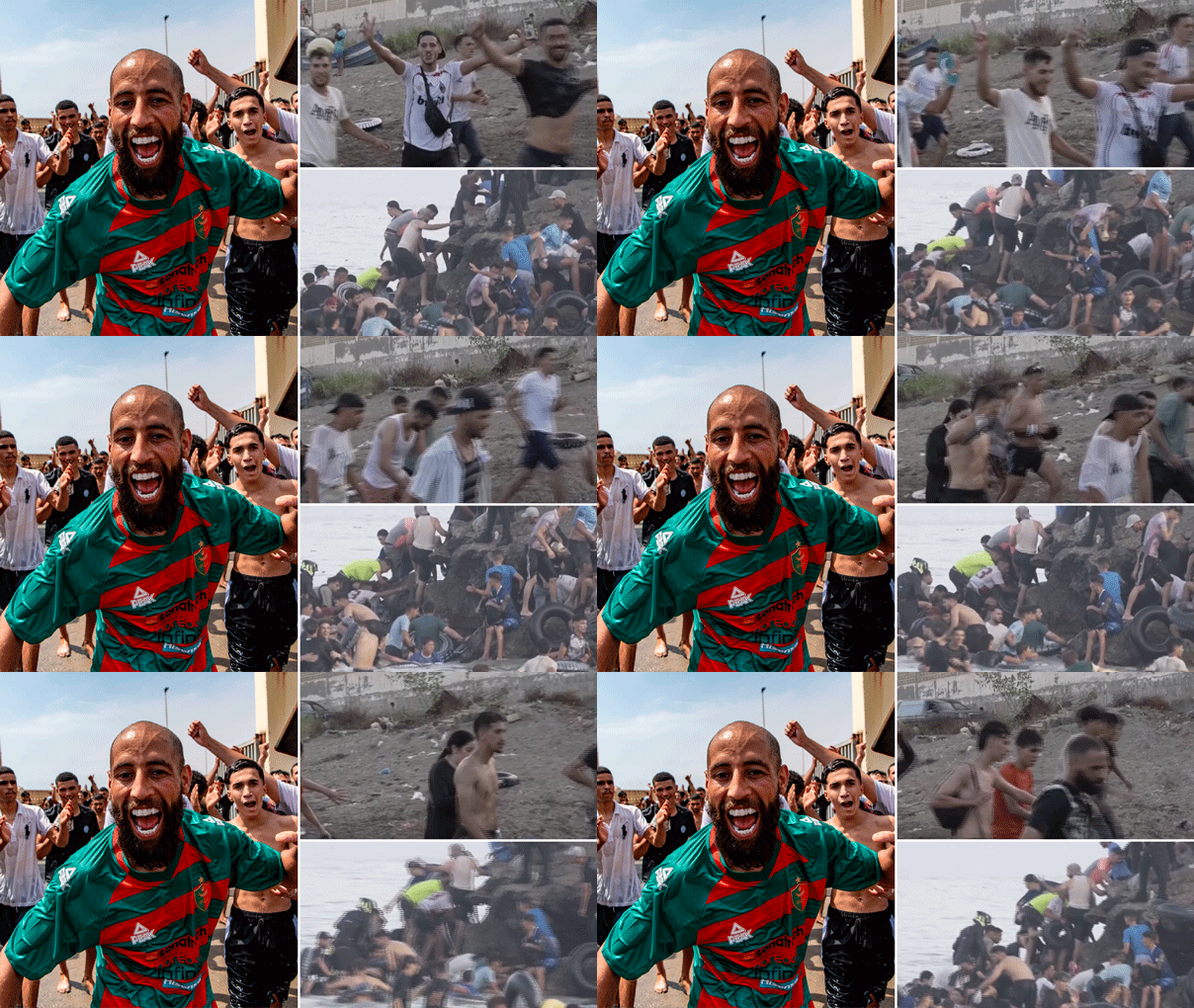
Key Highlights
- 🚨 Ceuta has been overwhelmed by a massive migrant surge from Morocco.
- 🇪🇸 Spain has deployed additional military and security personnel to help restore control.
- ⚠️ Dozens of migrants have reportedly died, with the death toll changing as authorities recover and identify victims.
- 🌊 Some migrants attempted to reach Ceuta by swimming around border defenses.
- 🇲🇦 The crisis has placed renewed pressure on Spain-Morocco relations.
- 🇪🇺 The incident is likely to intensify debate over EU migration policy and border security.
- 📊 Authorities and media have reported significantly different estimates of the number who crossed, making the final figure subject to verification.
Ceuta Border Crisis Explodes as 60,000 Migrants Enter Spain and Dozens Die in Chaotic Breach
A dramatic migration crisis has unfolded in Ceuta, Spain’s small North African enclave, after a huge surge of migrants attempted to enter Spanish territory from neighboring Morocco, overwhelming local authorities and triggering the deployment of Spanish military and security forces.
According to Ceuta’s president, around 60,000 migrants entered the territory over a roughly 24-hour period, while at least 34 people were reported dead in the latest updates. However, figures have changed rapidly as authorities assess the situation, and different reports have cited substantially lower numbers of people who actually crossed.
The unprecedented scenes have transformed one of Europe’s most sensitive migration borders into an international crisis.
What Happened at the Ceuta Border?
Ceuta sits on the northern coast of Africa but is part of Spain and therefore represents one of Europe’s most strategically sensitive borders.
Overnight, large numbers of people gathered on the Moroccan side near Fnideq, attempting to enter Ceuta.
When the main crossing became heavily secured, groups reportedly attempted alternative routes along the coast.
Some tried to swim around the border infrastructure.
Others moved through areas near the Tarajal beach crossing.
The situation rapidly deteriorated as crowds overwhelmed local security resources. Reuters reported that thousands gathered overnight and that groups tried alternative coastal routes after the principal crossing was blocked.
The Death Toll Is Rising
The most tragic part of the crisis has been the number of people who have died.
Initial reports cited nine deaths, but later reporting from the Associated Press and Washington Post put the toll considerably higher, with the Washington Post reporting at least 34 deaths in its latest update.
Many of the deaths occurred amid attempts to cross difficult coastal terrain and water routes.
The circumstances are still developing, and authorities are expected to continue recovering and identifying victims.
The rapidly changing figures mean reports should be treated as preliminary until Spanish and Moroccan authorities provide a consolidated final tally.
Why Did Migrants Try to Swim Into Ceuta?
Ceuta is separated from Morocco by a heavily secured border.
When security forces reinforced the primary crossing, some migrants attempted to find alternative routes.
That included moving toward the coast and trying to swim around sections of the border infrastructure.
This created an extremely dangerous situation.
Large numbers of people attempting to enter the water simultaneously can quickly produce:
- Panic
- Stampedes
- Drowning
- Injuries
- Separation of families
- Rescue difficulties
Reuters reported that the coastal attempts contributed to scenes of panic and that bodies were subsequently recovered.
Spain Deploys the Military
The scale of the emergency prompted Spain to deploy military personnel alongside police and border forces.
The objective was to reinforce security and help authorities regain control of the territory.
Ceuta is already home to Spanish military forces because of its strategic position.
But the sheer size of the reported influx created an extraordinary challenge.
The crisis has demonstrated how quickly a relatively small territory can become overwhelmed when thousands of people arrive simultaneously.
Why Ceuta Matters to Europe
Ceuta is not simply a Spanish city.
It is one of the European Union’s most important border points with Africa.
The territory is located on the North African coast, surrounded by Morocco and the Mediterranean.
Its geography makes it a natural focal point for people seeking entry into Europe.
For Spain and the EU, Ceuta therefore represents a critical test of:
Border security + migration policy + humanitarian protection.
The Numbers Are Extraordinary — But Need Context
The reported 60,000 figure has generated enormous attention.
Ceuta’s president said approximately 60,000 migrants had entered the territory during the crisis period.
However, other reporting has described substantially smaller numbers of people actually crossing into Ceuta.
Reuters, for example, reported Spanish television estimates that around 2,000–3,000 people crossed on Thursday, while thousands more gathered around the border.
That discrepancy is important.
The crisis is still unfolding, and the distinction between:
- People gathered near the border
- People who attempted to cross
- People who entered Ceuta
- People who were subsequently returned
can dramatically change the headline number.
The final verified figure will likely become clearer after authorities complete their assessment.
Morocco Is Also Facing a Major Security Challenge
The crisis isn’t occurring solely on the Spanish side.
Moroccan authorities have attempted to prevent large groups from reaching the border.
Reuters reported clashes and the use of water cannons as Moroccan security forces tried to control crowds near the crossing.
Vehicles were also reportedly set on fire during the unrest.
The incident therefore represents a major security challenge for both countries.
Why This Could Become a Political Crisis
Migration is already one of Europe’s most politically sensitive issues.
A mass border breach involving tens of thousands of people — if the highest estimates are confirmed — could trigger renewed arguments over:
- EU external borders
- Asylum procedures
- Deportation policies
- Spain-Morocco cooperation
- Border infrastructure
- Military deployment
- Humanitarian responsibilities
European governments have spent years trying to balance border control with international obligations toward asylum seekers and refugees.
The events in Ceuta could intensify that debate dramatically.
Spain and Morocco Have a Complicated Border Relationship
Spain and Morocco cooperate extensively on migration control.
Morocco plays a crucial role in preventing irregular migration toward Spanish territory.
That makes the latest crisis diplomatically important.
Spain needs cooperation from Moroccan authorities to manage migration flows.
Morocco, meanwhile, has its own domestic political and economic considerations.
Any major deterioration in border cooperation could have consequences far beyond Ceuta.
The Humanitarian Cost
Behind the enormous numbers are individual families and people making dangerous decisions.
The deaths demonstrate the risks associated with irregular migration routes.
When people believe a border opportunity has opened, large crowds can form rapidly.
That can turn a migration attempt into a mass-casualty event.
Women, children and families were reportedly among those involved in the movement toward Ceuta.
For humanitarian organizations, the priority is likely to be protecting vulnerable people while ensuring that those seeking asylum have access to appropriate procedures.
Could This Trigger a Wider EU Response?
That remains uncertain.
But Ceuta is an EU external-border issue, meaning Spain’s response can quickly become a European political question.
The European Union has been under pressure for years to develop a more coordinated migration system.
The latest crisis could renew calls for:
- Stronger external border controls
- More financial support for frontline countries
- Faster asylum processing
- Greater cooperation with North African states
- More effective returns for people without legal grounds to remain
- Stronger search-and-rescue capabilities
The challenge is finding a policy that addresses security concerns without creating additional humanitarian risks.
What Happens to the Migrants Who Entered?
Authorities must determine each person’s legal status.
Depending on individual circumstances, people may face:
- Registration
- Identity checks
- Asylum procedures
- Temporary accommodation
- Transfer
- Return to Morocco where legally permitted
The process can be complicated because international and European asylum protections apply to eligible individuals.
That means a mass arrival cannot simply be treated as a conventional border-security incident.
Why the Ceuta Crisis Could Matter for Markets
At first glance, this appears unrelated to financial markets.
But large migration crises can create broader economic consequences.
Governments may increase spending on:
- Border security
- Infrastructure
- Police
- Military deployment
- Refugee accommodation
- Emergency services
Political instability can also affect investor sentiment.
For businesses operating around European transport, tourism and logistics networks, prolonged disruption can create additional costs.
The immediate financial impact of this particular crisis is likely to be limited compared with major geopolitical events, but its political consequences could be much larger.
The Bigger European Migration Question
The Ceuta crisis highlights a fundamental problem Europe has struggled with for years:
How do you secure an external border while protecting people who may have legitimate humanitarian claims?
There is no simple answer.
Tighter borders can reduce irregular crossings but may push migrants toward more dangerous routes.
Looser access can reduce some physical risks but may increase pressure on European reception systems.
And when thousands attempt to cross simultaneously, even well-prepared authorities can face extraordinary challenges.
What Happens Next?
The immediate priorities are likely to be:
1. Restoring border control
Spanish and Moroccan forces will continue securing the frontier.
2. Searching for survivors
Rescue teams will continue dealing with people who attempted dangerous crossings.
3. Confirming the death toll
Authorities will need to identify victims and establish the final number of deaths.
4. Processing migrants
Those who entered Ceuta will face legal and administrative procedures.
5. Investigating the breach
Authorities will need to establish how such a massive crowd reached the border and whether security failures contributed.
6. Diplomatic discussions
Madrid and Rabat will likely face pressure to prevent another escalation.
Final Thoughts
The Ceuta border crisis has become one of Europe’s most dramatic migration emergencies in years.
Reports of tens of thousands of people entering or attempting to enter the Spanish enclave, combined with a rapidly rising death toll, have placed enormous pressure on Spanish and Moroccan authorities.
But the numbers are still developing, and reports differ substantially over how many people actually crossed the border.
What is beyond dispute is the humanitarian cost.
People died attempting to reach European territory.
Spain has deployed additional forces.
Morocco is struggling to contain the crowds.
And Europe is once again confronting the difficult intersection of migration, border security, diplomacy and humanitarian responsibility.
The biggest question now is whether Ceuta becomes a one-off crisis — or the beginning of a much larger confrontation over Europe’s migration policy.
❓ FAQs
What happened in Ceuta?
A huge group of migrants gathered near the Morocco-Ceuta border and attempted to enter Spanish territory through land and coastal routes, overwhelming authorities.
How many migrants entered Ceuta?
Reports vary significantly. Ceuta’s president said around 60,000 entered over 24 hours, while other reports have given much lower estimates for actual crossings. The situation remains fluid.
How many people died?
The reported death toll has changed rapidly. The latest Associated Press and Washington Post reports cited at least 34 deaths, while earlier reports had cited nine or 18.
Why did migrants try to swim into Ceuta?
After the main border crossing was heavily secured, some groups attempted alternative coastal routes, including swimming around border defenses.
Did Spain deploy the military?
Yes. Spain deployed military personnel alongside police and security forces following the mass border breach.
Where is Ceuta?
Ceuta is a Spanish territory on the North African coast, bordering Morocco.
Why is Ceuta important?
It is one of the EU’s land borders with Africa and a major entry point for people attempting to reach European territory.
Could this affect EU migration policy?
Potentially. A crisis of this scale could intensify political pressure for stronger EU border controls, asylum reforms and greater cooperation with North African countries.
📰 About The Business Now
The Business Now delivers coverage of global politics, business, finance, geopolitics, markets and major international developments with fact-based reporting and analysis.
🪙 Check Live Gold Prices
Track Gold, Silver, Platinum and Palladium prices, historical charts, calculators and daily market updates at:
🌐 External Resources
- Associated Press — Latest reporting on the Ceuta border breach and deaths.
- Reuters — Reporting on the overnight unrest and coastal crossings.
- The Washington Post — Latest reported estimates of crossings and casualties.
- European Parliament — Background on EU migration and Ceuta.
Keep reading
Related Articles
 Commodities
Oil Nears $95: Could the Iran War Trigger a New U.S. Inflation Shock?
Oil at $95 Is Not the Real Story A crude-oil headline is easy to write: “Oil prices rise as Iran tensions escalate.” Reuters, Bloomberg, CNBC and WSJ can publish that story within minutes. But for TheBusinessNow, that isn’t enough. The bigger question is: What happens to the American economy if oil stays near $95 —...
 Economy
U.S. National Debt Hits $40 Trillion: Why Treasury Yields Are Rising Again
The $40 Trillion Number Is Not the Whole Story The United States has crossed a psychological and financial milestone. $40 trillion. But simply writing “America owes $40 trillion” misses the more important story. The real question for markets is: Who is willing to finance America’s growing debt — and at what interest rate? That question...
 Commodities
Strait of Hormuz Standoff: The Oil Shock That Could Hit the U.S. Economy Next
Strait of Hormuz Standoff: Why the Oil Market Is Getting Nervous Again The oil market is being forced to price a problem that seemed to be easing only weeks ago: the Strait of Hormuz is still not reliably functioning as a normal commercial shipping route. On August 19, Brent crude was trading around $91.20 a...
Comments (0)