
China’s Next-Generation Fighter Stuns With New Maneuvers as U.S. Sixth-Gen Programs Race to Catch Up
China’s Next-Generation Fighter Stuns With New Maneuvers as U.S. Sixth-Gen Programs Race to Catch Up China’s latest sixth-generation fighter developments are putting a new spotlight on the global race for next-generation airpower. Reports of an advanced Chinese aircraft demonstrating unusual maneuvers come as the United States accelerates its own sixth-generation programs, including the Air Force’s...
TheBusinessNow
Aug 16, 2026 · 3 min Read
Key Highlights
- Reports say a Chinese sixth-generation aircraft has demonstrated unusual and highly advanced flight maneuvers.
- The reported demonstration adds pressure to the already intense U.S.-China competition in advanced military aviation.
- The United States is developing the F-47 for the Air Force and F/A-XX for the Navy.
- Congress dramatically increased funding for the Navy's F/A-XX program after an initial $74 million FY2026 request.
- Congressional appropriators moved approximately $897 million toward F/A-XX development, according to Defense One.
- The broader U.S. sixth-generation strategy is increasingly focused on systems of systems, rather than one fighter operating independently.
China’s Next-Generation Fighter Stuns With New Maneuvers as U.S. Sixth-Gen Programs Race to Catch Up
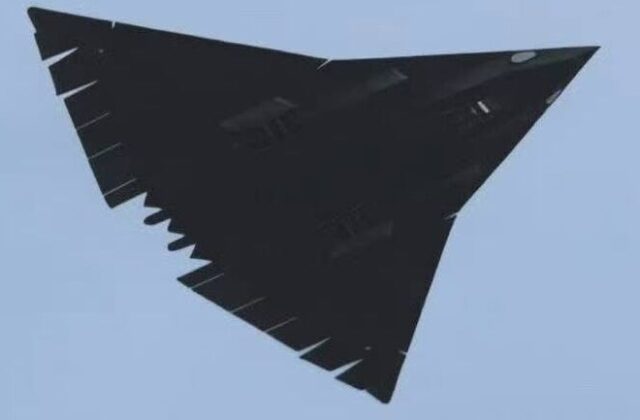
China’s latest sixth-generation fighter developments are putting a new spotlight on the global race for next-generation airpower. Reports of an advanced Chinese aircraft demonstrating unusual maneuvers come as the United States accelerates its own sixth-generation programs, including the Air Force’s F-47 and the Navy’s F/A-XX.
The significance goes beyond a single aircraft.
Sixth-generation combat aircraft are being designed around a broader concept of air warfare: stealth, sensors, networking, electronic warfare, long-range operations and integration with other aircraft and autonomous systems.
And the U.S. is now committing substantially more money to its own programs after Congress dramatically increased funding for the Navy’s F/A-XX program.
Important: Some of the performance claims surrounding China’s reported aircraft come from defense-media reporting and have not been independently verified through detailed official Chinese test data. The article below separates reported developments from confirmed U.S. program information.
China’s Sixth-Generation Fighter Is Drawing Global Attention
The latest reports from China have renewed questions about how quickly Beijing is progressing with its next-generation combat-aircraft programs.
Military Watch Magazine reported that a Chinese sixth-generation aircraft demonstrated what it described as unprecedented maneuvers.
The report is notable because maneuverability is only one component of sixth-generation aircraft development.
Modern airpower is moving toward aircraft that can operate as highly connected nodes, sharing information with other aircraft, unmanned systems and sensors.
That makes it difficult to judge the significance of an aircraft purely by what it can do during a short flight demonstration.
The bigger question is:
How much of the aircraft’s complete combat architecture is already operational?
Publicly available information cannot answer that with certainty.
What Makes a Fighter “Sixth Generation”?
There is no universally agreed checklist defining a sixth-generation fighter.
However, programs around the world increasingly emphasize several common characteristics.
Advanced stealth
Future aircraft are expected to have increasingly sophisticated approaches to reducing their radar, infrared and other signatures.
Sensor fusion
Rather than relying on individual sensors, the aircraft can combine information from multiple sources to create a more comprehensive picture of the battlespace.
Networked warfare
The fighter becomes part of a larger network involving other aircraft, satellites, ships, ground systems and unmanned platforms.
Autonomous teaming
Uncrewed aircraft can potentially operate alongside crewed fighters, expanding sensing and mission capabilities.
Electronic warfare
Future fighters are expected to have significantly greater ability to operate in environments where communications, radar and navigation systems are contested.
Long-range operations
The ability to detect and engage threats without entering heavily defended areas is increasingly important.
These characteristics help explain why the sixth-generation competition is much bigger than a traditional aircraft race.
The U.S. Is Building Two Major Sixth-Generation Fighter Programs
America’s response involves two major programs.
Air Force F-47
The Air Force’s F-47 is being developed as its next-generation fighter.
Congress has provided substantial funding for the program, with the FY2026 budget and subsequent legislation directing billions toward the effort. Defense One reported that the 2027 request continued to prioritize rapid development and production of the F-47, with a first flight targeted for 2028.
The program is intended to replace or complement existing fifth-generation capabilities over time.
The Navy’s F/A-XX Nearly Faced a Major Funding Cut
The Navy’s situation has been more complicated.
The FY2026 budget request initially allocated only $74.3 million for the Next Generation Fighter program, formally identified as F/A-XX.
That was a dramatic reduction from previous funding levels.
The Pentagon’s approach reflected concerns about simultaneously developing multiple sixth-generation aircraft programs and the desire to prioritize the Air Force’s F-47.
But Congress pushed back.
Defense One reported that lawmakers increased F/A-XX funding from roughly $74 million to $897 million, with additional reconciliation funding bringing the total enacted support substantially higher.
The Senate Appropriations Committee likewise highlighted an increase of $897 million for F/A-XX in its FY2026 defense appropriations summary.
That makes the funding battle itself an important part of the sixth-generation story.
Why F/A-XX Matters
F/A-XX is intended to become the Navy’s next-generation carrier-based fighter and eventually replace capabilities currently provided by aircraft such as the F/A-18E/F Super Hornet.
The Navy’s challenge is different from the Air Force’s.
A carrier-based fighter has to operate from a moving ship, meaning factors such as range, carrier integration and survivability become critical.
The Navy has argued that a next-generation aircraft is needed to extend the effective reach of the carrier air wing.
USNI News previously reported that the Navy’s F/A-XX program was intended to replace portions of the legacy Super Hornet and Growler fleet and extend the operational range of carrier aviation.
Congress Has Now Sent a Clear Signal
The funding increase is important because it suggests lawmakers do not want the Navy’s sixth-generation fighter capability to disappear while the Air Force’s F-47 moves forward.
The Congressional spending package described F/A-XX as a sixth-generation strike fighter intended to provide advanced air-superiority capabilities for the fleet.
That creates a two-track American approach:
F-47 → Air Force
F/A-XX → Navy
Both programs are competing for money, engineering talent and industrial capacity.
Northrop Grumman Is Also Expanding Its Advanced Aerospace Footprint
Northrop Grumman is one of the major U.S. companies involved in advanced military aviation.
Its B-21 Raider program is particularly relevant to the broader sixth-generation discussion.
Northrop describes the B-21 as a sixth-generation aircraft built around stealth, advanced networking and an open systems architecture.
That highlights an important point.
The next generation of military aircraft is not necessarily defined by a single technological breakthrough.
Instead, it is about integrating multiple technologies into one operational architecture.
Northrop is also involved in experimental aircraft programs such as DARPA’s XRQ-73 SHEPARD, a hybrid-electric uncrewed aircraft that completed a flight demonstration in 2026.
The Real Race May Be Happening Behind the Aircraft
The most visually impressive part of the Chinese reports is the aircraft’s maneuvering.
But maneuverability may not be the most important factor determining who leads the sixth-generation competition.
A modern combat aircraft could theoretically have extraordinary maneuverability and still be less effective than an aircraft with superior:
- sensors;
- electronic warfare;
- communications;
- software;
- data processing;
- stealth;
- range;
- weapons integration;
- autonomous teaming.
That is why analysts increasingly describe next-generation aircraft as systems of systems.
The fighter itself becomes one component in a much larger combat network.
China vs. U.S.: What Can Actually Be Compared?
A direct comparison remains difficult.
China has released limited public information about its newest aircraft programs.
The United States has also classified substantial details about the F-47 and F/A-XX.
That means publicly available photographs, flight videos and media reports can provide clues, but they cannot reveal the complete operational capability of either side.
For example, an aircraft’s external shape may provide clues about stealth design.
It does not reveal:
- radar performance;
- electronic-warfare capabilities;
- software architecture;
- classified sensors;
- communications resilience;
- actual weapons integration;
- or operational readiness.
Consequently, claims that one side has definitively “won” the sixth-generation race should be treated cautiously.
Why the Maneuvering Reports Still Matter
Even with those limitations, flight testing itself is significant.
Advanced maneuver demonstrations can provide evidence that an aircraft’s designers are testing aerodynamic configurations, flight-control systems and propulsion concepts beyond conventional fighter designs.
If China’s reported aircraft continues progressing through testing, the pressure on the U.S. defense establishment could increase.
The competition is ultimately about how quickly experimental designs can become reliable operational systems.
The Industrial Base Is Becoming a Major Battlefield
There is another issue that receives less attention: manufacturing capacity.
Sixth-generation aircraft require enormous investments in:
- advanced materials;
- semiconductor technology;
- sensors;
- propulsion;
- software;
- specialized manufacturing;
- testing infrastructure;
- and highly skilled engineering personnel.
This means simply allocating money to a program does not automatically produce an operational aircraft.
The United States is already attempting to expand its advanced aerospace infrastructure.
Northrop Grumman, for example, broke ground in July 2026 on a new facility at its Roy Innovation Center in Utah designed to support strategic deterrence and advanced aerospace missions.
The facility is part of a broader expansion of America’s aerospace and defense industrial capacity.
The U.S. Has More Than One Sixth-Generation Competition
The United States is not the only country developing next-generation aircraft.
The UK, Italy and Japan are also advancing the Global Combat Air Programme (GCAP).
The British government announced a £4.6 billion contract in July 2026 to advance the next phase of the multinational program, with the aircraft targeted for service from 2035.
That means the global sixth-generation race is becoming increasingly international.
Rather than one country developing one aircraft in isolation, several countries are creating competing technological ecosystems.
🔮 Outlook: The Sixth-Generation Race Is Accelerating
The latest Chinese maneuvering reports arrive at an important moment.
The U.S. is increasing investment in the F-47.
Congress has moved to strengthen the Navy’s F/A-XX program.
Northrop Grumman and other contractors continue investing in advanced aerospace infrastructure.
And international programs such as GCAP are moving forward.
The result is a rapidly changing combat-aircraft landscape.
The biggest question over the next several years won’t simply be:
“Which fighter is faster?”
It will be:
“Which country can turn advanced aircraft, autonomous systems, sensors, software and networks into a reliable combat ecosystem first?”
China’s reported flight demonstrations suggest Beijing wants to show that its development pace is accelerating.
Washington’s funding decisions show that U.S. lawmakers are unwilling to ignore the challenge.
The sixth-generation race is therefore entering a much more consequential phase — but the ultimate balance of capability remains impossible to determine from publicly available flight demonstrations alone.
🪙 Gold Market Watch
The sixth-generation fighter competition is not normally a direct driver of gold prices. However, major geopolitical developments can influence broader safe-haven demand, the U.S. dollar, Treasury yields and investor risk sentiment, all of which can affect precious metals.
For the latest gold-market information, readers can check GoldPriceNow.in — Live Gold Price.
No live gold price has been inserted here because a current price could not be independently verified during this article check.
❓ FAQs
What is a sixth-generation fighter?
A sixth-generation fighter is a broad term for next-generation combat aircraft incorporating advanced stealth, sensors, networking, electronic warfare, automation and integration with other platforms.
Does China have a sixth-generation fighter?
China has been conducting flight testing of highly advanced new combat-aircraft designs, and defense reports have described some as sixth-generation aircraft. However, the exact capabilities and operational status of China’s programs remain difficult to independently verify.
What is the U.S. sixth-generation fighter?
The United States is developing multiple next-generation fighter programs, most prominently the Air Force F-47 and Navy F/A-XX.
What is F/A-XX?
F/A-XX is the U.S. Navy’s next-generation carrier-based fighter program intended to replace future legacy carrier-air-wing capabilities.
How much money is the Navy receiving for F/A-XX?
The initial FY2026 request was approximately $74.3 million, while Congress subsequently moved to dramatically increase funding, with approximately $897 million added in the defense appropriations process.
Why did F/A-XX funding increase so dramatically?
Congress wanted to preserve the Navy’s sixth-generation fighter development rather than allowing the program to be significantly slowed while the Air Force’s F-47 received priority.
Is the B-21 a sixth-generation aircraft?
Northrop Grumman itself describes the B-21 Raider as the world’s first sixth-generation aircraft and emphasizes its stealth, networking and open-systems architecture.
Is China ahead of the United States in sixth-generation fighters?
There is not enough publicly verified information to make a definitive determination. Flight demonstrations reveal only part of an aircraft’s overall combat capability.
What makes sixth-generation fighters different?
The biggest difference is the emphasis on an integrated combat ecosystem involving the aircraft, sensors, networks, autonomous systems, electronic warfare and other platforms.
When will the next-generation fighters enter service?
Timelines vary by program. The U.S. F-47 is being developed on an accelerated schedule, while the multinational GCAP program is targeting service entry from 2035.
Where can I check the live gold price?
You can check GoldPriceNow.in for current gold-price information.
🌐 Key Resources
- Northrop Grumman — B-21 Raider
- Northrop Grumman — XRQ-73 SHEPARD
- DARPA — XRQ-73 Flight Demonstration
- Defense One — F-47 and F/A-XX Funding
- U.S. Senate Appropriations Committee — FY2026 Defense Appropriations
- HigherGov — Navy Next Generation Fighter Budget
- UK Government — GCAP Next-Generation Fighter Investment
- GoldPriceNow.in — Live Gold Price
Keep reading
Related Articles
 Crypto
₿ Bitcoin Breaks Above $72,000: Why Trump’s Crypto Push Is Sending Crypto Stocks Higher
Bitcoin’s $72,000 Move Is Bigger Than Bitcoin A typical crypto headline would be: Bitcoin jumps above $72,000. But that misses the most important part of today’s move. The interesting part is the simultaneous rally in: Bitcoin ↓ Coinbase ↓ Strategy ↓ Circle ↓ Robinhood ↓ Bitcoin miners ↓ Crypto infrastructure That tells us investors aren’t...
 Commodities
Oil Nears $95: Could the Iran War Trigger a New U.S. Inflation Shock?
Oil at $95 Is Not the Real Story A crude-oil headline is easy to write: “Oil prices rise as Iran tensions escalate.” Reuters, Bloomberg, CNBC and WSJ can publish that story within minutes. But for TheBusinessNow, that isn’t enough. The bigger question is: What happens to the American economy if oil stays near $95 —...
 Economy
U.S. National Debt Hits $40 Trillion: Why Treasury Yields Are Rising Again
The $40 Trillion Number Is Not the Whole Story The United States has crossed a psychological and financial milestone. $40 trillion. But simply writing “America owes $40 trillion” misses the more important story. The real question for markets is: Who is willing to finance America’s growing debt — and at what interest rate? That question...
Comments (0)