
IMD’s New Heavy Rain Warning: Is India About to Face the Strongest Monsoon Spell of 2026? States on High Alert
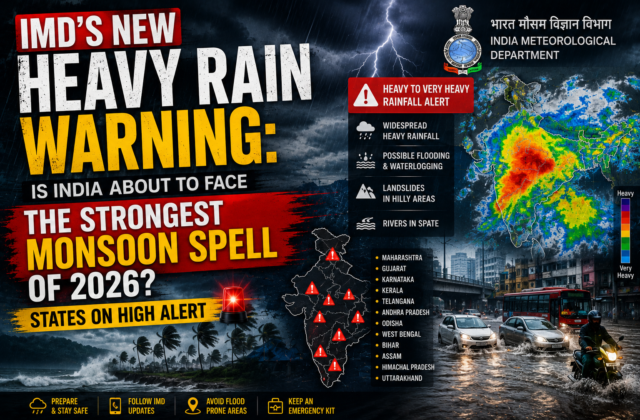
IMD’s New Heavy Rain Warning: Is India About to Face the Strongest Monsoon Spell of 2026? States on High Alert After weeks of uneven rainfall across many parts of the country, the India Meteorological Department (IMD) says the southwest monsoon has regained momentum, bringing with it a fresh spell of heavy to very heavy rainfall...
TheBusinessNow
Jul 21, 2026 · 3 min Read
Key Highlights
- 🌧️ IMD has issued heavy to very heavy rainfall alerts across multiple states.
- ⚠️ The southwest monsoon has regained strength after a relatively uneven phase.
- 🚗 Urban flooding, traffic congestion, and transport disruptions remain major concerns.
- ✈️ Flights and train services may experience delays in affected regions.
- 🌾 The active monsoon could benefit agriculture but also increase flood risks.
- 🌊 River levels, landslides, and waterlogging will be closely monitored over the coming days.
- 📢 Residents are advised to follow official weather updates and district-level alerts for the latest information.
IMD’s New Heavy Rain Warning: Is India About to Face the Strongest Monsoon Spell of 2026? States on High Alert
After weeks of uneven rainfall across many parts of the country, the India Meteorological Department (IMD) says the southwest monsoon has regained momentum, bringing with it a fresh spell of heavy to very heavy rainfall across several states. The warning comes as many cities are already dealing with waterlogging, traffic congestion, disrupted transport, and the risk of localized flooding.
For millions of Indians, this is more than just another weather update. The latest forecast could affect daily commuting, air travel, agriculture, businesses, and disaster management efforts over the coming days.
The key question now is not whether it will rain—but how intense this monsoon spell could become and which regions are most vulnerable.
Why Has the Monsoon Become Active Again?
Meteorologists explain that the southwest monsoon is being strengthened by favorable atmospheric conditions, including:
- Increased moisture flow from the Bay of Bengal.
- Strengthening monsoon winds.
- An active monsoon trough stretching across northern India.
- Localized low-pressure systems enhancing rainfall.
When these systems align, they often produce prolonged periods of widespread rainfall rather than isolated showers.
States Under Heavy Rain Alert
According to the latest IMD forecast, heavy to very heavy rainfall is expected across several regions, including parts of:
- West Bengal
- Bihar
- Jharkhand
- Odisha
- Assam
- Meghalaya
- Arunachal Pradesh
- Uttar Pradesh
- Uttarakhand
- Himachal Pradesh
- Punjab
- Haryana
- Delhi-NCR (isolated heavy showers)
- Madhya Pradesh
- Chhattisgarh
Rainfall intensity may vary by district, with some areas expected to receive significantly higher accumulations than neighboring regions.
Major Cities Could Face Disruptions
Urban flooding remains one of the biggest concerns during intense monsoon spells.
Cities with dense populations often experience:
- Waterlogged roads.
- Traffic gridlock.
- Delayed public transport.
- Flight disruptions.
- Temporary closure of underpasses.
- Overflowing drainage systems.
Recent heavy rainfall has already affected airport access and road connectivity in parts of eastern India, demonstrating how quickly severe weather can disrupt urban life.
Transportation Could Be the Biggest Challenge
Heavy rainfall affects almost every mode of transport.
Roads
Low-lying roads may become impassable due to waterlogging.
Railways
Flooded tracks and poor visibility can lead to train delays.
Air Travel
Thunderstorms, poor visibility, and runway water accumulation may result in flight delays or diversions.
Passengers are advised to check travel updates before leaving for airports or railway stations.
Flood Risk Is Increasing
Continuous rainfall over several days significantly increases flood potential.
The highest risks include:
- Overflowing rivers.
- Flash floods in hilly terrain.
- Urban flooding.
- Landslides in mountainous regions.
- Damage to roads and bridges.
District administrations in vulnerable areas often increase monitoring once IMD issues heavy rainfall alerts.
Agriculture Could See Mixed Effects
The renewed monsoon offers both opportunities and challenges.
Positive Impact
- Improved soil moisture.
- Better reservoir replenishment.
- Stronger kharif crop growth.
- Improved groundwater recharge.
Risks
- Crop waterlogging.
- Soil erosion.
- Delayed harvesting in some regions.
- Increased pest and disease outbreaks due to humidity.
Farmers are encouraged to follow local agricultural advisories and weather bulletins.
Impact on Businesses
Heavy rainfall affects more than transportation.
Businesses may face:
- Supply chain delays.
- Reduced retail footfall.
- Construction interruptions.
- Logistics bottlenecks.
- Delivery delays for e-commerce.
On the other hand, sectors such as agriculture, irrigation equipment, and weather-related services may benefit from improved rainfall.
How Climate Change Is Influencing Rainfall
Scientists increasingly observe that monsoon rainfall is becoming more erratic.
Instead of steady seasonal rain, many regions now experience:
- Longer dry spells.
- Short periods of extremely intense rainfall.
- Higher frequency of localized flooding.
- Greater weather variability.
While individual rainfall events cannot be attributed to climate change alone, research indicates that a warming atmosphere can increase the intensity of heavy rainfall episodes.
What Residents Should Do
Authorities recommend simple precautions during heavy rain alerts:
- Avoid driving through flooded roads.
- Monitor official weather updates.
- Keep emergency supplies available.
- Charge electronic devices.
- Stay away from swollen rivers and drainage channels.
- Follow local evacuation instructions if issued.
People living in landslide-prone areas should remain especially alert during continuous rainfall.
Economic Impact of an Active Monsoon
A healthy monsoon remains vital for India’s economy.
It influences:
| Sector | Potential Impact |
|---|---|
| Agriculture | Improved crop conditions if rainfall is well distributed |
| Food Prices | Better harvests may ease inflation over time |
| Reservoirs | Increased water storage |
| Hydropower | Improved electricity generation potential |
| Rural Economy | Higher agricultural activity |
However, excessive rainfall can offset some of these benefits by damaging crops and infrastructure.
What to Watch Over the Next 72 Hours
Weather conditions can evolve rapidly.
Key indicators include:
- Expansion of heavy rain zones.
- River water levels.
- Urban flooding reports.
- Flight and railway advisories.
- District-level weather warnings.
- Landslide alerts in hilly regions.
Residents should rely on official forecasts rather than rumors circulating on social media.
Final Analysis
The latest IMD warning signals that the southwest monsoon has entered another active phase, bringing both relief and risk.
For farmers, the rainfall could support crops and replenish water resources.
For cities, however, intense downpours may test drainage systems, disrupt transportation, and increase flood risks.
The coming days will depend not only on how much rain falls, but also on how effectively local authorities, infrastructure, and communities respond.
With millions of people expected to be affected directly or indirectly, staying informed and prepared will be just as important as watching the weather itself.
Frequently Asked Questions (FAQs)
Which states are under the latest IMD heavy rain alert?
The alert covers several states across North, East, Northeast, and Central India, with rainfall intensity varying by district.
Why has the monsoon become active again?
Meteorologists attribute the renewed activity to favorable atmospheric conditions, including increased moisture flow, an active monsoon trough, and localized low-pressure systems.
Can heavy rainfall disrupt flights and trains?
Yes. Poor visibility, waterlogging, and thunderstorms may lead to delays or cancellations, depending on local conditions.
Is flooding expected?
Localized flooding is possible in low-lying urban areas and river basins that receive prolonged heavy rainfall.
How can people stay safe?
Follow official IMD advisories, avoid flooded roads, monitor local administration updates, and prepare for possible travel disruptions.
About TheBusinessNow
TheBusinessNow delivers analysis of business, economics, public policy, governance, geopolitics, commodities, and markets. Our reporting focuses on verified information, multiple perspectives, and evidence-based analysis that helps readers understand the forces shaping India and the global economy.
Keep reading
Related Articles
 Business
Japan’s Bond Market Is Sending a Warning: 10-Year Yields Near 3% Put the BOJ and Government Under Pressure
Japan’s Bond Market Is Sending a Warning: 10-Year Yields Near 3% Put the BOJ and Government Under Pressure Japan’s once-unthinkably low borrowing costs are disappearing. As the 10-year Japanese government bond yield approaches 3%, investors are reassessing inflation, government spending, the yen and the next move from the Bank of Japan. Japan’s bond market is...
 Global
US–South Korea Military Drills Cut Short: Trump’s Kim Jong Un Strategy Raises New Questions for the Alliance
US–South Korea Military Drills Cut Short: Trump’s Kim Jong Un Strategy Raises New Questions for the Alliance The United States and South Korea are abruptly scaling back their major joint military exercises, putting a spotlight on the changing security relationship between Washington, Seoul and Pyongyang. The annual Ulchi Freedom Shield exercise was originally scheduled to...
 Opinion
Broadway Week 2026 Returns: 25 Shows Join NYC’s 2-for-1 Ticket Rush — What to Know Before Tickets Sell Out
Broadway Week 2026 Returns: 25 Shows Join NYC’s 2-for-1 Ticket Rush — What to Know Before Tickets Sell Out Broadway Week 2026 is back, and theater fans have another chance to see some of New York City’s biggest stage productions at a significantly lower price. The fall edition is bringing a 2-for-1 ticket promotion to...
Comments (0)