
Bitcoin Drops Below $63K After Trump-Iran Tensions Shake Global Markets
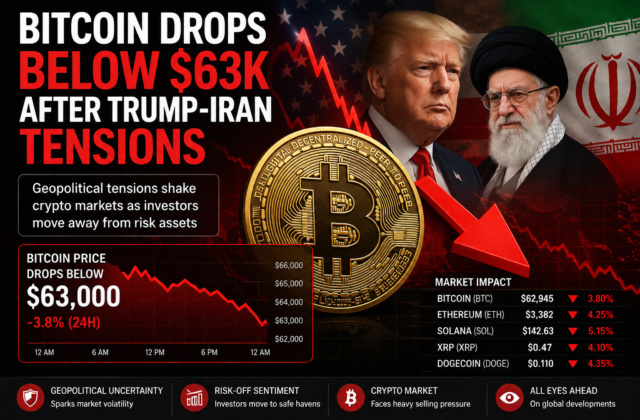
Bitcoin came under renewed selling pressure after geopolitical tensions escalated following remarks by U.S. President Donald Trump regarding Iran, sending shockwaves through global financial markets. The world’s largest cryptocurrency briefly fell below the $63,000 mark as investors reduced exposure to riskier assets amid growing uncertainty. The decline was not limited to Bitcoin. Major cryptocurrencies, including...
Phill How
Jul 8, 2026 · 7 min Read
Key Highlights
- Bitcoin slipped below the $63,000 mark as rising U.S.-Iran tensions triggered a broad sell-off across global crypto markets.
- Geopolitical uncertainty pushed investors toward traditional safe-haven assets, weighing heavily on Bitcoin, Ethereum, Solana, and other major cryptocurrencies.
- The broader crypto market lost billions in market value as risk sentiment weakened following the latest international developments.
- Analysts say Bitcoin's short-term direction will depend on geopolitical updates, institutional ETF inflows, and upcoming U.S. economic data.
- Despite the sharp decline, many experts remain optimistic about Bitcoin's long-term outlook, citing continued institutional adoption and growing blockchain innovation.
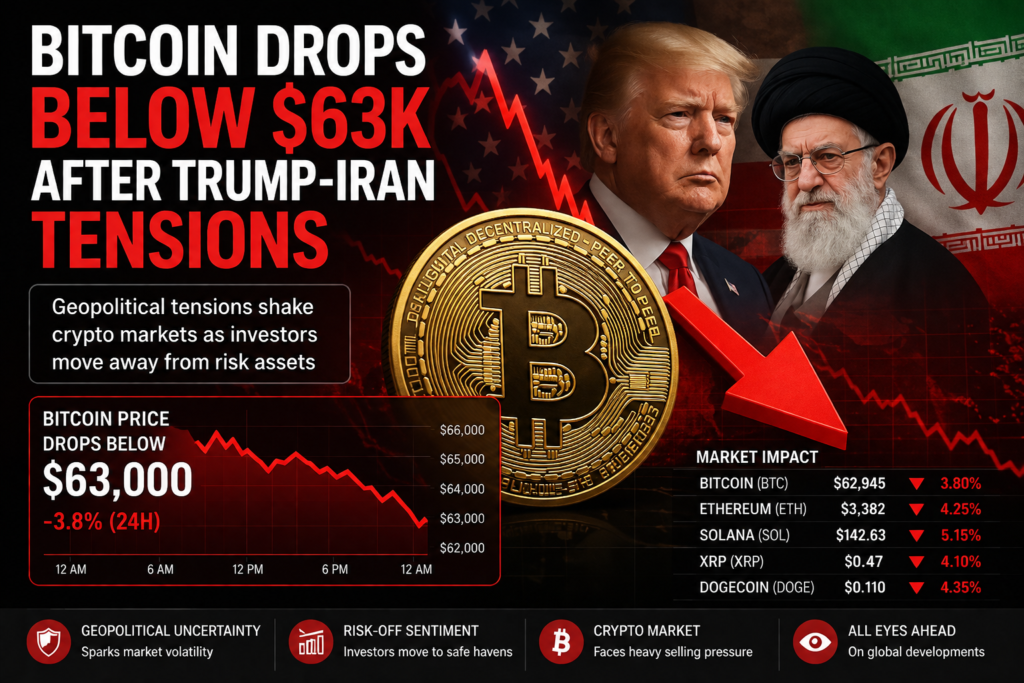
Bitcoin came under renewed selling pressure after geopolitical tensions escalated following remarks by U.S. President Donald Trump regarding Iran, sending shockwaves through global financial markets. The world’s largest cryptocurrency briefly fell below the $63,000 mark as investors reduced exposure to riskier assets amid growing uncertainty.
The decline was not limited to Bitcoin. Major cryptocurrencies, including Ethereum, Solana, XRP, and Dogecoin, also traded lower as market sentiment turned cautious. Analysts noted that periods of geopolitical instability often trigger a shift toward traditional safe-haven assets such as gold and the U.S. dollar, leading to increased volatility across the cryptocurrency market.
Why Did Bitcoin Fall?
The latest sell-off was largely driven by rising geopolitical concerns rather than changes in crypto fundamentals. Trump’s comments on the Middle East renewed fears of a broader regional conflict, prompting investors to adopt a more defensive stance.
Global equity markets also weakened, reflecting a broader “risk-off” sentiment. Cryptocurrencies, which are considered high-risk assets by many investors, were among the first to experience heavy selling pressure.
Altcoins Follow Bitcoin Lower
As Bitcoin declined, the broader crypto market also turned red.
Several leading digital assets recorded losses, including:
- Ethereum (ETH)
- Solana (SOL)
- XRP
- Dogecoin (DOGE)
- Cardano (ADA)
The overall cryptocurrency market capitalization slipped as traders reduced positions amid heightened uncertainty.
Market Experts Remain Optimistic
Despite the short-term decline, many analysts believe Bitcoin’s long-term outlook remains positive. Institutional adoption continues to grow, spot Bitcoin ETFs have attracted significant investor interest, and blockchain innovation remains strong.
Market experts suggest that geopolitical events often create temporary volatility, but Bitcoin has historically recovered from similar macroeconomic shocks over time.
What Investors Should Watch
In the coming days, crypto traders will closely monitor:
- Developments in the Middle East
- Statements from U.S. policymakers
- Global stock market performance
- Institutional investment flows
- Bitcoin ETF activity
- Upcoming economic data releases
These factors could determine whether Bitcoin stabilizes or experiences further price fluctuations.
Final Thoughts
Bitcoin’s drop below $63,000 highlights how sensitive cryptocurrency markets remain to global geopolitical events. While rising tensions between the United States and Iran have temporarily weakened investor confidence, the long-term outlook for digital assets continues to depend on institutional adoption, regulatory developments, and broader economic conditions.
As volatility remains elevated, investors are likely to keep a close eye on both geopolitical headlines and macroeconomic indicators before making their next move.
About TheBusinessNow
TheBusinessNow delivers global coverage of business, finance, technology, geopolitics, commodities, and economic trends. Our goal is to provide readers with original, fact-based analysis that explains how world events shape markets and investment decisions.
Keep reading
Related Articles
 Crypto
₿ Bitcoin Breaks Above $72,000: Why Trump’s Crypto Push Is Sending Crypto Stocks Higher
Bitcoin’s $72,000 Move Is Bigger Than Bitcoin A typical crypto headline would be: Bitcoin jumps above $72,000. But that misses the most important part of today’s move. The interesting part is the simultaneous rally in: Bitcoin ↓ Coinbase ↓ Strategy ↓ Circle ↓ Robinhood ↓ Bitcoin miners ↓ Crypto infrastructure That tells us investors aren’t...
 Finance
Walmart Stock Plunges 6%: What Its Weak Outlook Says About the U.S. Consumer
Walmart Stock Plunges 6% — But the Earnings Were Not Actually Bad This is where the headline can be misleading. Walmart did not report a disastrous quarter. Quite the opposite. Revenue rose 5.9%, operating income increased 28.8%, e-commerce remained extremely strong and Walmart raised its full-year sales and profit expectations. Yet investors immediately sold the...
 Economy
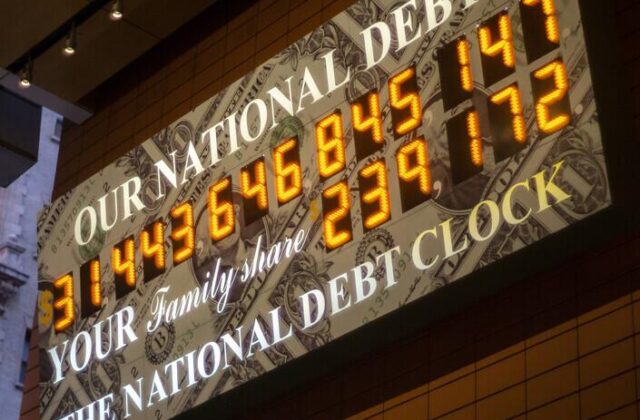
U.S. National Debt Hits $40 Trillion: Why Treasury Yields Are Rising Again
The $40 Trillion Number Is Not the Whole Story The United States has crossed a psychological and financial milestone. $40 trillion. But simply writing “America owes $40 trillion” misses the more important story. The real question for markets is: Who is willing to finance America’s growing debt — and at what interest rate? That question...
Comments (0)