
Rahul Gandhi Dragged Away During Protest: The Political Clash That Has Reignited India’s Democracy Debate
Rahul Gandhi Dragged Away During Protest: The Political Clash That Has Reignited India’s Democracy Debate Indian politics witnessed another dramatic day as Leader of the Opposition Rahul Gandhi, along with several Congress leaders including Priyanka Gandhi Vadra, was detained during a sit-in protest near the Prime Minister’s official residence in New Delhi. Images and videos...
TheBusinessNow
Jul 21, 2026 · 3 min Read
Key Highlights
- 🚨 Rahul Gandhi was detained during a protest near the Prime Minister's residence.
- 📢 The protest followed nationwide outrage over police action against student demonstrators.
- 📹 Images of Gandhi being removed by police spread rapidly across media and social platforms.
- ⚖️ Congress and the government have offered sharply different accounts of the incident.
- 🏛️ The episode has renewed debate over the balance between public order and the right to protest.
- 🇮🇳 The political fallout is expected to continue in Parliament and public discourse.
- 📊 The incident has become one of India's most closely watched political developments this week.
Rahul Gandhi Dragged Away During Protest: The Political Clash That Has Reignited India’s Democracy Debate
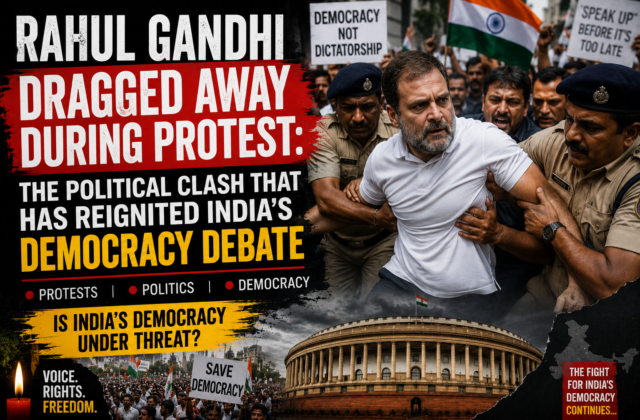
Indian politics witnessed another dramatic day as Leader of the Opposition Rahul Gandhi, along with several Congress leaders including Priyanka Gandhi Vadra, was detained during a sit-in protest near the Prime Minister’s official residence in New Delhi. Images and videos showing Rahul Gandhi being physically removed by police quickly spread across television and social media, intensifying a national debate over protest rights, policing, and political accountability.
The protest followed widespread public anger over the police action against students demonstrating over alleged examination irregularities a day earlier. While Congress described the police response as excessive and demanded accountability, the government argued that security restrictions near the Prime Minister’s residence had to be enforced.
The events have transformed what began as a student-led issue into one of the biggest political confrontations of the year.
Why Rahul Gandhi Led the Protest
Congress leaders organized the sit-in to demand answers from the government over the previous day’s clashes between police and protesters. Rahul Gandhi accused the government of failing to address public concerns and called for accountability over the handling of the demonstrations.
According to Congress, the protest was intended to highlight concerns about students and democratic rights. Government representatives, however, maintained that law enforcement acted to uphold security and public order around a highly protected zone.
The Dramatic Detention
Television footage and photographs showed Rahul Gandhi being removed by police personnel after refusing to leave the protest site. Congress later shared images that appeared to show him with a minor facial injury, while police detained several opposition leaders participating in the demonstration.
The visuals became the day’s defining political story, drawing strong reactions from supporters and critics alike.
Competing Narratives
The incident has produced sharply different interpretations.
Congress’s Position
Congress alleges that the detention and the earlier police action against protesters demonstrate an attempt to suppress democratic dissent and called for greater accountability.
Government’s Position
Government representatives have argued that the protest took place near one of India’s most sensitive security locations and that police acted within their responsibility to enforce restrictions. They have also criticized the opposition’s approach, saying it escalated confrontation rather than dialogue.
Why This Incident Matters Beyond Politics
The debate now extends beyond one protest.
It raises broader questions including:
- How should democratic societies balance security with the right to protest?
- What level of force is appropriate during political demonstrations?
- How can governments maintain public order while protecting constitutional freedoms?
These questions are not unique to India and are debated in democracies worldwide.
The Constitutional Dimension
Article 19 of the Indian Constitution guarantees freedoms including speech and peaceful assembly, subject to reasonable restrictions related to public order, security, and other constitutional grounds.
In practice, disputes often arise over where that balance should be drawn—particularly during politically sensitive protests.
The latest events have once again brought that constitutional debate into public focus.
Public Reaction
The images of Rahul Gandhi’s detention generated widespread discussion across television, digital platforms, and social media.
Supporters viewed the incident as symbolic of shrinking space for political protest.
Others argued that no individual, regardless of political position, is exempt from security rules near protected government installations.
The contrasting reactions illustrate the deep political polarization surrounding major national events.
What Could Happen Next?
Several developments are likely to shape the story in the coming days:
| Issue | What to Watch |
|---|---|
| Parliament | Debate over student protests and policing |
| Political Response | Statements from major parties |
| Public Opinion | Nationwide reaction and demonstrations |
| Legal Developments | Any petitions or inquiries arising from the protests |
Why Investors and Businesses Pay Attention
Political stability affects more than elections.
Major political confrontations can influence:
- Investor confidence.
- Policy discussions.
- Legislative priorities.
- International perceptions of governance.
While markets often look beyond short-term political events, sustained uncertainty can become a factor in broader economic sentiment.
The Bigger Picture
The detention of a sitting Leader of the Opposition has intensified an already heated national conversation.
For some, it reflects the need for stronger security enforcement around sensitive locations.
For others, it highlights concerns about how democratic dissent is managed.
Ultimately, the episode underscores the importance of transparent institutions, peaceful political engagement, and public confidence in constitutional processes.
Conclusion
Rahul Gandhi’s detention outside the Prime Minister’s residence has become far more than a single political incident.
It has reignited debates over democratic rights, public protest, policing, and accountability.
As investigations, parliamentary discussions, and political responses continue, the long-term significance of the episode will depend not only on partisan narratives but also on whether institutions are seen as addressing public concerns fairly and transparently.
In a democracy, moments of confrontation often become moments of reflection—and this may prove to be one of them.
Frequently Asked Questions (FAQs)
Why was Rahul Gandhi detained?
Rahul Gandhi and other opposition leaders were detained during a protest near the Prime Minister’s residence after police intervened to enforce security restrictions.
What was the protest about?
The protest was organized following police action against student demonstrators who were protesting over alleged examination irregularities.
Did Rahul Gandhi sustain an injury?
Congress released images showing Rahul Gandhi with a minor facial injury after the detention. Authorities have not publicly characterized the injury beyond the events surrounding the protest.
What is the government’s position?
Government representatives have said security restrictions around the Prime Minister’s residence were enforced and criticized the opposition’s approach to the protest.
Why has the incident attracted national attention?
The detention of the Leader of the Opposition, combined with the earlier student protests, has sparked a wider debate about democratic rights, policing, and political accountability.
About TheBusinessNow
TheBusinessNow delivers analysis of business, economics, public policy, governance, geopolitics, commodities, and markets. Our reporting focuses on verified information, multiple perspectives, and evidence-based analysis that helps readers understand the forces shaping India and the global economy.
Keep reading
Related Articles
 Commodities
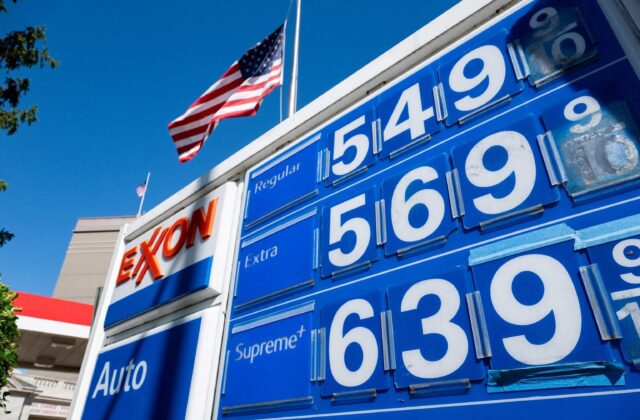
Oil Nears $95: Could the Iran War Trigger a New U.S. Inflation Shock?
Oil at $95 Is Not the Real Story A crude-oil headline is easy to write: “Oil prices rise as Iran tensions escalate.” Reuters, Bloomberg, CNBC and WSJ can publish that story within minutes. But for TheBusinessNow, that isn’t enough. The bigger question is: What happens to the American economy if oil stays near $95 —...
 Economy
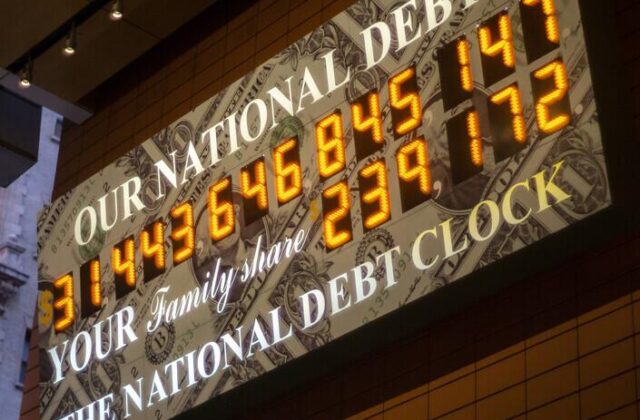
U.S. National Debt Hits $40 Trillion: Why Treasury Yields Are Rising Again
The $40 Trillion Number Is Not the Whole Story The United States has crossed a psychological and financial milestone. $40 trillion. But simply writing “America owes $40 trillion” misses the more important story. The real question for markets is: Who is willing to finance America’s growing debt — and at what interest rate? That question...
 Commodities
Strait of Hormuz Standoff: The Oil Shock That Could Hit the U.S. Economy Next
Strait of Hormuz Standoff: Why the Oil Market Is Getting Nervous Again The oil market is being forced to price a problem that seemed to be easing only weeks ago: the Strait of Hormuz is still not reliably functioning as a normal commercial shipping route. On August 19, Brent crude was trading around $91.20 a...
Comments (0)