
Todd Blanche Refuses to Pledge DOJ Independence From Trump: Why His Answer Is Triggering a New Washington Fight
Todd Blanche Refuses to Pledge DOJ Independence From Trump: Why His Answer Is Triggering a New Washington Fight Washington is facing a fresh confrontation over the independence of the Justice Department after newly confirmed Attorney General Todd Blanche declined to promise that the department would always operate independently of the White House. Blanche made the...
TheBusinessNow
Aug 16, 2026 · 3 min Read
Key Highlights
- Attorney General Todd Blanche declined to pledge that the Justice Department would always act independently of the White House.
- Blanche argued that an attorney general should follow the Constitution and said Trump would not ask him to do anything illegal or unethical.
- Blanche is a former personal defense attorney for Trump and was confirmed by the Senate 50-49.
- His predecessor, Pam Bondi, was dismissed by Trump after the president became dissatisfied with the Justice Department's performance, according to reporting cited by the Guardian.
- Critics say Blanche's position represents a significant departure from post-Watergate expectations surrounding DOJ independence.
- Blanche has also said he would consider Trump's views on specific Justice Department matters.
Todd Blanche Refuses to Pledge DOJ Independence From Trump: Why His Answer Is Triggering a New Washington Fight
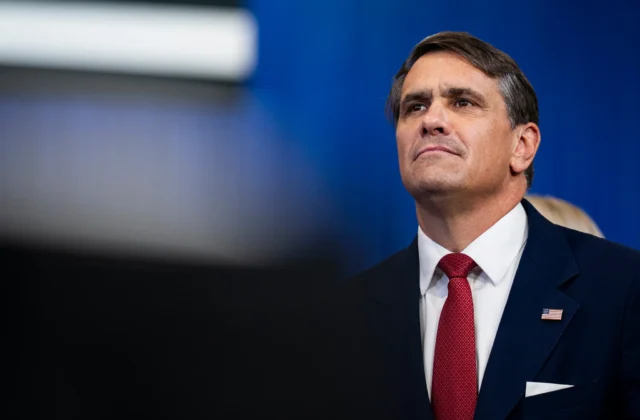
Washington is facing a fresh confrontation over the independence of the Justice Department after newly confirmed Attorney General Todd Blanche declined to promise that the department would always operate independently of the White House.
Blanche made the comments Sunday during an interview with NBC’s Meet the Press, when host Kristen Welker pressed him on whether he would maintain independence from President Donald Trump.
His answer was direct: he said he would not make such a pledge, adding that no attorney general should do so. At the same time, Blanche said he had sworn to uphold the Constitution and argued that Trump would never ask him to do something unethical or illegal.
The remarks are already drawing criticism because the Justice Department occupies a uniquely sensitive position in the U.S. government: it enforces federal law while operating under an administration led by an elected president.
The controversy therefore goes beyond one television interview.
It raises a much larger question:
How much independence should the Justice Department have from the president it ultimately serves under the executive branch?
What Exactly Did Todd Blanche Say?
The controversy centers on a relatively simple question.
Would Blanche pledge that the Justice Department would remain independent from the White House?
He declined.
Blanche argued that there is a difference between promising to investigate cases according to law and promising to operate independently of the president.
He also rejected the suggestion that Trump might ask him to cross an ethical or legal boundary.
According to Blanche, Trump has never made such a request and would not do so.
That distinction is at the heart of the current political fight.
Blanche is effectively saying that his constitutional oath is the ultimate safeguard.
Critics, however, argue that institutional independence is itself an important safeguard, particularly when the president or administration is involved in matters that could eventually reach the Justice Department.
Why DOJ Independence Matters
The Justice Department is not simply another Cabinet department.
It oversees federal prosecutors and law enforcement agencies, including the FBI, and plays a central role in enforcing federal criminal and civil law.
That means its decisions can directly affect:
- criminal investigations;
- prosecutions;
- civil-rights enforcement;
- federal elections;
- national-security cases;
- public corruption investigations;
- antitrust enforcement;
- immigration enforcement;
- political figures from both parties.
The basic concern is straightforward.
If prosecutors are perceived as acting primarily according to presidential political preferences, public confidence in equal enforcement of the law can deteriorate.
That does not mean the attorney general must ignore the president.
The Justice Department is part of the executive branch.
The difficult question is where the line should be drawn between legitimate presidential supervision and inappropriate political influence over individual law-enforcement decisions.
Blanche’s Relationship With Trump Is Central to the Debate
Blanche is not a political outsider who suddenly arrived at the Justice Department.
Before joining the administration, he represented Trump as a criminal defense lawyer.
That history has become a major part of the controversy surrounding his appointment.
The Senate confirmed Blanche by a narrow 50-49 vote, with Democrats opposing him and two Republicans also voting against confirmation, according to reporting following the vote.
His critics therefore question whether his previous attorney-client relationship with Trump creates an unusual degree of personal loyalty.
Blanche’s defenders point to his constitutional oath and argue that his previous legal representation does not prevent him from carrying out the responsibilities of attorney general.
The dispute is consequently not simply about his résumé.
It is about whether the public believes the Justice Department can make consequential decisions without political favoritism.
The Timing Makes Blanche’s Comments More Significant
The remarks arrive at a particularly sensitive moment for the Justice Department.
Blanche took over after Trump dismissed Pam Bondi.
The Guardian reported that Trump’s dissatisfaction included frustration over the department’s failure to take stronger action against political adversaries.
That background gives Blanche’s comments additional significance.
If an attorney general knows that a predecessor was removed after failing to satisfy the president, critics may naturally wonder how much room the new attorney general has to disagree with the White House.
The White House, meanwhile, can argue that an elected president has legitimate authority to set law-enforcement priorities.
Both questions can exist simultaneously.
Blanche Says Trump Would Never Ask for an Illegal Act
One of Blanche’s strongest defenses is that he does not expect Trump to demand illegal conduct.
During the interview, Blanche said the president would never ask him to do something unethical or illegal and emphasized his oath to the Constitution.
That is an important distinction.
The debate isn’t necessarily about whether Trump would explicitly order Blanche to break the law.
The broader institutional question is whether political influence can affect law enforcement without anyone explicitly ordering an illegal act.
For example, a president can publicly criticize an investigation.
A Cabinet official can hear those comments.
Prosecutors can then decide whether to reconsider a case.
None of those steps necessarily constitutes an illegal order.
But they can still create questions about institutional independence.
Trump’s Public Pressure Is Already Part of the Story
That concern has become especially visible in the case involving Olympic canoeist David Hearn.
The White House has urged the Justice Department to reconsider a prosecution after U.S. Attorney Jeanine Pirro dropped the case involving alleged damage to the Lincoln Memorial Reflecting Pool.
Trump publicly criticized the decision, and the Justice Department has been assessing whether another prosecution could be pursued.
Blanche was asked about Trump’s influence over such decisions.
He indicated that he would take the president’s views into consideration.
That answer is significant because it provides a real-world example of the broader question surrounding his independence.
The Watergate Legacy Is Hanging Over the Debate
Critics are invoking the post-Watergate era because the scandal fundamentally changed expectations surrounding presidential control of federal law enforcement.
University of Michigan law professor Barb McQuade described Blanche’s refusal to pledge independence as a major departure from the Justice Department’s post-Watergate mission.
The historical concern is understandable.
Watergate demonstrated the potential dangers when presidential power and federal law enforcement become deeply intertwined.
The reforms and institutional practices that followed were intended to strengthen confidence that prosecutors would enforce the law without simply becoming instruments of presidential political interests.
Blanche’s critics believe his comments threaten that tradition.
His supporters would likely argue that an attorney general ultimately remains accountable within the executive branch and cannot be completely independent from the president.
A Second Contradiction Is Now Getting Attention
There is another important piece of context.
Just days before his controversial television appearance, Blanche addressed Justice Department employees and promised to lead with integrity and uphold the rule of law “without fear or favor.”
He also told employees that he would listen to their concerns and make adjustments when necessary.
That creates an interesting contrast.
Blanche’s message to DOJ employees:
Rule of law, integrity and open disagreement.
Blanche’s message on White House independence:
No promise of complete independence from the White House.
Whether those positions are compatible will likely become one of the defining questions of his tenure.
Election Enforcement Adds Another Layer
The controversy also comes as the Justice Department continues pursuing election-related initiatives.
The Guardian reported that Blanche intends to continue “election integrity” efforts despite repeated court defeats involving attempts to obtain voter-roll information from states.
A June Senate letter to Blanche separately raised concerns about the DOJ’s handling of election-related policies and its removal of a federal prosecution manual concerning election offenses.
This makes DOJ independence particularly sensitive.
Election enforcement requires public confidence from both political parties.
If one side believes federal law enforcement is being used against its political interests, the credibility of the entire process can suffer.
What Could Happen Next?
The immediate political controversy is unlikely to disappear after one interview.
Several developments could determine how the issue evolves.
1. Congressional scrutiny
Democratic lawmakers are likely to continue questioning Blanche over the relationship between DOJ decision-making and Trump’s political priorities.
2. High-profile prosecutions
Future decisions involving Trump’s political opponents could become tests of Blanche’s independence.
3. Court battles
If the Justice Department pursues controversial cases, federal judges could become an important check on executive-branch actions.
4. DOJ employee reaction
The department’s workforce will also matter. AP has reported that the agency has already experienced significant departures and internal concerns over politicization.
5. Trump’s public statements
Trump’s own comments could become an increasingly important indicator of how much pressure he intends to place on the Justice Department.
BusinessNow Outlook: Why This Matters Beyond Washington
At first glance, the dispute over DOJ independence appears purely political.
But its consequences can extend into markets and business.
Investors depend heavily on predictable enforcement of:
- securities law;
- antitrust rules;
- corporate regulations;
- fraud statutes;
- sanctions;
- intellectual-property law;
- financial-crime laws.
When the credibility of federal enforcement becomes politically contested, businesses can face greater uncertainty about how regulations will be interpreted and enforced.
That does not automatically mean markets will fall.
But institutional credibility is itself an economic asset.
A legal system perceived as predictable allows companies and investors to make long-term decisions with greater confidence.
A system perceived as politically unpredictable can increase risk premiums and complicate corporate planning.
For that reason, the Blanche controversy is worth watching even for investors who normally ignore Washington politics.
🔮 Outlook: The Real Test Will Be Actions, Not One Interview
Blanche’s refusal to pledge DOJ independence is politically significant, but the most important evidence will come from what his department actually does.
Will prosecutors pursue politically sensitive cases based on evidence and law?
Will DOJ officials be allowed to disagree with the administration?
Will courts constrain controversial actions?
Will Blanche reject presidential pressure when he believes it conflicts with the department’s legal responsibilities?
Those questions cannot be answered by one television interview.
They will be answered through decisions made over the coming months.
For now, Blanche has made his position clear: he does not believe an attorney general should promise complete independence from the White House.
At the same time, he insists that his constitutional oath prevents him from crossing ethical or legal boundaries.
The tension between those two positions could become one of the defining institutional stories of the Trump administration.
❓ FAQs
Who is Todd Blanche?
Todd Blanche is the U.S. attorney general in the Trump administration. Before joining the administration, he served as Trump’s criminal defense attorney. He was confirmed by the Senate in a narrow 50-49 vote.
Did Todd Blanche refuse to pledge independence from Trump?
Yes. During an NBC Meet the Press interview on August 16, 2026, Blanche declined to promise that the Justice Department would always operate independently of the White House.
What did Blanche say about Trump’s orders?
Blanche said Trump would never ask him to do something unethical or illegal and emphasized that he had sworn to uphold the Constitution.
Why is DOJ independence controversial?
The Justice Department handles federal investigations and prosecutions. Critics argue that excessive presidential political influence could undermine public confidence that federal law is being enforced fairly.
Was Blanche previously Trump’s lawyer?
Yes. Blanche previously represented Trump as a criminal defense attorney before becoming a senior Justice Department official.
Why was Pam Bondi replaced?
Reporting says Trump dismissed his predecessor, Pam Bondi, after becoming dissatisfied with the Justice Department’s handling of matters involving his political adversaries.
What happens next?
Congressional scrutiny, high-profile DOJ decisions, court challenges and Blanche’s handling of presidential requests will provide the clearest indication of how the department operates under his leadership.
🌐 Key Resources
Keep reading
Related Articles
 Commodities
Oil Nears $95: Could the Iran War Trigger a New U.S. Inflation Shock?
Oil at $95 Is Not the Real Story A crude-oil headline is easy to write: “Oil prices rise as Iran tensions escalate.” Reuters, Bloomberg, CNBC and WSJ can publish that story within minutes. But for TheBusinessNow, that isn’t enough. The bigger question is: What happens to the American economy if oil stays near $95 —...
 Economy
U.S. National Debt Hits $40 Trillion: Why Treasury Yields Are Rising Again
The $40 Trillion Number Is Not the Whole Story The United States has crossed a psychological and financial milestone. $40 trillion. But simply writing “America owes $40 trillion” misses the more important story. The real question for markets is: Who is willing to finance America’s growing debt — and at what interest rate? That question...
 Commodities
Strait of Hormuz Standoff: The Oil Shock That Could Hit the U.S. Economy Next
Strait of Hormuz Standoff: Why the Oil Market Is Getting Nervous Again The oil market is being forced to price a problem that seemed to be easing only weeks ago: the Strait of Hormuz is still not reliably functioning as a normal commercial shipping route. On August 19, Brent crude was trading around $91.20 a...
Comments (0)