
7000 crores Mumbai–Pune Expressway Missing Link Damaged by Monsoon Landslide Just Weeks After Opening, Raising Safety Concerns
Mumbai–Pune Expressway’s New Missing Link Faces Early Setback After Monsoon Landslide The recently inaugurated Mumbai–Pune Expressway Missing Link has suffered a significant setback after a monsoon-triggered landslide damaged a retaining wall on the newly opened section. The incident occurred barely nine weeks after the project’s inauguration, forcing authorities to partially suspend traffic while engineers assess...
TheBusinessNow
Jul 8, 2026 · 5 min Read

Key Highlights
- 🚧 Monsoon-triggered landslide damaged a retaining wall on the Mumbai–Pune Expressway Missing Link.
- 🌧️ The incident occurred just nine weeks after the expressway section was inaugurated.
- 🚗 Authorities partially suspended traffic on the affected stretch as a precaution.
- 🔍 Engineers have begun structural inspections to determine the exact cause of the damage.
- 🏗️ The incident has raised questions about construction quality and long-term infrastructure durability.
- 🚦 Commuters may face delays, diversions, and temporary lane restrictions until repairs are completed.
Mumbai–Pune Expressway’s New Missing Link Faces Early Setback After Monsoon Landslide
The recently inaugurated Mumbai–Pune Expressway Missing Link has suffered a significant setback after a monsoon-triggered landslide damaged a retaining wall on the newly opened section. The incident occurred barely nine weeks after the project’s inauguration, forcing authorities to partially suspend traffic while engineers assess the damage and begin repair work.
The unexpected damage has sparked public concern over construction quality, infrastructure durability, and whether India’s mega infrastructure projects are adequately designed to withstand increasingly intense monsoon seasons.
What Happened?
According to officials, heavy rainfall triggered a landslide near the newly constructed stretch of the expressway, causing damage to one of the retaining walls built to stabilize the surrounding hillside.
As a precautionary measure, traffic on the affected portion has been partially restricted to ensure commuter safety while engineers inspect the structure.
Authorities have confirmed that repair and stabilization work has already begun.
A Flagship Infrastructure Project Under Scrutiny
The Mumbai–Pune Expressway Missing Link is one of Maharashtra’s most ambitious highway projects.
Designed to reduce travel time between Mumbai and Pune, the project features:
- Modern tunnels through the Western Ghats
- High-capacity bridges and viaducts
- Advanced safety systems
- Reduced travel distance
- Faster and safer transportation
The project was expected to significantly improve connectivity while easing congestion on one of India’s busiest expressways.
However, the recent landslide has shifted attention from its engineering achievements to questions surrounding long-term resilience.
Why Did the Landslide Occur?
While the exact cause is still under investigation, experts believe several factors may have contributed.
Possible reasons include:
- Extremely heavy monsoon rainfall
- Saturated hillside soil
- Natural erosion
- Increased water pressure behind retaining structures
- Local geological conditions
Officials have stated that a detailed technical inspection will determine whether the incident resulted solely from natural conditions or whether construction-related factors also played a role.
Growing Questions Over Construction Quality
The timing of the incident has intensified public debate.
Since the expressway section became operational only a few weeks ago, many commuters are questioning whether the retaining structures were adequately designed for severe monsoon conditions.
Infrastructure experts caution that new projects must undergo extensive testing against extreme weather events, particularly as climate change contributes to more frequent episodes of intense rainfall.
If deficiencies are identified during the investigation, additional reinforcement measures may be recommended.
Impact on Commuters
The partial traffic suspension has affected thousands of daily commuters traveling between Mumbai and Pune.
Motorists may experience:
- Traffic congestion
- Longer travel times
- Temporary lane closures
- Increased monitoring by highway authorities
- Diversions in affected areas
Officials are urging travelers to follow traffic advisories until repair work is completed.
Infrastructure and Climate Resilience
The incident highlights a broader challenge facing infrastructure projects across India.
Changing weather patterns have increased the frequency of:
- Intense rainfall
- Flash floods
- Landslides
- Soil erosion
- Slope instability
As infrastructure expands into mountainous terrain, engineers face growing pressure to design structures capable of withstanding increasingly unpredictable environmental conditions.
Experts argue that climate resilience should become a central component of future infrastructure planning.
Government Response
Authorities have assured the public that safety remains the highest priority.
Engineering teams are currently:
- Inspecting the damaged retaining wall
- Monitoring nearby slopes
- Removing unstable debris
- Reinforcing vulnerable sections
- Assessing long-term structural stability
Further decisions regarding reopening the affected lanes will depend on the findings of the technical inspection.
What Happens Next?
A comprehensive engineering assessment is expected to determine:
- The exact cause of the retaining wall failure
- Whether additional sections require reinforcement
- If construction standards were fully met
- What preventive measures can reduce future risks
The findings could influence maintenance strategies for similar infrastructure projects across the country.
Final Thoughts
The Mumbai–Pune Expressway Missing Link was celebrated as a milestone in India’s transportation infrastructure, promising faster and more efficient travel between two of the country’s largest cities.
However, the monsoon-triggered landslide only weeks after its inauguration serves as a reminder that infrastructure must not only be modern and efficient but also resilient enough to withstand increasingly extreme weather conditions.
As investigations continue, commuters and policymakers alike will be watching closely to see what lessons emerge and how future projects can be made more durable.
About TheBusinessNow
TheBusinessNow delivers global coverage of business, finance, technology, geopolitics, commodities, and economic trends. Our goal is to provide readers with original, fact-based analysis that explains how world events shape markets and investment decisions.
Keep reading
Related Articles
 Commodities
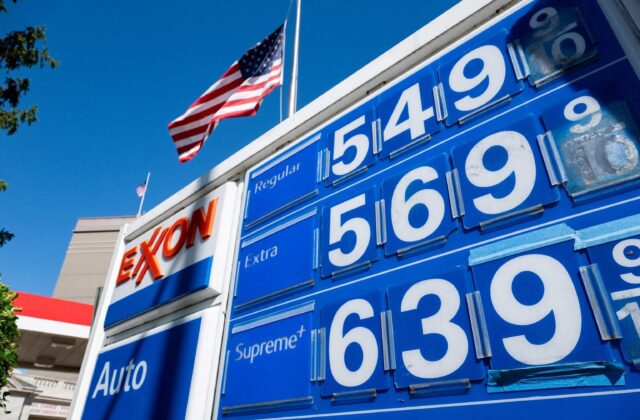
Oil Nears $95: Could the Iran War Trigger a New U.S. Inflation Shock?
Oil at $95 Is Not the Real Story A crude-oil headline is easy to write: “Oil prices rise as Iran tensions escalate.” Reuters, Bloomberg, CNBC and WSJ can publish that story within minutes. But for TheBusinessNow, that isn’t enough. The bigger question is: What happens to the American economy if oil stays near $95 —...
 Economy
U.S. National Debt Hits $40 Trillion: Why Treasury Yields Are Rising Again
The $40 Trillion Number Is Not the Whole Story The United States has crossed a psychological and financial milestone. $40 trillion. But simply writing “America owes $40 trillion” misses the more important story. The real question for markets is: Who is willing to finance America’s growing debt — and at what interest rate? That question...
 Commodities
Strait of Hormuz Standoff: The Oil Shock That Could Hit the U.S. Economy Next
Strait of Hormuz Standoff: Why the Oil Market Is Getting Nervous Again The oil market is being forced to price a problem that seemed to be easing only weeks ago: the Strait of Hormuz is still not reliably functioning as a normal commercial shipping route. On August 19, Brent crude was trading around $91.20 a...
Comments (0)