
U.S. Water Systems Hit by Expanding Cyberattack Wave as At Least 12 States Face New Threat
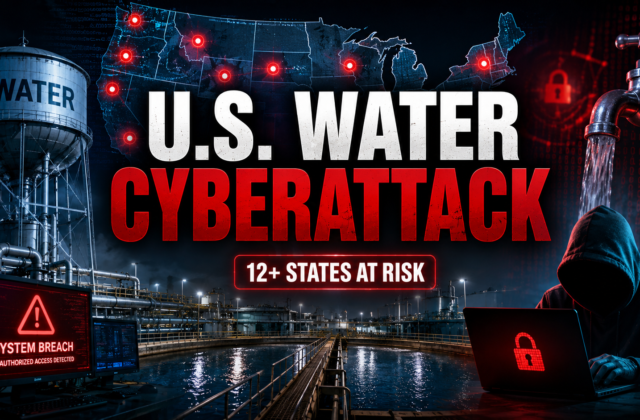
U.S. Water Systems Hit by Expanding Cyberattack Wave as At Least 12 States Face New Threat A growing cyberattack campaign targeting U.S. water and wastewater infrastructure has expanded beyond the seven states previously identified by federal officials, with new reporting indicating that systems in at least 12 states have now been affected or targeted. The...
Casy
Aug 4, 2026 · 3 min Read
Key Highlights
- 💻 Cyberattacks have now reportedly reached water systems in at least 12 states.
- 🚰 No evidence has emerged that the attacks contaminated drinking water.
- ⚠️ Federal officials previously confirmed attacks affecting utilities in at least seven states.
- 🏙️ Minnesota has been among the hardest-hit areas, with more than 30 water systems reportedly targeted in the recent campaign.
- 🔧 Some utilities experienced operational disruptions, including pressure problems and temporary moves to manual controls.
- 🇺🇸 Federal agencies are investigating the attacks and warning utilities about vulnerable internet-connected equipment.
- 🌐 The incidents highlight a broader cybersecurity weakness across U.S. municipal water infrastructure.
U.S. Water Systems Hit by Expanding Cyberattack Wave as At Least 12 States Face New Threat
A growing cyberattack campaign targeting U.S. water and wastewater infrastructure has expanded beyond the seven states previously identified by federal officials, with new reporting indicating that systems in at least 12 states have now been affected or targeted. The incidents are putting renewed attention on one of America’s most vulnerable pieces of critical infrastructure: the technology responsible for controlling pumps, pressure, wells and treatment operations.
The attacks have not been reported to contaminate drinking water, and authorities continue to emphasize that the water supply remains safe in the affected communities. But the incidents have demonstrated that attackers can reach the digital systems used to operate physical water infrastructure.
The development is particularly concerning because many smaller water utilities operate with limited cybersecurity budgets and staffing. A congressional report has previously warned that internet-connected water infrastructure can become an attractive target because water systems provide essential services while some utilities lack the resources needed for sophisticated cybersecurity protections.
How Serious Is the New Water Cyberattack Threat?
The most important distinction is between an attack on a water utility’s computer systems and an attack that actually contaminates drinking water.
So far, officials have not reported evidence that the recent campaign made affected drinking water unsafe. However, attackers have demonstrated that they can interfere with technology connected to water operations.
That distinction matters because modern water utilities increasingly rely on computerized systems to monitor and control physical equipment.
These systems can help operators manage:
- Water pressure
- Pumps
- Wells
- Treatment equipment
- Valves
- Storage systems
- Industrial control equipment
When those systems are compromised, the consequences can be operational rather than immediately related to water quality.
That could still mean pressure loss, flooding, equipment shutdowns or service interruptions.
Why the Number of States Is Growing
Earlier federal reporting identified attacks affecting utilities in at least seven states.
The latest reporting indicates the scope may now extend to at least 12 states.
That does not necessarily mean every one of those states experienced identical attacks.
Some incidents may involve unauthorized access or attempts to compromise systems, while others have resulted in measurable operational disruption.
That is why the broader number should be interpreted carefully.
The confirmed common factor is the targeting of water-related infrastructure—not necessarily identical damage in every state.
Investigators are continuing to determine how the individual incidents are connected and who is responsible.
Minnesota Became a Major Warning Sign
Minnesota has provided one of the clearest examples of what can happen when attackers reach water-system controls.
More than 30 Minnesota water systems were recently targeted, according to Associated Press reporting. In Braham, an attack temporarily disrupted computerized controls for the city’s well and water-treatment plant.
The incident forced operators to rely on water already stored in the system while affected equipment was disconnected and operations were restored.
Officials said the attack did not create a major threat to water quality.
But the incident demonstrated something potentially more important:
A cyberattack can interfere with the physical operation of a water utility even when the drinking water itself remains safe.
That is precisely the type of vulnerability cybersecurity officials have warned about for years.
What Hackers Are Targeting
The recent incidents have focused attention on operational technology, rather than simply stealing customer information.
Water utilities increasingly use connected equipment that allows operators to monitor and control physical infrastructure remotely.
That creates efficiency.
It can also create a potential entry point for attackers.
Federal cybersecurity agencies have previously warned that unauthorized access to water and wastewater systems can threaten a utility’s ability to provide clean water and manage wastewater effectively.
The problem becomes particularly serious when systems that were originally designed for isolated environments become connected to broader networks or the internet.
Could a Cyberattack Make Drinking Water Unsafe?
There is no evidence from the current incidents that drinking water has been deliberately contaminated.
That is an important point.
Authorities have been monitoring the affected utilities, and recent reporting says water supplies remain safe.
However, cybersecurity experts have long warned that attacks against water infrastructure could theoretically affect treatment processes or operational controls.
A congressional research report noted that manipulation of operational technology could potentially disrupt potable-water supplies or damage physical infrastructure.
Therefore, the current situation should not be described as a nationwide contaminated-water emergency.
It is better understood as a critical-infrastructure cybersecurity emergency.
Why Small Water Utilities Are Particularly Vulnerable
America’s water infrastructure is highly decentralized.
Thousands of local and regional utilities are responsible for providing water to communities.
Some smaller utilities may not have:
- Large cybersecurity teams
- Dedicated security operations centers
- Modern monitoring systems
- Extensive IT budgets
- Specialized industrial-control expertise
A federal congressional report has highlighted the resource limitations facing parts of the municipal water sector and the cybersecurity risks associated with increasing connectivity.
This creates an unusual security problem.
A sophisticated attacker does not necessarily need to penetrate America’s largest water utility.
A smaller system with weaker protections may provide an easier target.
Federal Agencies Are Warning Utilities to Act
The Cybersecurity and Infrastructure Security Agency has previously warned that attackers are increasingly targeting water and wastewater infrastructure.
The FBI and other agencies have urged utilities to strengthen defenses and reduce exposure of vulnerable equipment.
Recent reporting indicates that federal officials have encouraged utilities to disconnect susceptible industrial systems from the public internet where appropriate.
The goal is straightforward:
Reduce the number of systems that attackers can reach remotely.
Utilities are also being encouraged to improve monitoring, update credentials, secure remote access and maintain the ability to operate systems manually when digital controls are compromised.
Is Iran Behind the Attacks?
This remains one of the most sensitive parts of the investigation.
Some U.S. officials and cybersecurity experts have pointed toward possible Iranian-linked activity, citing similarities with previous attacks against critical infrastructure.
However, responsibility has not been conclusively established publicly.
That distinction is important.
Attributing a cyberattack to a particular government or state-linked group requires evidence, and investigators are still examining the incidents.
The attacks are occurring during heightened tensions between the United States and Iran, but timing alone does not establish who conducted them.
Why These Attacks Matter Beyond Water
Water systems do not operate in isolation.
Hospitals need reliable water.
Power facilities need water.
Manufacturing plants depend on water.
Restaurants, schools and businesses require functioning municipal water systems.
A serious disruption could therefore create cascading effects across other parts of the economy.
A Utah legislative audit recently noted that drinking-water systems support other critical infrastructure sectors, including hospitals, electricity-generating facilities and emergency services.
That makes water cybersecurity an economic issue as well as a public-safety issue.
What Happens If Attackers Escalate?
The current attacks appear to have focused primarily on disrupting or accessing operational systems.
But cybersecurity specialists are concerned about what could happen if attackers move from disruption to deliberate physical consequences.
Potential consequences could include:
🚰 Pressure Loss
A compromised control system could interfere with pumping or distribution.
🌊 Flooding
Improper control of pumps or other equipment could potentially create operational problems.
🏭 Treatment Disruption
Interference with treatment controls could force operators to switch to manual procedures.
🛠️ Emergency Shutdowns
Utilities may need to disconnect compromised equipment to prevent further damage.
💰 Higher Costs
Restoring systems, replacing equipment and investigating attacks can become expensive.
The recent incidents have demonstrated that some of these operational consequences are not merely theoretical.
The Manual Backup Problem
One of the most important lessons from the Minnesota incidents is the value of manual operation.
When computerized controls were compromised, some utilities were able to disconnect affected systems and continue operating manually.
That backup capability can prevent a cyber incident from becoming a full-scale water emergency.
But manual operations require:
- Trained employees
- Emergency procedures
- Physical access to equipment
- Reliable backup controls
- Clear communication
- Rapid incident response
A utility that has become completely dependent on automated systems could face a much more difficult recovery.
Why This Is Becoming a National Security Issue
The U.S. government considers water systems part of the nation’s critical infrastructure.
A successful attack against enough utilities could potentially create disruptions across multiple communities simultaneously.
The congressional research report notes that more than 324 million people regularly receive water from U.S. water systems, illustrating the enormous scale of the infrastructure involved.
That makes the recent campaign important even for Americans whose local water systems have not been affected.
The concern is not necessarily that every water system will be attacked.
It is that the campaign demonstrates how vulnerable digitally connected infrastructure can become.
What Should Water Utilities Do Now?
Cybersecurity agencies have already identified several basic priorities.
Utilities should focus on:
Securing internet-connected operational technology
Strengthening remote-access controls
Changing default or compromised credentials
Monitoring unusual network activity
Maintaining offline backups
Testing manual operating procedures
Training employees to recognize cyber threats
Sharing incident information with federal authorities
CISA, the FBI, EPA and NSA have previously issued joint guidance specifically addressing cyber threats to U.S. water and wastewater systems.
What Should Consumers Do?
For most Americans, there is no reason to panic.
The latest reporting does not indicate widespread drinking-water contamination from the attacks.
Residents should instead pay attention to official notices from their local water utility.
If a local authority issues a:
- Boil-water advisory
- Water-use restriction
- Pressure warning
- Emergency service announcement
residents should follow those instructions.
People should also avoid relying on viral social-media posts claiming that America’s entire water supply has been compromised.
That is not what current evidence shows.
The Bigger Cybersecurity Problem
The water attacks highlight a larger transformation taking place across America’s infrastructure.
Water utilities are becoming more connected.
Electricity systems are becoming more connected.
Transportation networks are becoming more connected.
Industrial facilities are becoming more connected.
Connectivity can improve efficiency and reduce operating costs.
But every additional digital connection can potentially create another security consideration.
The challenge for utilities is therefore not simply to eliminate technology.
It is to make sure technology does not become the weakest link in critical infrastructure.
Next Outlook
The immediate outlook is likely to remain focused on investigation, containment and determining the full geographic scope of the attacks.
The most important questions are:
1. Will the number of affected states increase?
The reported expansion from seven to at least 12 states suggests investigators may still be identifying incidents.
2. Will attackers return?
Authorities will be watching whether compromised utilities face repeat attempts.
3. Will attribution become clearer?
Investigators continue examining whether the campaign can be tied to a specific actor.
4. Will more utilities switch to manual operation?
Utilities may temporarily disconnect vulnerable systems while security reviews are conducted.
5. Will Washington increase funding?
The attacks could intensify calls for greater federal support for municipal cybersecurity.
What This Means for U.S. Infrastructure
The most important lesson from the latest attacks is not that Americans should fear turning on their taps.
It is that critical infrastructure is increasingly dependent on cybersecurity.
A water treatment facility may look like a physical facility filled with pipes, pumps and tanks.
Behind those systems, however, are computers, networks, sensors and controllers.
If those digital systems are compromised, physical consequences can follow.
That connection between cyberspace and physical infrastructure is becoming one of the defining security challenges of the modern economy.
Final Thoughts
The reported expansion of cyberattacks against U.S. water systems to at least 12 states has turned what initially appeared to be a collection of local incidents into a much broader national cybersecurity concern.
The reassuring news is that there is currently no reported evidence of widespread drinking-water contamination from this campaign.
The more troubling development is that attackers have demonstrated the ability to reach systems responsible for controlling real-world water infrastructure.
Minnesota’s experience shows what that can look like: disrupted controls, pressure problems and utilities temporarily relying on manual operations.
🔮 Next Outlook
The immediate priority will be determining the true scope of the campaign and preventing additional utilities from being compromised.
If investigators find that the attacks are connected and coordinated across the country, the incident could become one of the most significant recent tests of U.S. critical-infrastructure cybersecurity.
For consumers, the message is simple:
Don’t panic—but don’t ignore official water advisories either.
The water may still be safe to drink.
The computers controlling America’s water systems, however, are proving to be a very different story.
❓ FAQs
Are U.S. water systems currently under cyberattack?
Yes. Recent reporting indicates that water and wastewater systems in at least 12 states have been targeted or affected by cyberattacks.
Is the drinking water contaminated?
There is currently no reported evidence of widespread drinking-water contamination from the recent attacks.
How many states have been affected?
Federal reporting previously identified at least seven states. New reporting indicates the scope has expanded to at least 12 states.
What happened in Minnesota?
More than 30 Minnesota water systems were reportedly targeted. Some experienced operational disruptions, including interference with computerized controls.
Are the attacks confirmed to be from Iran?
No definitive public attribution has been established. Officials and cybersecurity experts have raised the possibility of Iranian-linked actors, but investigations remain ongoing.
Can hackers shut down a water system?
Cyberattacks can interfere with computerized operational systems and force utilities to switch to manual procedures. Recent incidents demonstrate that such disruptions are possible.
Should Americans be worried about their tap water?
There is no evidence of a nationwide drinking-water contamination event from these attacks. Consumers should follow official instructions from their local water authorities if an advisory is issued.
Why are water utilities targeted?
Water systems are critical infrastructure and increasingly rely on internet-connected technology. Smaller utilities may also have limited cybersecurity resources, making protection more difficult.
📰 About The Business Now
The Business Now delivers coverage of breaking U.S. and global news, business, finance, technology, cybersecurity, markets and major developments with a focus on factual reporting and useful context.
🪙 Check Live Gold Prices
Track Gold, Silver, Platinum and Palladium prices, historical charts, calculators and daily market updates at:
🌐 External Resources
Keep reading
Related Articles
 Commodities
Oil Nears $95: Could the Iran War Trigger a New U.S. Inflation Shock?
Oil at $95 Is Not the Real Story A crude-oil headline is easy to write: “Oil prices rise as Iran tensions escalate.” Reuters, Bloomberg, CNBC and WSJ can publish that story within minutes. But for TheBusinessNow, that isn’t enough. The bigger question is: What happens to the American economy if oil stays near $95 —...
 Economy
U.S. National Debt Hits $40 Trillion: Why Treasury Yields Are Rising Again
The $40 Trillion Number Is Not the Whole Story The United States has crossed a psychological and financial milestone. $40 trillion. But simply writing “America owes $40 trillion” misses the more important story. The real question for markets is: Who is willing to finance America’s growing debt — and at what interest rate? That question...
 Commodities
Strait of Hormuz Standoff: The Oil Shock That Could Hit the U.S. Economy Next
Strait of Hormuz Standoff: Why the Oil Market Is Getting Nervous Again The oil market is being forced to price a problem that seemed to be easing only weeks ago: the Strait of Hormuz is still not reliably functioning as a normal commercial shipping route. On August 19, Brent crude was trading around $91.20 a...
Comments (0)