
US Oil Shock: Crude Inventories Jump Far Above Expectations—What It Means for Prices Next
US Oil Shock: Crude Inventories Jump Far Above Expectations—What It Means for Prices Next The global oil market received an unexpected surprise after the latest U.S. Energy Information Administration (EIA) data showed a sharp rise in commercial crude oil inventories, reversing market expectations and immediately becoming one of the most closely watched economic releases of...
TheBusinessNow
Jul 22, 2026 · 3 min Read
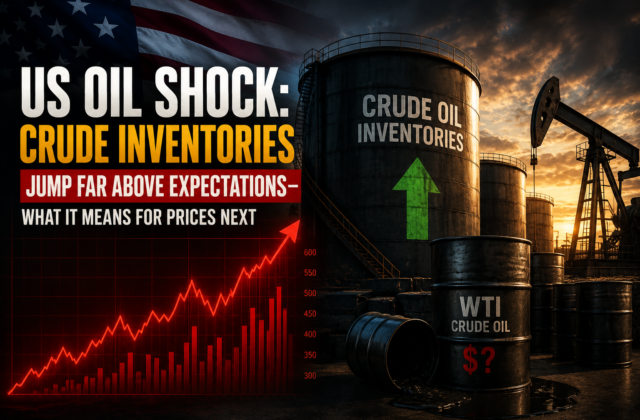
Key Highlights
- 🛢️ US crude oil inventories unexpectedly increased by 2.010 million barrels.
- 📉 Markets had expected a 0.880 million barrel decline, making the result a major surprise.
- 📦 Cushing crude inventories fell 674,000 barrels, indicating mixed regional supply trends.
- 🌍 Middle East geopolitical tensions continue to influence oil prices alongside inventory data.
- 📊 Traders are watching whether this marks the beginning of a broader supply trend or a one-week anomaly.
- 💰 Oil prices will also depend on OPEC+, refinery activity, exports, and global demand.
- ⚠️ The next few EIA reports will be critical in determining the market's direction.
US Oil Shock: Crude Inventories Jump Far Above Expectations—What It Means for Prices Next
The global oil market received an unexpected surprise after the latest U.S. Energy Information Administration (EIA) data showed a sharp rise in commercial crude oil inventories, reversing market expectations and immediately becoming one of the most closely watched economic releases of the week.
According to the latest figures:
- Actual Crude Inventory: +2.010 million barrels
- Market Forecast: -0.880 million barrels
- Previous Week: -1.692 million barrels
Instead of another inventory draw, analysts witnessed a build of more than 2 million barrels, creating a swing of nearly 2.9 million barrels versus expectations.
For energy traders, hedge funds, refiners, and governments, this was far more than just another weekly data release—it offered fresh clues about the health of the U.S. oil market, refinery activity, and global demand.
What Are Crude Oil Inventories?
Crude oil inventories measure the amount of petroleum stored across the United States.
Every week, the Energy Information Administration (EIA) publishes inventory data that markets use to gauge:
- Domestic demand
- Refinery utilization
- Import and export flows
- Supply-demand balance
- Future oil price direction
Because the United States is one of the world’s largest oil producers and consumers, even modest inventory changes can move global energy markets.
Breaking Down the Numbers
| Indicator | Latest | Previous | Forecast |
|---|---|---|---|
| US Crude Oil Inventories | +2.010M | -1.692M | -0.880M |
| Cushing Inventories | -674K | +430K | — |
One of the most interesting aspects of this report is that Cushing, Oklahoma—the delivery hub for WTI crude futures—recorded an inventory decline of 674,000 barrels, even as nationwide inventories increased.
This suggests regional differences in supply and logistics rather than a uniform buildup across the country.
Why Did Inventories Rise?
Several factors may have contributed:
Higher Imports
An increase in imported crude can temporarily lift inventories if refinery demand does not rise at the same pace.
Lower Refinery Demand
If refineries process less crude due to maintenance or lower fuel demand, inventories naturally increase.
Seasonal Market Factors
Summer driving demand, export schedules, and weather disruptions can all influence weekly inventory figures.
Export Variations
Any slowdown in exports can leave more crude stored domestically.
Because inventory reports reflect only one week’s activity, analysts generally examine several consecutive reports before identifying a lasting trend.
What Does This Mean for Oil Prices?
Normally:
Rising Inventories
⬇️ Can put downward pressure on crude prices because higher stockpiles may indicate weaker short-term demand or stronger supply.
Falling Inventories
⬆️ Often support prices by suggesting tighter supply conditions.
However, markets rarely react to one indicator alone.
Oil prices also depend on:
- OPEC+ production policy
- Geopolitical tensions
- Middle East security
- U.S. shale output
- Global economic growth
- Chinese industrial demand
- Federal Reserve policy
- Currency movements
The Middle East Factor Still Matters
The inventory surprise comes at a time when geopolitical tensions remain elevated.
Recent developments involving:
- Iran
- The Strait of Hormuz
- Regional energy infrastructure
- US military deployments
continue to create uncertainty for energy markets.
Even if inventories rise domestically, geopolitical risks can still support oil prices if traders fear supply disruptions.
This creates a unique situation where bearish inventory data competes against bullish geopolitical risks.
Why Investors Are Paying Attention
Professional investors are watching several indicators beyond this week’s inventory report:
Oil Demand
Is U.S. fuel consumption slowing?
Gasoline Inventories
Higher gasoline stockpiles could signal softer consumer demand.
Distillate Stocks
Diesel inventories provide clues about manufacturing and freight activity.
Cushing Storage
Changes here directly affect WTI futures pricing.
OPEC+
Any production adjustment by OPEC+ could quickly offset inventory increases.
Could This Affect Inflation?
Energy prices influence nearly every sector of the economy.
If crude prices decline:
- Transportation costs may ease.
- Inflation pressures could moderate.
- Central banks may gain more flexibility.
If geopolitical risks outweigh inventory increases:
- Oil prices may remain elevated.
- Fuel costs could stay high.
- Inflation could remain stubborn.
What Should Traders Watch Next?
The coming weeks will be crucial.
Markets will monitor:
- Next week’s EIA inventory report.
- OPEC+ policy announcements.
- U.S. refinery utilization.
- Chinese economic data.
- Global shipping activity.
- Developments in the Middle East.
One inventory report rarely defines a long-term trend, but a series of similar reports can significantly reshape market expectations.
Expert Perspective
Energy analysts often caution against drawing broad conclusions from a single weekly inventory release.
Weather events, refinery maintenance, import timing, and export schedules can all influence the data. For this reason, traders typically look for confirmation over multiple weeks before changing their outlook on supply and demand.
Final Analysis
The latest U.S. crude inventory report delivered one of the week’s biggest surprises, with stockpiles rising by 2.010 million barrels against expectations for a decline. While the data may point to stronger near-term supply or softer demand, it is only one piece of a much larger puzzle.
Global oil prices remain influenced by multiple forces, including OPEC+ decisions, economic growth, refinery activity, and ongoing geopolitical tensions in the Middle East. As a result, investors are likely to weigh this inventory build against broader market developments before concluding that a lasting shift in oil prices is underway.
❓FAQs
1. What are US crude oil inventories?
US crude oil inventories measure the amount of crude oil stored by commercial companies across the United States. The data is released weekly by the U.S. Energy Information Administration (EIA) and is one of the most closely watched indicators in the global oil market.
2. What were the latest US crude oil inventory numbers?
According to the latest EIA report:
- 🛢️ Actual: +2.010 million barrels
- 📉 Forecast: -0.880 million barrels
- 📊 Previous: -1.692 million barrels
The unexpected increase surprised energy traders and analysts.
3. Why did oil inventories rise?
Several factors may have contributed, including:
- Higher crude imports
- Lower refinery processing
- Changes in export volumes
- Seasonal demand fluctuations
- Temporary supply-chain adjustments
4. Do higher inventories mean oil prices will fall?
Not necessarily. Rising inventories can put downward pressure on prices, but oil markets are also influenced by:
- OPEC+ production decisions
- Middle East geopolitical tensions
- Global economic growth
- U.S. dollar strength
- Refinery demand
- Weather-related disruptions
5. Why is Cushing, Oklahoma important?
Cushing is the delivery point for WTI crude oil futures. Inventory changes there can directly affect oil futures pricing and are closely monitored by commodity traders.
6. How does this affect gasoline prices?
If higher crude inventories lead to lower oil prices over time, gasoline prices could ease. However, refining costs, taxes, and local supply conditions also influence prices at the pump.
7. Why do investors watch EIA inventory data every week?
The report provides insight into:
- Global oil demand
- Supply conditions
- Refinery activity
- Energy market trends
- Potential price movements
8. What should traders monitor next?
Key developments include:
⛽ Refinery utilization rates
📅 Next EIA inventory report
🛢️ OPEC+ production decisions
🌍 Middle East geopolitical developments
📈 Global economic data
🚢 Export and shipping trends
Keep reading
Related Articles
 Crypto
₿ Bitcoin Breaks Above $72,000: Why Trump’s Crypto Push Is Sending Crypto Stocks Higher
Bitcoin’s $72,000 Move Is Bigger Than Bitcoin A typical crypto headline would be: Bitcoin jumps above $72,000. But that misses the most important part of today’s move. The interesting part is the simultaneous rally in: Bitcoin ↓ Coinbase ↓ Strategy ↓ Circle ↓ Robinhood ↓ Bitcoin miners ↓ Crypto infrastructure That tells us investors aren’t...
 Markets
U.S. Treasury Doubles Bond Buybacks: Why Markets Are Still Worried About Rising Yields
The Treasury Just Sent Two Messages to Wall Street At first glance, this looks like a straightforward market-support operation. Treasury says: We want to improve liquidity in longer-dated Treasury securities. Investors hear: Washington is increasingly concerned about the rise in long-term borrowing costs. And that second interpretation is what makes this story important. The Treasury...
 Commodities
Oil Nears $95: Could the Iran War Trigger a New U.S. Inflation Shock?
Oil at $95 Is Not the Real Story A crude-oil headline is easy to write: “Oil prices rise as Iran tensions escalate.” Reuters, Bloomberg, CNBC and WSJ can publish that story within minutes. But for TheBusinessNow, that isn’t enough. The bigger question is: What happens to the American economy if oil stays near $95 —...
Comments (0)