
U.S. Strikes Iran Over Strait of Hormuz Attacks: Oil Prices Surge, Gold Gains, and Global Markets Brace for Escalation
U.S. Strikes Iran Over Strait of Hormuz Attacks: Oil Prices Surge, Gold Gains, and Global Markets Brace for Escalation The U.S. Strikes Iran Over Strait of Hormuz Attacks has become one of the biggest geopolitical developments of 2026, sending shockwaves through global financial markets. According to official military statements, U.S. Central Command (CENTCOM) launched coordinated...
TheBusinessNow
Jul 15, 2026 · 3 min Read
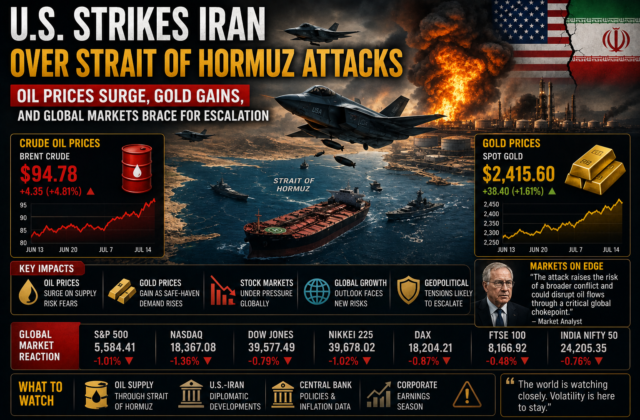
Key Highlights
- U.S. Central Command launched strikes against Iranian military targets.
- The operation followed attacks on commercial shipping in the Strait of Hormuz.
- The Strait of Hormuz carries nearly 20% of global oil supplies.
- Crude oil prices reacted higher amid supply concerns.
- Gold gained as investors sought safe-haven assets.
- The U.S. Dollar strengthened during heightened geopolitical uncertainty.
U.S. Strikes Iran Over Strait of Hormuz Attacks: Oil Prices Surge, Gold Gains, and Global Markets Brace for Escalation
The U.S. Strikes Iran Over Strait of Hormuz Attacks has become one of the biggest geopolitical developments of 2026, sending shockwaves through global financial markets. According to official military statements, U.S. Central Command (CENTCOM) launched coordinated strikes targeting Iranian military infrastructure allegedly used to support attacks on commercial shipping in the Strait of Hormuz.
The operation marks a significant escalation in tensions between Washington and Tehran, raising fears of a wider regional conflict. Investors immediately shifted toward safe-haven assets while energy markets reacted sharply due to concerns over disruptions in one of the world’s most important oil transit routes.
Table of Contents
- U.S. Strikes Iran Over Strait of Hormuz Attacks
- Why the U.S. Launched the Strikes
- Why the Strait of Hormuz Matters
- Immediate Market Reaction
- Impact on Oil Prices
- Impact on Gold Prices
- Impact on the U.S. Dollar
- Impact on Global Stock Markets
- What Could Happen Next?
- Investor Outlook
- FAQs
U.S. Strikes Iran Over Strait of Hormuz Attacks: What Happened?
The latest military operation follows repeated attacks on commercial vessels navigating the Strait of Hormuz. U.S. officials stated that the strikes targeted facilities believed to support Iranian military operations affecting international shipping.
The objective, according to CENTCOM, was to reduce Iran’s operational capabilities while protecting one of the world’s busiest maritime trade corridors.
Although the operation was described as limited, analysts warn that further retaliation could quickly widen the conflict.
Why the U.S. Strikes Iran Over Strait of Hormuz Attacks Matter
The U.S. Strikes Iran Over Strait of Hormuz Attacks are significant because the Strait of Hormuz handles nearly one-fifth of the world’s oil exports.
Major energy exporters including:
- Saudi Arabia
- United Arab Emirates
- Kuwait
- Iraq
- Qatar
depend heavily on this narrow waterway.
Any military escalation in the region threatens global energy supplies, shipping costs, inflation, and economic growth.

U.S. Strikes Iran Over Strait of Hormuz Attacks: Immediate Market Reaction
Global financial markets reacted almost immediately.
Investors rushed into traditional safe-haven assets while reducing exposure to riskier investments.
Early reactions included:
- Higher crude oil prices
- Rising gold demand
- Stronger U.S. Dollar
- Pressure on Asian and European equities
- Increased market volatility
Energy companies generally outperformed broader markets, while airline and transportation stocks faced pressure due to rising fuel costs.
U.S. Strikes Iran Over Strait of Hormuz Attacks: Impact on Crude Oil Prices
Oil markets remain the biggest focus after the military action.
The Strait of Hormuz transports millions of barrels of crude oil every day. Even the possibility of supply disruptions can push prices significantly higher.
If tensions continue:
- Brent crude could remain elevated.
- Shipping insurance costs may increase.
- Freight expenses could rise.
- Global fuel prices may climb.
- Inflationary pressures may return.
Higher oil prices often affect transportation, manufacturing, aviation, and logistics industries worldwide.
U.S. Strikes Iran Over Strait of Hormuz Attacks: Impact on Gold Prices
Gold traditionally benefits during periods of geopolitical uncertainty.
Following the U.S. Strikes Iran Over Strait of Hormuz Attacks, investors increased allocations toward precious metals as a hedge against uncertainty.
Factors supporting gold include:
- Safe-haven demand
- Rising geopolitical risks
- Inflation concerns
- Market volatility
- Central bank buying
If tensions persist, gold prices could continue attracting investor interest despite higher interest rates.
U.S. Strikes Iran Over Strait of Hormuz Attacks: Impact on the U.S. Dollar
The U.S. Dollar often strengthens during periods of global uncertainty because investors seek liquidity and safety.
A stronger dollar may:
- Pressure emerging-market currencies.
- Make commodities more expensive internationally.
- Increase import costs for several countries.
- Affect gold’s upside in the short term.
Currency markets are expected to remain highly sensitive to additional geopolitical developments.
U.S. Strikes Iran Over Strait of Hormuz Attacks: Impact on Global Stock Markets
Equity investors generally avoid risk during military conflicts.
Sectors likely to experience volatility include:
Energy
Oil producers may benefit from higher crude prices.
Airlines
Higher jet fuel prices could pressure airline profitability.
Shipping
Maritime companies may face increased insurance and transportation costs.
Defense
Defense contractors could see stronger investor interest amid rising geopolitical tensions.
Technology
Technology stocks may remain volatile as investors shift capital toward defensive sectors.
U.S. Strikes Iran Over Strait of Hormuz Attacks: Impact on Indian Markets
Indian markets are particularly sensitive because India imports a large share of its crude oil requirements.
Possible consequences include:
- Higher fuel prices
- Rupee volatility
- Inflation concerns
- Pressure on airline stocks
- Increased import costs
- Volatile Nifty 50 and Sensex trading
Oil marketing companies and sectors dependent on imported energy could remain under pressure if crude prices continue rising.
What Could Happen Next After the U.S. Strikes Iran Over Strait of Hormuz Attacks?
Investors should closely monitor:
- Iran’s official response
- Additional military deployments
- Shipping activity through the Strait of Hormuz
- OPEC statements
- U.S. diplomatic actions
- United Nations responses
- Oil inventory data
- Global inflation expectations
Any further escalation could amplify volatility across commodities, currencies, and equity markets.
Investor Outlook
The current environment favors disciplined risk management.
Investors may consider watching:
- Crude oil prices
- Gold movements
- Dollar Index
- Treasury yields
- Global equity indices
- Shipping updates from the Gulf region
Long-term investors typically avoid emotional decisions during geopolitical events and instead focus on diversified portfolios and quality assets.
Frequently Asked Questions (FAQs)
Why did the U.S. strike Iran?
According to U.S. officials, the strikes targeted military capabilities allegedly used in attacks on commercial shipping in the Strait of Hormuz.
Why is the Strait of Hormuz important?
It is one of the world’s most critical oil shipping routes, carrying roughly one-fifth of global crude oil exports.
How do the U.S. Strikes Iran Over Strait of Hormuz Attacks affect oil prices?
Markets fear possible supply disruptions, which generally push crude oil prices higher.
Will gold prices rise after the U.S. Strikes Iran Over Strait of Hormuz Attacks?
Geopolitical tensions often increase demand for gold as investors seek safe-haven assets.
How could this affect Indian markets?
Higher oil prices could increase inflation, pressure the rupee, and create volatility in sectors such as aviation, transportation, and energy.
About TheBusinessNow
TheBusinessNow delivers global coverage of business, finance, technology, geopolitics, commodities, and economic trends. Our goal is to provide readers with original, fact-based analysis that explains how world events shape markets and investment decisions.
Read More – FII DII Data Today: FIIs Sell ₹735.83 Crore While DIIs Buy ₹704.93 Crore
Calculate Live Gold Price – Gold Calculator
Check Live Markets – Tradingview
Keep reading
Related Articles
 Crypto
₿ Bitcoin Breaks Above $72,000: Why Trump’s Crypto Push Is Sending Crypto Stocks Higher
Bitcoin’s $72,000 Move Is Bigger Than Bitcoin A typical crypto headline would be: Bitcoin jumps above $72,000. But that misses the most important part of today’s move. The interesting part is the simultaneous rally in: Bitcoin ↓ Coinbase ↓ Strategy ↓ Circle ↓ Robinhood ↓ Bitcoin miners ↓ Crypto infrastructure That tells us investors aren’t...
 Markets
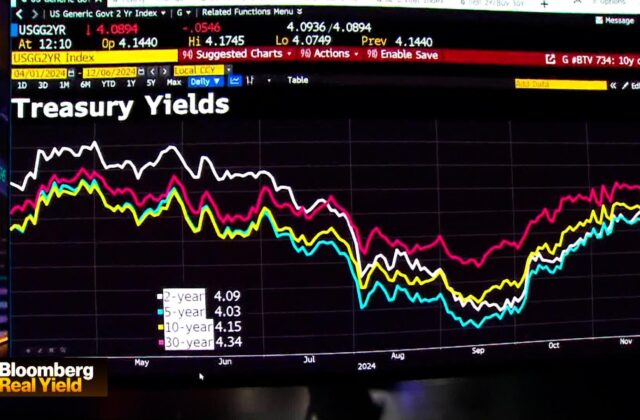
U.S. Treasury Doubles Bond Buybacks: Why Markets Are Still Worried About Rising Yields
The Treasury Just Sent Two Messages to Wall Street At first glance, this looks like a straightforward market-support operation. Treasury says: We want to improve liquidity in longer-dated Treasury securities. Investors hear: Washington is increasingly concerned about the rise in long-term borrowing costs. And that second interpretation is what makes this story important. The Treasury...
 Commodities
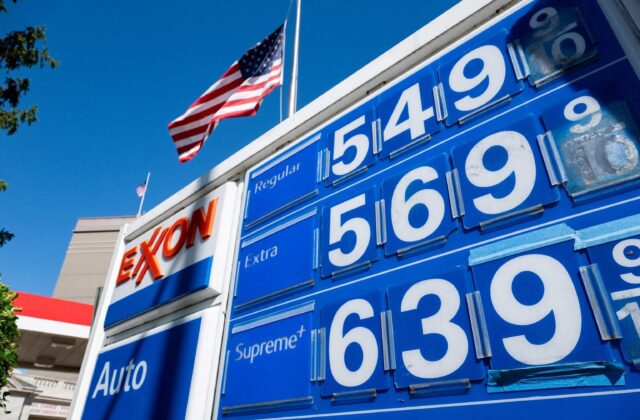
Oil Nears $95: Could the Iran War Trigger a New U.S. Inflation Shock?
Oil at $95 Is Not the Real Story A crude-oil headline is easy to write: “Oil prices rise as Iran tensions escalate.” Reuters, Bloomberg, CNBC and WSJ can publish that story within minutes. But for TheBusinessNow, that isn’t enough. The bigger question is: What happens to the American economy if oil stays near $95 —...
Comments (0)