
U.S.-Iran Deal Could Be Closer Than Trump’s Rhetoric Suggests: Pakistan Says Hormuz Talks Near Breakthrough
U.S.-Iran Deal Could Be Closer Than Trump’s Rhetoric Suggests: Pakistan Says Hormuz Talks Near Breakthrough Pakistan says the United States and Iran may be closer to an agreement than President Donald Trump’s latest hard-line statements suggest, raising fresh hopes that a diplomatic path could eventually reopen the Strait of Hormuz and ease pressure on global...
Dino
Aug 11, 2026 · 3 min Read
Key Highlights
- 🇵🇰 Pakistan says the U.S. and Iran are nearing some form of agreement.
- 🇶🇦 Qatar is also involved in mediation and has indicated that Hormuz discussions are at an advanced stage.
- 🇺🇸 President Trump has simultaneously adopted a tougher negotiating stance.
- 💰 Trump's reported demand for compensation from Iran has complicated the diplomatic picture.
- 🚢 The Strait of Hormuz remains the crucial issue for global energy markets.
- 🛢️ Oil prices have been highly sensitive to developments surrounding the waterway.
- 🥇 Gold has also benefited from geopolitical uncertainty, reaching a two-month high on Tuesday
U.S.-Iran Deal Could Be Closer Than Trump’s Rhetoric Suggests: Pakistan Says Hormuz Talks Near Breakthrough
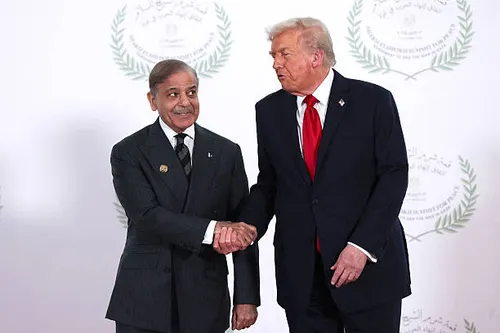
Pakistan says the United States and Iran may be closer to an agreement than President Donald Trump’s latest hard-line statements suggest, raising fresh hopes that a diplomatic path could eventually reopen the Strait of Hormuz and ease pressure on global energy markets.
The development is significant because the Strait of Hormuz remains at the center of the U.S.-Iran standoff. Pakistan and Qatar have been involved in mediation efforts, while Washington and Tehran continue to communicate indirectly through intermediaries rather than through a straightforward direct negotiating channel. Reuters reported Tuesday that Pakistan believes the two sides are nearing “some sort of” agreement, while Qatar has also described the Hormuz negotiations as being at an advanced stage.
But there is an important complication.
Trump’s tougher position and demands for compensation from Iran have introduced another obstacle just as mediators are signaling progress. That creates a market environment where a breakthrough could produce a sharp reversal in oil-risk premiums, while a collapse in negotiations could quickly push energy prices and safe-haven assets higher.
🌍 Why the U.S.-Iran Deal Matters Right Now
The potential agreement matters because the Strait of Hormuz is not an ordinary shipping route.
It is one of the world’s most strategically important energy chokepoints.
Any prolonged disruption can affect:
- crude oil prices;
- fuel costs;
- shipping insurance;
- tanker availability;
- inflation expectations;
- global trade;
- and the currencies of energy-importing countries.
That is why investors are treating every diplomatic development as a potential market-moving event.
A credible agreement that allows commercial shipping to normalize could remove part of the geopolitical premium embedded in energy prices.
A breakdown, however, could have the opposite effect.
🇵🇰 Pakistan Says a Deal May Be Near
Pakistan has positioned itself as a mediator between Washington and Tehran.
On Tuesday, Pakistani officials indicated that the United States and Iran were getting close to “some sort of” deal, despite Trump’s increasingly forceful public messaging.
Qatar is also involved in the mediation effort and has reportedly indicated that discussions concerning the Strait of Hormuz are at an advanced stage.
That is important because Pakistan has previously worked alongside Qatar to create a diplomatic framework involving the United States and Iran.
In June, Pakistan and Qatar said high-level discussions involving U.S. and Iranian representatives had produced encouraging progress and established mechanisms for continued technical talks on nuclear issues, sanctions, monitoring and dispute resolution. The two countries also said a communication channel had been created to reduce incidents and support safe passage for commercial vessels through Hormuz.
So Tuesday’s comments are not occurring in isolation.
They follow months of mediation efforts.
🇺🇸 But Trump Is Sending a Much Tougher Message
The biggest reason markets remain cautious is the difference between the diplomatic optimism coming from mediators and the public position coming from Washington.
Trump has hardened his stance toward Tehran and has raised the issue of compensation.
That creates an obvious negotiating problem.
Even if the two sides agree on the broad objective of reducing hostilities and restoring shipping, the terms of the agreement could still prove extremely difficult.
A deal could therefore be close in principle while remaining far from finalized in practice.
That distinction matters enormously for investors.
🚢 Strait of Hormuz Is the Market’s Biggest Pressure Point
The Strait of Hormuz connects the Persian Gulf with the Gulf of Oman and the wider Arabian Sea.
For financial markets, the key question isn’t simply whether negotiations are happening.
It is:
When can commercial shipping operate normally again?
That is the practical test.
A diplomatic announcement without a reliable improvement in shipping conditions may have only a temporary effect on oil prices.
Conversely, evidence that tankers are moving safely and consistently could create a much stronger market reaction.
🛢️ What This Means for Oil Prices
Oil markets have already been reacting to every development surrounding the conflict.
On Tuesday, Brent crude moved around the $90-per-barrel area as traders assessed both geopolitical risks and the possibility of diplomatic progress.
This creates two very different scenarios.
🟢 Scenario 1: Hormuz Reopens
If a credible agreement leads to sustained reopening:
Geopolitical risk ↓
Shipping disruption ↓
Oil risk premium ↓
Supply concerns ↓
That could put downward pressure on crude prices.
🔴 Scenario 2: Negotiations Collapse
If Trump and Iran fail to bridge their differences:
Geopolitical risk ↑
Shipping uncertainty ↑
Oil supply concerns ↑
Crude volatility ↑
That could send oil prices sharply higher.
The market is therefore trading the probability of a deal, not just the possibility of one.
🥇 What Does This Mean for Gold?
Gold is responding to the same geopolitical uncertainty from the opposite direction.
Reuters reported that spot gold reached a two-month high of $4,434.84 per ounce before easing to around $4,396.87 on Tuesday.
That tells investors something important.
Gold isn’t being driven by one factor.
The market is simultaneously weighing:
- U.S.-Iran tensions;
- expectations for Federal Reserve policy;
- inflation data;
- Treasury yields;
- the U.S. dollar;
- and safe-haven demand.
A genuine breakthrough in U.S.-Iran negotiations could reduce one source of safe-haven demand.
But if inflation or interest-rate expectations remain supportive for gold, the metal could remain resilient.
📈 Gold vs. Oil: Two Very Different Reactions
The potential Hormuz deal creates an interesting divergence.
| Asset | If a Deal Progresses | If Talks Collapse |
|---|---|---|
| Crude Oil | Potential downside | Potential sharp upside |
| Gold | Safe-haven premium could ease | Potential upside |
| Shipping Costs | Could decline | Could rise |
| Inflation Expectations | Could moderate | Could increase |
| Global Stocks | Potential relief | Potential pressure |
| Energy Stocks | Could face profit pressure | Could benefit from higher oil |
This isn’t a guaranteed market reaction.
Other economic data can easily overwhelm geopolitical developments.
💵 Why the Fed Is Also Watching the Middle East
Oil prices feed into inflation.
If crude prices rise substantially and remain elevated, transportation and production costs can increase.
That can complicate central-bank decisions.
The Federal Reserve therefore has to consider whether an energy shock is temporary or likely to feed into broader inflation.
At the same time, gold is approaching an important macroeconomic crossroads because U.S. inflation data are also due.
Reuters reported that traders were closely watching upcoming U.S. CPI and PPI data for clues about the Fed’s interest-rate path.
This means gold traders aren’t looking only at Iran.
They’re watching Iran + oil + inflation + Fed policy simultaneously.
🇵🇰 Why Pakistan’s Role Matters
Pakistan’s involvement is strategically significant because it can provide a communication channel between Washington and Tehran at a time when direct negotiations remain difficult.
Pakistan’s foreign ministry has repeatedly emphasized diplomacy as the preferred route to resolving the conflict.
In July, Pakistan said that renewed hostilities served no one’s interests and called for restraint and sustained dialogue.
That diplomatic position has now become particularly important as the Hormuz dispute continues.
If Pakistan and Qatar can help convert indirect messages into an agreed framework, they could play a major role in preventing another escalation.
⚠️ Why a Deal Is Still Not Guaranteed
The biggest mistake investors could make is interpreting “close to a deal” as “deal completed.”
Those are very different things.
Several issues could still derail negotiations:
1. Compensation
Trump’s demand for compensation creates an additional negotiating hurdle.
2. Hormuz control
The two sides still have different interests regarding how the waterway should operate.
3. Sanctions
Economic sanctions remain a major component of the broader U.S.-Iran dispute.
4. Verification
Even if Washington and Tehran agree on principles, implementing and verifying the agreement could take time.
5. Military incidents
A single serious incident could change the diplomatic environment almost instantly.
🔮 U.S.-Iran and Hormuz Outlook: What Happens Next?
The next phase could be extremely volatile.
Bullish scenario for global markets
If Pakistan and Qatar successfully help Washington and Tehran reach a workable arrangement:
- Hormuz shipping improves;
- oil risk premium declines;
- inflation fears ease;
- global equities could benefit;
- gold’s geopolitical premium could cool.
Bearish scenario
If Trump’s demands and Iran’s conditions prove incompatible:
- negotiations could stall;
- Hormuz disruption could continue;
- oil could rise;
- inflation expectations could increase;
- gold could receive additional safe-haven demand;
- risk assets could come under pressure.
Most likely near-term scenario
The most important development may be continued negotiations rather than an immediate final agreement.
That would keep markets extremely headline-sensitive.
📊 What Investors Should Watch
For the next several sessions, five indicators could matter most:
🛢️ 1. Brent crude
A sustained move above major psychological levels would indicate that traders are assigning a higher probability to prolonged disruption.
🚢 2. Hormuz shipping traffic
Actual vessel movement is more meaningful than diplomatic headlines alone.
🇺🇸 3. Trump administration statements
Any change in language regarding Iran, compensation or sanctions could immediately affect expectations.
🇮🇷 4. Iranian response
Tehran’s reaction will determine whether diplomatic progress is genuine.
🥇 5. Gold
Gold’s ability to hold elevated levels despite changing geopolitical headlines will provide a useful gauge of safe-haven demand.
💡 The Bigger Economic Picture
The U.S.-Iran confrontation has evolved beyond a purely geopolitical story.
It has become an energy-market story, inflation story and financial-market story.
The Strait of Hormuz connects all three.
If the waterway reopens reliably, the world could see relief in energy markets.
If it remains restricted, the consequences could spread through crude prices, freight costs and inflation expectations.
That is why Pakistan’s latest assessment is receiving so much attention.
🏆 Bottom Line
Pakistan says the United States and Iran may be closer to an agreement than President Trump’s latest rhetoric suggests—but the deal is far from guaranteed.
Mediators including Pakistan and Qatar are signaling progress, while Washington’s tougher position and demands for compensation are complicating the final stages.
For markets, the most important question is no longer simply:
“Will the U.S. and Iran reach a deal?”
It is:
“Will any deal actually restore reliable commercial traffic through the Strait of Hormuz?”
If the answer is yes, oil could lose part of its geopolitical premium and global markets could get a significant relief signal.
If the answer is no, energy-market volatility could remain elevated—and gold could continue to attract investors seeking protection from geopolitical risk.
❓ FAQs
Is the U.S. and Iran deal finalized?
No. Pakistan says the two sides are nearing some form of agreement, but a final deal has not been confirmed.
Why is Pakistan involved?
Pakistan has acted as a mediator between the United States and Iran and has supported diplomatic efforts aimed at ending the conflict and resolving the Hormuz dispute.
What is the Strait of Hormuz?
It is a strategically important waterway connecting the Persian Gulf with the Gulf of Oman and the wider global shipping network.
Why does Hormuz matter to oil prices?
Disruption to shipping through the waterway can raise concerns about energy supplies, transportation and insurance costs, potentially increasing crude prices.
Could a U.S.-Iran deal push oil prices lower?
Potentially. If an agreement leads to sustained normalization of shipping, the geopolitical risk premium in crude could decline.
Could a failed deal push gold higher?
Potentially. Renewed geopolitical uncertainty can increase safe-haven demand, although gold also responds strongly to interest rates, inflation and the dollar.
What is Trump demanding from Iran?
Recent reporting says Trump has raised demands for compensation, adding another obstacle to negotiations.
Is Qatar involved?
Yes. Qatar has been involved alongside Pakistan in mediation efforts and has indicated that discussions concerning Hormuz are at an advanced stage.
What should investors watch next?
Watch Brent crude, Hormuz shipping activity, U.S. and Iranian statements, sanctions developments, gold and U.S. inflation data.
🪙 Gold Price Today — Live Market Check
Gold remains highly sensitive to the same geopolitical developments discussed above.
On August 11, 2026, Reuters reported spot gold at around $4,396.87 per ounce, after it briefly reached $4,434.84, a two-month high.
For the latest India gold price, 24K/22K rates and gold calculator, readers can check:
GoldPriceNow.in — Live Gold Price & Calculator
Note: I have not inserted a ₹/gram GoldPriceNow figure because I could not independently retrieve the site’s live quote during this check. That avoids publishing an unverified price.
🌐 Key Resources
- Reuters — Pakistan Says U.S. and Iran Are Nearing a Deal — Latest reporting on Pakistan’s assessment and the Hormuz negotiations.
- Bloomberg — U.S.-Iran and Hormuz Developments — The source referenced for this report.
- Pakistan Ministry of Foreign Affairs — U.S.-Iran/Qatar-Pakistan Joint Statement — Official account of the mediation framework and safe-passage mechanism.
- Pakistan Ministry of Foreign Affairs — July 2026 Briefing — Pakistan’s position on dialogue and de-escalation.
- Reuters — Gold Market Update, August 11, 2026 — Latest gold and macro-market context.
- GoldPriceNow.in — Live Gold Price & Calculator — Live domestic gold-price reference.
Keep reading
Related Articles
 Crypto
₿ Bitcoin Breaks Above $72,000: Why Trump’s Crypto Push Is Sending Crypto Stocks Higher
Bitcoin’s $72,000 Move Is Bigger Than Bitcoin A typical crypto headline would be: Bitcoin jumps above $72,000. But that misses the most important part of today’s move. The interesting part is the simultaneous rally in: Bitcoin ↓ Coinbase ↓ Strategy ↓ Circle ↓ Robinhood ↓ Bitcoin miners ↓ Crypto infrastructure That tells us investors aren’t...
 Markets
U.S. Treasury Doubles Bond Buybacks: Why Markets Are Still Worried About Rising Yields
The Treasury Just Sent Two Messages to Wall Street At first glance, this looks like a straightforward market-support operation. Treasury says: We want to improve liquidity in longer-dated Treasury securities. Investors hear: Washington is increasingly concerned about the rise in long-term borrowing costs. And that second interpretation is what makes this story important. The Treasury...
 Commodities
Oil Nears $95: Could the Iran War Trigger a New U.S. Inflation Shock?
Oil at $95 Is Not the Real Story A crude-oil headline is easy to write: “Oil prices rise as Iran tensions escalate.” Reuters, Bloomberg, CNBC and WSJ can publish that story within minutes. But for TheBusinessNow, that isn’t enough. The bigger question is: What happens to the American economy if oil stays near $95 —...
Comments (0)