
Trump Draws a New Line Against Iran: Could This Trigger a Wider Regional Crisis?
Trump Draws a New Line Against Iran: Could This Trigger a Wider Regional Crisis? For months, the Middle East has remained on edge. Military deployments have increased, commercial shipping has faced repeated disruptions, and global energy markets have reacted to every new development. Now, fresh remarks from US President Donald Trump have once again placed...
TheBusinessNow
Jul 22, 2026 · 3 min Read
Key Highlights
- 🌍 Trump's latest warning has renewed global attention on US-Iran relations.
- 🚢 The Strait of Hormuz remains a key focus for energy security and international shipping.
- 🛢️ Oil and financial markets are closely monitoring geopolitical developments.
- 📈 Investors are watching for any signs of changes in regional security conditions.
- 🤝 Diplomatic efforts continue alongside heightened political rhetoric.
- ⚠️ No new military action has been officially announced based solely on these remarks.
- 🌐 The situation highlights how geopolitical events can quickly influence the global economy.
Trump Draws a New Line Against Iran: Could This Trigger a Wider Regional Crisis?
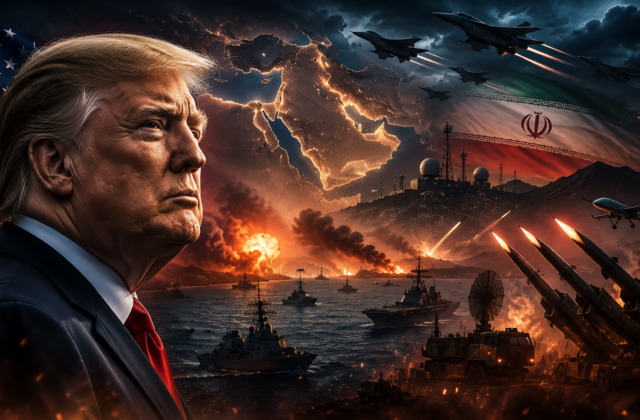
For months, the Middle East has remained on edge. Military deployments have increased, commercial shipping has faced repeated disruptions, and global energy markets have reacted to every new development. Now, fresh remarks from US President Donald Trump have once again placed Iran at the center of international attention.
Trump has signaled that attacks on US interests or shipping would bring a forceful American response. While no new military action has been announced, the remarks have renewed debate over whether the region is moving toward another dangerous phase—or whether the statements are intended primarily as deterrence.
For investors, governments, and businesses, the key question is no longer just what was said, but what could happen next.
Why This Warning Matters
Relations between Washington and Tehran have been marked by decades of confrontation, sanctions, and periodic military incidents. Each new warning is watched closely because even changes in rhetoric can influence diplomacy, military planning, and financial markets.
The latest comments come at a time when several strategic flashpoints remain under close observation, including maritime security in the Gulf and the protection of international shipping routes.
Although strong public statements are common during periods of tension, analysts stress that political rhetoric does not automatically translate into military action.
The Strait of Hormuz Remains the World’s Pressure Point
Any discussion involving Iran inevitably turns to the Strait of Hormuz, one of the world’s most important energy corridors.
A substantial share of globally traded crude oil and liquefied natural gas passes through this narrow waterway every day. Even the perception of increased risk in the region can influence:
- Global oil prices
- Shipping insurance costs
- Freight rates
- Inflation expectations
- Currency markets
That is why governments and investors monitor developments in the Gulf almost in real time.
Why Global Markets Are Paying Attention
Geopolitical events rarely stay confined to politics.
History shows that rising tensions in the Middle East often affect:
🛢️ Oil Markets
Energy prices are usually the first to react. Traders price in the possibility of supply disruptions even before any actual interruption occurs.
🥇 Gold
Periods of geopolitical uncertainty often increase demand for safe-haven assets such as gold, although market reactions depend on many factors.
📈 Equity Markets
Defense companies, shipping firms, airlines, and energy producers may all experience increased volatility when geopolitical risks rise.
Could This Become a Wider Regional Crisis?
That depends on several factors.
Analysts are watching for:
- Any attacks on commercial shipping.
- Official military deployments.
- Diplomatic statements from Washington and Tehran.
- Reactions from regional allies.
- Activity around strategic maritime routes.
At present, there is no official confirmation of a broader military escalation resulting from Trump’s latest remarks. Future developments will depend on decisions taken by all parties.
Diplomacy Still Matters
Despite periods of heightened rhetoric, diplomatic engagement continues to play an important role in reducing the risk of conflict.
International partners, including European governments and regional stakeholders, generally emphasize de-escalation while seeking to protect trade routes and regional stability.
Whether the coming weeks bring renewed negotiations or greater confrontation will depend on actions rather than statements alone.
What Investors Should Watch
For financial markets, the focus remains on:
- Oil price movements.
- Shipping activity in the Gulf.
- Official US and Iranian statements.
- Central bank responses if energy prices rise.
- Broader geopolitical developments.
Investors often distinguish between political messaging and concrete policy decisions before adjusting long-term positions.
Final Analysis
Donald Trump’s latest warning has once again drawn global attention to one of the world’s most strategically sensitive regions.
At this stage, the development is best understood as part of a broader geopolitical landscape in which public statements, military preparedness, and diplomacy all interact. While strong rhetoric can influence markets and public perception, it does not necessarily indicate that military escalation is imminent.
For businesses, investors, and policymakers, the coming days will be critical. Official announcements, developments in the Gulf, and any changes to regional security conditions will provide a clearer picture of whether this remains a diplomatic warning or becomes part of a broader shift in US-Iran relations.
❓FAQs
1. What did Donald Trump say about Iran?
Recent reports indicate that Donald Trump warned the United States would respond forcefully if American ships or military assets were attacked. Readers should refer to official White House statements and verified government releases for the exact wording and context.
2. Has the US launched new military strikes on Iran?
As of publication, no new large-scale military operation has been officially announced based solely on these remarks. Monitor official US government announcements for updates.
3. Why is the Strait of Hormuz so important?
The Strait of Hormuz is one of the world’s most critical energy chokepoints, with a significant share of globally traded oil passing through it. Any disruption can affect oil prices, shipping costs, and the global economy.
4. Could this trigger a wider regional conflict?
While analysts warn that heightened tensions increase geopolitical risks, whether the situation escalates depends on future actions by all parties. Diplomatic developments remain an important factor.
5. How could this affect global oil prices?
If tensions disrupt energy infrastructure or shipping routes, oil prices could become more volatile. However, markets also respond to official policy decisions and actual developments rather than rhetoric alone.
6. Why are investors closely watching this situation?
Geopolitical tensions often influence:
- 🛢️ Crude oil prices
- 🥇 Gold prices
- 📈 Global stock markets
- 🚢 Shipping and logistics
- 💵 Currency markets
7. Is this likely to impact the global economy?
A prolonged escalation in the Middle East could affect energy costs, inflation, trade, and investor confidence, although the extent would depend on how events unfold.
8. Where can readers find verified updates?
Readers should rely on official statements from the White House, the US Department of Defense, and established international news organizations for confirmed information.
Keep reading
Related Articles
 Crypto
₿ Bitcoin Breaks Above $72,000: Why Trump’s Crypto Push Is Sending Crypto Stocks Higher
Bitcoin’s $72,000 Move Is Bigger Than Bitcoin A typical crypto headline would be: Bitcoin jumps above $72,000. But that misses the most important part of today’s move. The interesting part is the simultaneous rally in: Bitcoin ↓ Coinbase ↓ Strategy ↓ Circle ↓ Robinhood ↓ Bitcoin miners ↓ Crypto infrastructure That tells us investors aren’t...
 Markets
U.S. Treasury Doubles Bond Buybacks: Why Markets Are Still Worried About Rising Yields
The Treasury Just Sent Two Messages to Wall Street At first glance, this looks like a straightforward market-support operation. Treasury says: We want to improve liquidity in longer-dated Treasury securities. Investors hear: Washington is increasingly concerned about the rise in long-term borrowing costs. And that second interpretation is what makes this story important. The Treasury...
 Commodities
Oil Nears $95: Could the Iran War Trigger a New U.S. Inflation Shock?
Oil at $95 Is Not the Real Story A crude-oil headline is easy to write: “Oil prices rise as Iran tensions escalate.” Reuters, Bloomberg, CNBC and WSJ can publish that story within minutes. But for TheBusinessNow, that isn’t enough. The bigger question is: What happens to the American economy if oil stays near $95 —...
Comments (0)