
The Next Big Global Shift Has Already Begun: What Every Investor, Business, and Consumer Needs to Know
The Next Big Global Shift Has Already Begun The world is changing faster than at any point in recent history. Artificial intelligence is transforming workplaces. Global supply chains are being rewritten. Governments are investing trillions in strategic industries. Central banks are navigating a higher-interest-rate world, while geopolitical tensions continue to reshape trade and security. Many...
TheBusinessNow
Jul 20, 2026 · 3 min Read

Key Highlights
- 🌍 Multiple long-term trends are reshaping the global economy simultaneously.
- 🤖 AI is changing how businesses operate and how people work.
- 🏭 Supply chains are shifting toward resilience and regional diversification.
- ⚡ Energy and digital infrastructure are becoming strategic priorities.
- 📈 Higher interest rates are changing investment decisions worldwide.
- 🌐 Geopolitical developments are playing a larger role in business strategy.
- 🚀 Adaptability and long-term planning may become key advantages in the years ahead.
The Next Big Global Shift Has Already Begun
The world is changing faster than at any point in recent history.
Artificial intelligence is transforming workplaces. Global supply chains are being rewritten. Governments are investing trillions in strategic industries. Central banks are navigating a higher-interest-rate world, while geopolitical tensions continue to reshape trade and security.
Many people are waiting for “the next big change” to arrive.
The reality is that the next big global shift has already begun.
Unlike previous economic cycles, this transformation isn’t driven by a single event. Instead, multiple long-term trends are converging at once, creating a new global landscape that could define the next decade.
Here’s what is changing, why it matters, and how businesses, investors, and consumers can prepare.
Why 2026 Is Becoming a Defining Year
Several structural changes are unfolding simultaneously:
- Artificial intelligence is automating more tasks.
- Governments are prioritizing domestic manufacturing.
- Energy systems are evolving.
- Global demographics are shifting.
- Supply chains are becoming more regional.
- Digital infrastructure is expanding rapidly.
Taken together, these trends represent more than a normal economic cycle—they point to a broader transformation in how economies grow and compete.
AI Is Reshaping the Global Economy
Artificial intelligence has moved beyond experimentation.
Businesses now use AI for:
- Customer service
- Software development
- Medical diagnostics
- Financial analysis
- Manufacturing optimization
- Logistics and supply-chain management
- Marketing and content creation
The impact is twofold:
- Productivity may increase across many industries.
- Workers will need new skills as some tasks become automated.
Rather than replacing every job, AI is more likely to change the nature of many roles, increasing demand for workers who can collaborate with intelligent systems.
Global Supply Chains Are Being Rebuilt
For decades, businesses optimized for cost.
Now, resilience is becoming just as important.
Companies are increasingly diversifying manufacturing and sourcing to reduce dependence on a single region.
This shift includes:
- Nearshoring production closer to consumers.
- Expanding manufacturing into multiple countries.
- Building strategic inventories.
- Investing in supply-chain technology.
The result is a more flexible—but often more expensive—global production network.
Energy Is Entering a New Phase
Energy remains at the center of economic growth.
Governments and companies are investing heavily in:
- Renewable power
- Battery storage
- Electricity grids
- Nuclear technologies
- Natural gas infrastructure
- Hydrogen research
At the same time, traditional energy sources continue to play a major role in meeting global demand.
Rather than a sudden replacement, many analysts expect an extended period where multiple energy systems coexist.
Geopolitics Is Influencing Business Decisions
Political developments increasingly affect economic outcomes.
Businesses now monitor issues such as:
- Trade policies
- Export controls
- Sanctions
- Shipping disruptions
- Regional conflicts
- Cybersecurity risks
These factors influence everything from production costs to investment decisions.
Companies that once focused primarily on efficiency are now incorporating geopolitical risk into long-term planning.
Higher Interest Rates Are Changing Investment Strategies
For much of the previous decade, low borrowing costs supported rapid growth in technology, real estate, and financial assets.
Today’s environment is different.
Higher interest rates affect:
- Mortgage affordability
- Business borrowing
- Startup funding
- Consumer spending
- Asset valuations
Investors are placing greater emphasis on profitability, cash flow, and financial resilience.
Demographic Changes Will Shape Future Growth
Population trends vary significantly across regions.
Some countries face aging populations and slower labor-force growth, while others continue to experience expanding working-age populations.
These shifts may influence:
- Consumer demand
- Housing markets
- Healthcare spending
- Labor shortages
- Immigration policies
Businesses that understand demographic trends may be better positioned to anticipate future demand.
Digital Infrastructure Is Becoming Essential
The expansion of AI, cloud computing, and connected technologies requires substantial physical infrastructure.
Key investment areas include:
- Data centers
- Fiber-optic networks
- Semiconductor manufacturing
- Power generation
- Cybersecurity systems
As digital services become more central to daily life, the infrastructure supporting them becomes increasingly valuable.
The Numbers Worth Watching
Several indicators can help measure how this global shift evolves:
| Indicator | Why It Matters |
|---|---|
| Global Inflation | Influences purchasing power and interest-rate decisions |
| Central Bank Policies | Affect borrowing costs and investment activity |
| AI Adoption Rates | Signal productivity improvements across industries |
| Manufacturing Investment | Reflects supply-chain restructuring |
| Energy Prices | Influence inflation and business costs |
| Global Trade Growth | Indicates the health of international commerce |
| Corporate Earnings | Measure business performance during economic transition |
What This Means for Investors
Periods of structural change often create both opportunities and challenges.
Many investors are focusing on:
- Diversified portfolios
- High-quality businesses
- Long-term innovation
- Infrastructure investments
- Balanced exposure across sectors and regions
- Risk management rather than short-term speculation
Maintaining flexibility may be more valuable than attempting to predict every market movement.
What Businesses Should Do
Businesses can strengthen their position by:
- Investing in employee skills.
- Adopting appropriate AI tools.
- Diversifying suppliers.
- Strengthening cybersecurity.
- Improving operational efficiency.
- Monitoring regulatory and geopolitical developments.
Organizations that adapt proactively may be better equipped for long-term competitiveness.
What Consumers Can Expect
Consumers are likely to experience:
- More AI-powered products and services.
- Faster digital experiences.
- Continued technological innovation.
- Ongoing changes in employment requirements.
- Greater emphasis on digital skills.
- Potential shifts in prices as supply chains evolve.
Preparing for continuous learning may become increasingly important in the years ahead.
Is This the Beginning of a New Economic Era?
History has seen several major transitions:
- The Industrial Revolution.
- The rise of electricity.
- The internet age.
- The smartphone era.
Today’s convergence of AI, digital infrastructure, energy transformation, and geopolitical realignment may represent another such turning point.
While no one can predict the exact outcome, the evidence suggests that the global economy is entering a period of meaningful structural change rather than simply another short-term business cycle.
Conclusion
The Next Big Global Shift Has Already Begun, and its effects are becoming visible across technology, finance, manufacturing, energy, and international trade.
For investors, businesses, and consumers, the key challenge is not predicting every development but remaining adaptable as conditions evolve.
The coming years are likely to reward organizations and individuals who embrace innovation, manage risk thoughtfully, and remain prepared for a rapidly changing global economy.
Frequently Asked Questions
What is the next big global shift?
It refers to the combination of major long-term trends—including AI adoption, supply-chain restructuring, energy transformation, demographic changes, and geopolitical realignment—that are reshaping the global economy.
Why is 2026 considered significant?
Many of these structural changes are accelerating simultaneously, making 2026 an important period for businesses and investors to adapt.
How does AI fit into this shift?
AI is improving productivity, changing job requirements, and driving investment in digital infrastructure such as data centers and semiconductor manufacturing.
How can investors respond?
Many experts emphasize diversification, quality investments, long-term thinking, and risk management rather than relying on short-term market predictions.
About TheBusinessNow
TheBusinessNow delivers global coverage of business, finance, technology, geopolitics, commodities, and economic trends. Our goal is to provide readers with original, fact-based analysis that explains how world events shape markets and investment decisions.
Watch Gold Price Live – GoldPriceNow.in
Keep reading
Related Articles
 Crypto
₿ Bitcoin Breaks Above $72,000: Why Trump’s Crypto Push Is Sending Crypto Stocks Higher
Bitcoin’s $72,000 Move Is Bigger Than Bitcoin A typical crypto headline would be: Bitcoin jumps above $72,000. But that misses the most important part of today’s move. The interesting part is the simultaneous rally in: Bitcoin ↓ Coinbase ↓ Strategy ↓ Circle ↓ Robinhood ↓ Bitcoin miners ↓ Crypto infrastructure That tells us investors aren’t...
 Markets
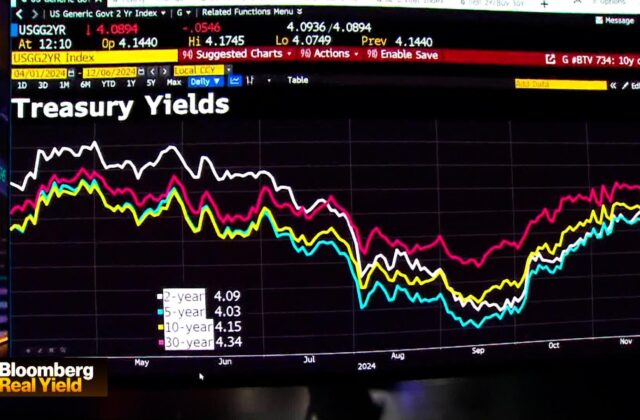
U.S. Treasury Doubles Bond Buybacks: Why Markets Are Still Worried About Rising Yields
The Treasury Just Sent Two Messages to Wall Street At first glance, this looks like a straightforward market-support operation. Treasury says: We want to improve liquidity in longer-dated Treasury securities. Investors hear: Washington is increasingly concerned about the rise in long-term borrowing costs. And that second interpretation is what makes this story important. The Treasury...
 Commodities
Oil Nears $95: Could the Iran War Trigger a New U.S. Inflation Shock?
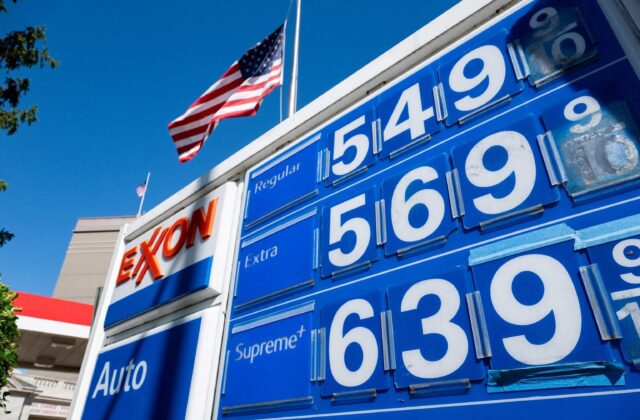
Oil at $95 Is Not the Real Story A crude-oil headline is easy to write: “Oil prices rise as Iran tensions escalate.” Reuters, Bloomberg, CNBC and WSJ can publish that story within minutes. But for TheBusinessNow, that isn’t enough. The bigger question is: What happens to the American economy if oil stays near $95 —...
Comments (0)