
Stock Market Crash in 2026? Wall Street Is Split—Could This Be the Biggest Test for Investors Yet?
Stock Market Crash in 2026? Wall Street Is Split—Could This Be the Biggest Test for Investors Yet? After another year of record-breaking rallies driven by artificial intelligence, resilient corporate earnings, and investor optimism, a new question is dominating Wall Street: Is the next stock market crash closer than many investors realize? Across financial markets, analysts...
TheBusinessNow
Jul 20, 2026 · 3 min Read
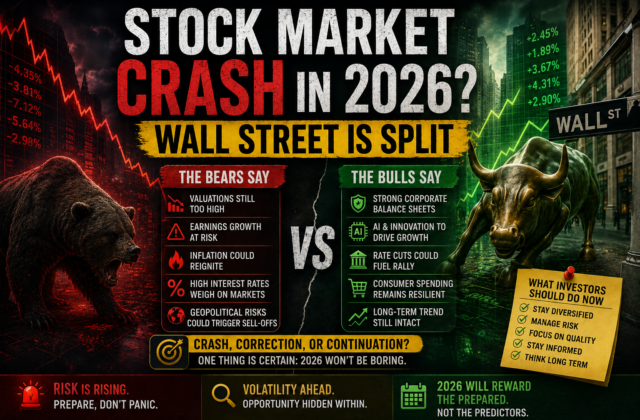
Key Highlights
- 📉 Wall Street remains divided over whether elevated valuations could lead to a major market correction in 2026.
- 🏦 Interest rate decisions, inflation, and corporate earnings are expected to remain the biggest drivers of market sentiment.
- 🤖 Artificial intelligence continues supporting technology stocks, but high expectations also increase valuation risks.
- 🌍 Geopolitical tensions and slowing global growth could contribute to increased market volatility.
- History shows that every major market crash has had different causes, but markets have eventually recovered over time.
- 💼 Professional investors typically emphasize diversification, long-term planning, and risk management rather than trying to predict exact market tops or bottoms.
- 🔍 The remainder of 2026 is likely to be shaped by economic data, central bank policy, and corporate earnings rather than headlines alone.
Stock Market Crash in 2026? Wall Street Is Split—Could This Be the Biggest Test for Investors Yet?
After another year of record-breaking rallies driven by artificial intelligence, resilient corporate earnings, and investor optimism, a new question is dominating Wall Street:
Is the next stock market crash closer than many investors realize?
Across financial markets, analysts remain divided. Some believe the bull market has room to continue, while others warn that elevated valuations, geopolitical uncertainty, high government debt, and slower global growth could trigger a significant correction.
So, are the biggest stock market crash predictions for 2026 based on real risks—or are they simply another round of market fear?
Here’s a complete analysis.
Why Crash Predictions Are Back
Stock market crash forecasts typically increase whenever markets reach new highs.
Several developments are fueling concern:
- 📈 Major indexes remain near historic highs.
- 🤖 AI-driven stocks have led much of the recent rally.
- 💵 High interest rates continue affecting borrowing costs.
- 🌍 Geopolitical tensions remain elevated.
- 🏦 Investors are closely watching future Federal Reserve decisions.
These factors have encouraged some market strategists to warn that optimism could be running ahead of economic fundamentals.
What Could Trigger a Stock Market Crash?
1. Expensive Stock Valuations
After extended rallies, investors begin asking whether stock prices have risen faster than company earnings.
Higher valuations can increase market sensitivity to disappointing earnings or weaker economic data.
2. Interest Rate Uncertainty
Interest rates remain one of the biggest drivers of stock prices.
Higher rates:
- Increase borrowing costs
- Reduce consumer spending
- Pressure corporate profits
- Lower valuations for growth companies
Unexpected policy changes often increase market volatility.
3. Slowing Global Growth
Large economies continue facing challenges including:
- Weak manufacturing
- Slower exports
- High debt
- Soft consumer demand
A broader slowdown could affect multinational corporate earnings.
4. Geopolitical Risks
Financial markets dislike uncertainty.
Potential risks include:
- Trade disputes
- Military conflicts
- Energy supply disruptions
- Sanctions
- Political instability
Unexpected geopolitical events can trigger sharp but sometimes temporary market declines.
5. Corporate Earnings
Ultimately, stock prices depend on company profits.
If earnings growth slows while valuations remain high, investors may reassess risk.
Why Some Experts Believe the Bull Market Can Continue
Not everyone expects a crash.
Several positive factors continue supporting equities.
Strong Corporate Innovation
Artificial intelligence, cloud computing, automation, and semiconductor investment continue driving productivity improvements.
Healthy Consumer Spending
Despite economic uncertainty, consumer spending remains an important pillar supporting business revenues in many sectors.
Institutional Investment
Large pension funds, ETFs, and long-term investors continue allocating significant capital to equities.
Technology Leadership
Many of today’s largest companies maintain strong cash flows and global competitive advantages.
Lessons From Previous Market Crashes
| Crash | Main Cause | Recovery |
|---|---|---|
| 2000 Dot-Com Crash | Technology Bubble | Multi-year recovery |
| 2008 Financial Crisis | Banking & Housing | Gradual recovery supported by policy actions |
| 2020 Pandemic Crash | Global lockdowns | Rapid recovery driven by stimulus and reopening |
Every crash has been triggered by different circumstances.
History also shows that markets have eventually recovered from each major decline.
What Smart Investors Do During Volatile Markets
Professional investors rarely make decisions based solely on headlines.
Instead they focus on:
✅ Portfolio diversification
✅ Long-term investing
✅ Regular portfolio reviews
✅ Risk management
✅ Cash reserves for opportunities
Rather than attempting to predict exact market bottoms or tops, many investors build strategies that can withstand different market environments.
Which Sectors Could Be More Resilient?
If volatility increases, investors often pay closer attention to sectors such as:
- Healthcare
- Consumer Staples
- Utilities
- Defense
- Infrastructure
- High-quality dividend companies
Technology companies with strong earnings may also remain resilient, though performance can vary significantly.
What Could Prevent a Crash?
Several developments could support markets through the rest of 2026.
Inflation Moderates
Lower inflation may improve consumer purchasing power and reduce pressure on businesses.
Stable Interest Rates
Predictable monetary policy generally supports investor confidence.
Strong Corporate Earnings
If companies continue delivering earnings growth, higher stock prices may become easier to justify.
AI Investment Continues
Artificial intelligence remains one of the most significant long-term investment themes, supporting technology spending across multiple industries.
Biggest Warning Signs Investors Should Watch
Investors should monitor:
- 📊 Inflation reports
- 🏦 Federal Reserve announcements
- 📈 Corporate earnings
- 🌍 Geopolitical developments
- 💵 Bond yields
- 📉 Consumer confidence
- 🏭 Manufacturing activity
- 🛢️ Energy prices
Rather than relying on a single indicator, experienced investors evaluate multiple signals together.
What History Teaches About Market Crashes
One important lesson from previous corrections is that markets often recover over time.
Investors who remained diversified and focused on long-term objectives generally fared better than those who made decisions driven by short-term panic.
This does not eliminate risk, but it highlights the importance of preparation over prediction.
Conclusion
The Stock Market Crash Predictions 2026 debate reflects genuine uncertainty rather than certainty about the future.
Markets face several risks, including interest rate uncertainty, elevated valuations, geopolitical developments, and slowing global growth. At the same time, technological innovation, resilient businesses, and long-term investment demand continue providing support.
Rather than asking “Will the market crash?”, investors may benefit more from asking “Is my portfolio prepared for different outcomes?”
History suggests that disciplined investing, diversification, and staying informed have often proven more effective than attempting to predict the exact timing of market downturns.
Frequently Asked Questions
Will the stock market crash in 2026?
No one can predict a market crash with certainty. Analysts remain divided, and future market performance will depend on economic conditions, corporate earnings, interest rates, and geopolitical events.
What usually causes stock market crashes?
Common causes include economic recessions, financial crises, excessive valuations, geopolitical shocks, or unexpected policy changes.
Should investors sell during market volatility?
Investment decisions depend on individual goals, risk tolerance, and financial circumstances. Many long-term investors focus on diversification and disciplined investing rather than reacting solely to short-term market movements.
Which sectors are generally more defensive?
Healthcare, utilities, consumer staples, and infrastructure are often considered more defensive during periods of market uncertainty, though no sector is immune to declines.
About TheBusinessNow
TheBusinessNow delivers global coverage of business, finance, technology, geopolitics, commodities, and economic trends. Our goal is to provide readers with original, fact-based analysis that explains how world events shape markets and investment decisions.
Watch Gold Price Live – GoldPriceNow.in
Keep reading
Related Articles
 Crypto
₿ Bitcoin Breaks Above $72,000: Why Trump’s Crypto Push Is Sending Crypto Stocks Higher
Bitcoin’s $72,000 Move Is Bigger Than Bitcoin A typical crypto headline would be: Bitcoin jumps above $72,000. But that misses the most important part of today’s move. The interesting part is the simultaneous rally in: Bitcoin ↓ Coinbase ↓ Strategy ↓ Circle ↓ Robinhood ↓ Bitcoin miners ↓ Crypto infrastructure That tells us investors aren’t...
 Markets
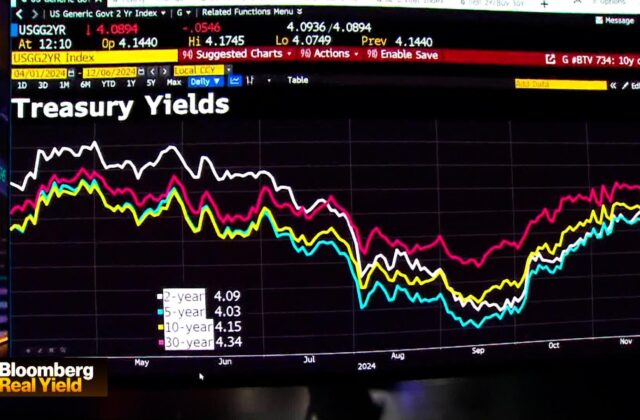
U.S. Treasury Doubles Bond Buybacks: Why Markets Are Still Worried About Rising Yields
The Treasury Just Sent Two Messages to Wall Street At first glance, this looks like a straightforward market-support operation. Treasury says: We want to improve liquidity in longer-dated Treasury securities. Investors hear: Washington is increasingly concerned about the rise in long-term borrowing costs. And that second interpretation is what makes this story important. The Treasury...
 Finance
Walmart Stock Plunges 6%: What Its Weak Outlook Says About the U.S. Consumer
Walmart Stock Plunges 6% — But the Earnings Were Not Actually Bad This is where the headline can be misleading. Walmart did not report a disastrous quarter. Quite the opposite. Revenue rose 5.9%, operating income increased 28.8%, e-commerce remained extremely strong and Walmart raised its full-year sales and profit expectations. Yet investors immediately sold the...
Comments (0)