
SpaceX Just Broke Another Launch Record: Two Falcon 9 Rockets Took Off Minutes Apart
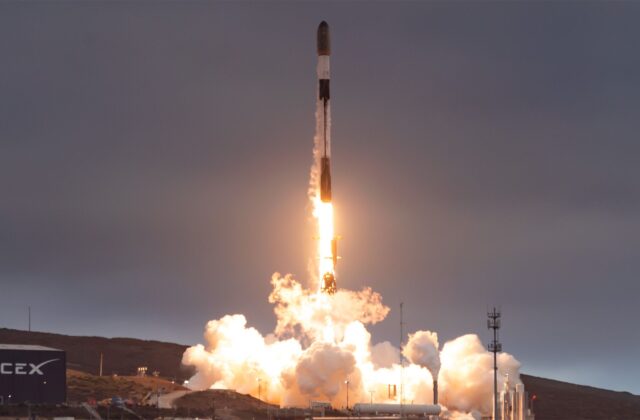
SpaceX Just Broke Another Launch Record: Two Falcon 9 Rockets Took Off Minutes Apart SpaceX has delivered another striking demonstration of its rapid-launch capability, sending two Falcon 9 missions into orbit in the same evening with only about 38 minutes separating the liftoffs. The back-to-back launches involved the USSF-366 mission from California and the Globalstar...
TheBusinessNow
Aug 16, 2026 · 3 min Read
Key Highlights
- SpaceX conducted two Falcon 9 launches in rapid succession.
- The launches were separated by roughly 38 minutes, according to the supplied reporting.
- One mission was USSF-366, a U.S. Space Force mission launched from Vandenberg Space Force Base in California.
- The other was Globalstar 2R, launched from Cape Canaveral Space Force Station in Florida.
- The missions demonstrate SpaceX's ability to coordinate launches from two U.S. coasts during a compressed period.
- USSF-366 carried a U.S. Space Force payload; its launch was tracked from Vandenberg's SLC-4E.
SpaceX Just Broke Another Launch Record: Two Falcon 9 Rockets Took Off Minutes Apart
SpaceX has delivered another striking demonstration of its rapid-launch capability, sending two Falcon 9 missions into orbit in the same evening with only about 38 minutes separating the liftoffs. The back-to-back launches involved the USSF-366 mission from California and the Globalstar 2R mission from Florida, highlighting how SpaceX is pushing toward an increasingly airline-like launch cadence.
The achievement is bigger than simply seeing two rockets launch on the same day.
For the commercial space industry, the time between launches is becoming one of the most important measures of operational efficiency.
And SpaceX’s latest doubleheader shows just how quickly that gap is shrinking.
🚀 What Happened During SpaceX’s Doubleheader?
SpaceX’s latest launch sequence involved two Falcon 9 missions operating from opposite sides of the United States.
The first was USSF-366, launched from Space Launch Complex 4E at Vandenberg Space Force Base in California.
The second was Globalstar 2R, launched from Space Launch Complex 40 at Cape Canaveral Space Force Station in Florida.
Launch tracking data shows USSF-366 lifting off at approximately 21:51 UTC on August 16, while the Globalstar mission followed shortly afterward from Florida.
That geographical separation makes the achievement particularly interesting.
SpaceX wasn’t simply preparing a second rocket at the same launch pad.
It was coordinating operations at two separate launch complexes thousands of miles apart.
⏱️ Why a 38-Minute Gap Matters
A rocket launch involves far more than pressing a button.
Before liftoff, teams have to coordinate:
- launch vehicle preparation;
- payload systems;
- weather;
- range safety;
- airspace;
- tracking networks;
- ground systems;
- fueling;
- communications;
- and recovery operations.
Reducing the interval between launches therefore requires an enormous amount of coordination.
SpaceX has spent years building an operational system designed around frequent Falcon 9 flights.
The latest doubleheader shows what that system can produce when missions line up successfully.
🇺🇸 USSF-366: The Military Mission
USSF-366 is a mission for the United States Space Force.
It launched aboard a Falcon 9 from Vandenberg Space Force Base in California.
The launch was tracked from SLC-4E, one of SpaceX’s major West Coast launch facilities.
The military nature of the mission is significant because the U.S. government increasingly depends on commercial launch providers for rapid and reliable access to space.
SpaceX’s reusable Falcon 9 system gives government customers access to a launch architecture that can support frequent missions.
That is increasingly important as military planners look at space not merely as a scientific domain, but as critical infrastructure for:
- communications;
- navigation;
- surveillance;
- missile warning;
- intelligence;
- and national security.
🛰️ Globalstar 2R Adds Another Piece to the Story
The second mission involved Globalstar 2R, launched from Florida.
Launch tracking information listed the mission as a Falcon 9 Block 5 flight from Cape Canaveral Space Force Station.
Globalstar’s satellite network supports satellite communications services, making the mission part of the broader commercial satellite-infrastructure expansion.
This illustrates another important aspect of SpaceX’s business.
The company isn’t dependent on one type of customer.
Its launch manifest can include:
government payloads + commercial satellites + broadband spacecraft + scientific missions + crewed spacecraft.
That diversity helps SpaceX maintain a high flight rate.
🌎 Two Coasts, One Launch Machine
Perhaps the most impressive part of the achievement is the geographic scale.
USSF-366 operated from California.
Globalstar 2R operated from Florida.
That means SpaceX’s launch infrastructure effectively supported two missions at opposite ends of the continental United States within an extremely short period.
This is the type of operational flexibility that competitors will have to consider carefully.
A launch company doesn’t just need a good rocket.
It needs:
launch pads + trained teams + range access + supply chains + recovery infrastructure + flight-proven hardware.
SpaceX has spent years building that ecosystem.
🔄 Reusability Is the Hidden Story
The Falcon 9’s first-stage reusability is central to SpaceX’s high-frequency launch strategy.
Instead of treating every booster as disposable hardware, SpaceX can recover and refurbish first stages for future missions.
That changes the economics of launch.
A reusable rocket can potentially:
- reduce hardware costs;
- increase launch frequency;
- shorten production pressure;
- improve operational experience;
- and make frequent launches economically viable.
The more often SpaceX flies, the more valuable that infrastructure becomes.
This creates a feedback loop:
More launches → more experience → better operations → greater capacity → more customers → more launches.
🏭 SpaceX Is Moving Toward a Different Launch Philosophy
Traditional space programs often treated launches as major individual events.
SpaceX’s Falcon 9 operation increasingly resembles a transportation network.
The objective isn’t simply:
“Can we launch a rocket?”
It’s becoming:
“How many reliable launches can we perform?”
That is a fundamentally different business model.
If rockets become routine transportation rather than rare events, satellite companies can build their businesses around predictable access to orbit.
That could accelerate the deployment of:
- communications satellites;
- Earth-observation spacecraft;
- navigation systems;
- defense satellites;
- scientific instruments;
- and large satellite constellations.
🇺🇸 Why This Matters for the U.S. Space Industry
The U.S. government is increasingly looking for rapid access to space.
That includes both military and commercial requirements.
For the Space Force, launch capacity can become strategically important during periods of geopolitical tension.
If satellites are damaged, disrupted or lost, replacing them quickly could become a national-security requirement.
A launch provider capable of rapidly preparing another mission gives the U.S. more flexibility.
That makes SpaceX’s launch cadence relevant far beyond the company’s commercial ambitions.
📈 What This Means for SpaceX
The biggest long-term advantage may not be a single launch record.
It is operational repetition.
Every successful launch provides additional data about:
- engines;
- flight procedures;
- booster recovery;
- payload integration;
- ground operations;
- weather constraints;
- and launch scheduling.
That accumulated experience can make future missions easier to organize.
In other words, SpaceX isn’t simply accumulating launches.
It is accumulating operational knowledge.
⚠️ But Fast Launches Don’t Mean Zero Risk
High launch frequency also creates challenges.
More missions mean more opportunities for:
- technical anomalies;
- weather delays;
- range conflicts;
- payload problems;
- ground-system issues;
- and recovery complications.
A company operating at an extremely high cadence has to maintain reliability while simultaneously increasing speed.
That balance is critical.
The real achievement isn’t launching quickly once.
It is launching quickly without allowing reliability to deteriorate.
🌴 Florida’s Space Coast Is Getting Busier
The latest activity comes as Florida prepares for an increasingly crowded launch schedule.
Launch tracking sources list additional SpaceX missions from Cape Canaveral later in August, including the Nancy Grace Roman Space Telescope mission aboard Falcon Heavy, currently listed for August 30.
Another Globalstar mission is also listed in the Florida schedule.
That means the Space Coast could see continued heavy activity throughout the remainder of the month.
Florida Today has also highlighted the growing interest in viewing SpaceX launches from Florida, including the importance of choosing locations where liftoff and sonic booms can be experienced safely.
Launch schedules remain subject to change because of weather, technical issues and range restrictions.
👀 What Should SpaceX Watchers Look for Next?
The most interesting question isn’t whether SpaceX can launch two Falcon 9s rapidly.
It is whether this kind of cadence can become increasingly routine.
Watch for three things:
1. Shorter launch intervals
Can SpaceX repeatedly reduce the amount of time between successful missions?
2. Booster turnaround
How efficiently can individual Falcon 9 first stages return to service?
3. Increasing mission diversity
Can SpaceX maintain a high flight rate while serving government, commercial, scientific and communications customers simultaneously?
Those factors will help determine whether today’s record becomes tomorrow’s normal operation.
🔮 Outlook: Is This the Future of Rocket Launches?
The direction of the industry appears increasingly clear.
Launches are becoming more frequent.
Rocket stages are becoming reusable.
Satellite constellations are getting larger.
Government agencies are becoming more dependent on commercial providers.
And customers increasingly want predictable access to orbit rather than occasional launch opportunities.
SpaceX’s rapid Falcon 9 doubleheader provides a glimpse of what that future could look like.
The ultimate goal isn’t simply to break another launch record.
It’s to make rapid access to space routine.
If SpaceX can maintain high launch frequency while preserving Falcon 9 reliability and improving booster turnaround, the economics of getting hardware into orbit could continue changing across the industry.
💰 Could SpaceX’s Launch Pace Affect the Broader Space Economy?
Absolutely.
A higher launch cadence can create opportunities throughout the space ecosystem.
Satellite manufacturers can schedule deployments more confidently.
Communications companies can replace spacecraft faster.
Defense agencies can diversify launch options.
Earth-observation companies can deploy larger constellations.
And startups can potentially develop missions without waiting months or years for an available rocket.
The rocket therefore becomes more than transportation.
It becomes an enabling piece of the entire space economy.
🪙 SpaceX, Space Stocks and Gold: Why Investors Should Watch the Bigger Picture
SpaceX itself is not publicly traded, so investors cannot simply buy a SpaceX stock through a standard exchange.
But the company’s launch activity can influence sentiment around the wider space and aerospace ecosystem.
At the same time, investors tracking broader markets should remember that geopolitical and economic developments can affect traditional safe-haven assets.
For readers following gold alongside technology, defense and space-market developments, GoldPriceNow.in provides live gold-price information and related tools.
SpaceX’s launch record itself isn’t a direct gold-price catalyst.
Gold remains much more sensitive to:
- Federal Reserve policy;
- interest rates;
- Treasury yields;
- the U.S. dollar;
- inflation expectations;
- and geopolitical risk.
🏁 Bottom Line
SpaceX’s latest Falcon 9 doubleheader is about more than two rockets launching close together.
It demonstrates the growing maturity of a launch system built around reusability, infrastructure and high operational frequency.
USSF-366 and Globalstar 2R represented very different customers and missions, yet both could be handled through the same broader Falcon 9 launch architecture.
That is the real significance.
The space industry is moving toward a world where launching a satellite isn’t necessarily a once-in-a-while event.
It could become a routine transportation service.
And SpaceX is currently pushing hardest to make that vision a reality.
❓ FAQs
How far apart were the two SpaceX launches?
The two Falcon 9 missions were separated by approximately 38 minutes, according to the supplied reporting.
What was the first SpaceX mission?
The first mission was USSF-366, a United States Space Force mission launched from Vandenberg Space Force Base in California. Launch tracking records identify SLC-4E as the launch site.
What was the second SpaceX mission?
The second mission was Globalstar 2R, launched from Cape Canaveral Space Force Station in Florida aboard a Falcon 9 Block 5.
Why is the 38-minute gap important?
It demonstrates SpaceX’s ability to coordinate multiple missions at different launch facilities within a very compressed period. That capability is important for increasing overall launch capacity.
What is Falcon 9?
Falcon 9 is SpaceX’s two-stage orbital launch vehicle. Its first stage is designed to return and land for potential reuse.
Why is rocket reusability important?
Reusing rocket hardware can reduce the amount of new hardware required for each mission and support a higher launch cadence.
Does SpaceX launch only its own satellites?
No. SpaceX launches payloads for government agencies, commercial satellite operators and other customers.
Where was USSF-366 launched?
USSF-366 launched from Space Launch Complex 4E at Vandenberg Space Force Base, California.
Where was Globalstar 2R launched?
Globalstar 2R launched from Cape Canaveral Space Force Station in Florida.
Are more SpaceX launches planned from Florida?
Yes. Launch schedules list additional SpaceX missions from Cape Canaveral and Kennedy Space Center, including the Nancy Grace Roman Space Telescope mission later in August. However, launch dates can change because of weather, technical issues and range constraints.
Can I track future SpaceX launches?
Yes. Official mission information and launch schedules are available through SpaceX and launch-tracking resources.
🌐 Key Resources
Keep reading
Related Articles
 Crypto
₿ Bitcoin Breaks Above $72,000: Why Trump’s Crypto Push Is Sending Crypto Stocks Higher
Bitcoin’s $72,000 Move Is Bigger Than Bitcoin A typical crypto headline would be: Bitcoin jumps above $72,000. But that misses the most important part of today’s move. The interesting part is the simultaneous rally in: Bitcoin ↓ Coinbase ↓ Strategy ↓ Circle ↓ Robinhood ↓ Bitcoin miners ↓ Crypto infrastructure That tells us investors aren’t...
 Markets
U.S. Treasury Doubles Bond Buybacks: Why Markets Are Still Worried About Rising Yields
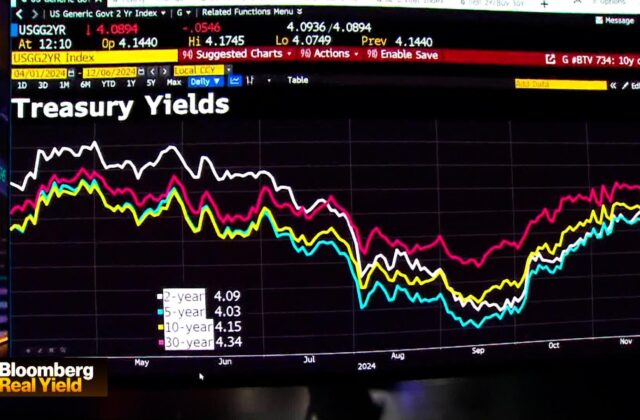
The Treasury Just Sent Two Messages to Wall Street At first glance, this looks like a straightforward market-support operation. Treasury says: We want to improve liquidity in longer-dated Treasury securities. Investors hear: Washington is increasingly concerned about the rise in long-term borrowing costs. And that second interpretation is what makes this story important. The Treasury...
 Commodities
Oil Nears $95: Could the Iran War Trigger a New U.S. Inflation Shock?
Oil at $95 Is Not the Real Story A crude-oil headline is easy to write: “Oil prices rise as Iran tensions escalate.” Reuters, Bloomberg, CNBC and WSJ can publish that story within minutes. But for TheBusinessNow, that isn’t enough. The bigger question is: What happens to the American economy if oil stays near $95 —...
Comments (0)