
Russia Sanctions Bill Updated: U.S. Senators Revise Russia Oil Tariffs, Add Gas Import Exceptions – What It Means for Global Energy Markets
Russia Sanctions Bill Updated: U.S. Revises Oil Tariffs and Gas Import Rules The Russia Sanctions Bill Updated on Wednesday after U.S. senators introduced significant revisions to proposed legislation targeting Russian energy exports. The latest version softens several of the toughest measures while maintaining economic pressure on Moscow, marking an important shift in Washington’s sanctions strategy....
TheBusinessNow
Jul 14, 2026 · 2 min Read
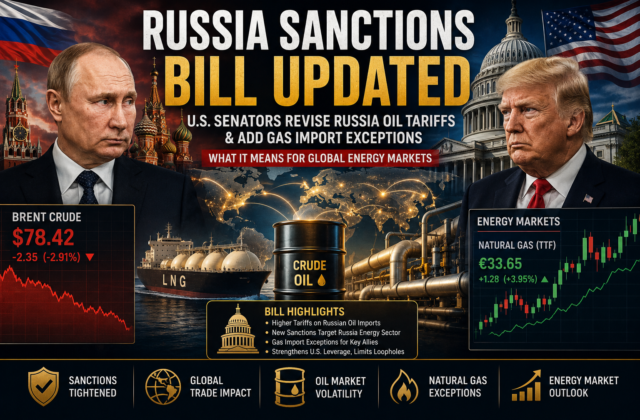
Key Highlights
- U.S. senators introduced a revised Russia sanctions bill targeting Russian oil and gas exports.
- Maximum proposed tariffs were reduced from 500% to 100%, signaling a more balanced sanctions approach.
- Countries importing less than 15% of Russia's natural gas may qualify for exemptions if they are actively reducing dependence on Russian energy.
- The revised legislation aims to maintain pressure on Russia while minimizing disruption to global energy markets.
- Lower tariffs could reduce the risk of sharp spikes in global crude oil and natural gas prices.
- Investors are closely watching the bill for its potential impact on oil prices, inflation, and global trade.
Russia Sanctions Bill Updated: U.S. Revises Oil Tariffs and Gas Import Rules
The Russia Sanctions Bill Updated on Wednesday after U.S. senators introduced significant revisions to proposed legislation targeting Russian energy exports. The latest version softens several of the toughest measures while maintaining economic pressure on Moscow, marking an important shift in Washington’s sanctions strategy.
Instead of imposing a blanket 500% tariff on countries purchasing Russian oil and gas, lawmakers have proposed a more targeted framework that lowers the maximum tariff to 100% and introduces exemptions for certain natural gas importers.
The revised proposal reflects an effort to balance geopolitical pressure with global energy market stability.
Russia Sanctions Bill Updated: What Has Changed?
The biggest change in the Russia Sanctions Bill Updated is the reduction of proposed tariffs on major buyers of Russian oil and gas.
Key revisions include:
- Maximum tariff reduced from 500% to 100%
- New exemptions for qualifying natural gas importers
- Countries importing less than 15% of Russia’s natural gas may qualify for relief
- Governments must demonstrate meaningful efforts to reduce dependence on Russian energy
- The revised legislation is designed to pressure Russia while limiting disruption to global energy supplies
Lawmakers say the updated framework offers greater flexibility without abandoning sanctions entirely.
Russia Sanctions Bill Updated: Gas Import Exceptions Explained
One of the most closely watched additions to the Russia Sanctions Bill Updated is a new exemption mechanism for natural gas.
Countries that import less than 15% of Russia’s natural gas exports may avoid the full sanctions if they can prove they are actively diversifying energy sources.
The goal is to avoid penalizing nations already reducing reliance on Russian energy while encouraging further diversification.
Analysts say this approach could reduce unintended economic consequences for allied economies still transitioning away from Russian supplies.
Russia Sanctions Bill Updated: Why the U.S. Softened the Proposal
Several factors likely influenced lawmakers to revise the sanctions proposal.
These include:
- Concerns over higher global oil prices
- Inflation risks linked to energy markets
- Pressure from allied nations dependent on imported energy
- The need to avoid disruptions in global supply chains
- Maintaining international support for sanctions against Russia
Rather than pursuing maximum economic pressure regardless of market impact, the updated bill seeks a more balanced approach.
Russia Sanctions Bill Updated: What It Means for Oil Prices
Energy traders are watching the Russia Sanctions Bill Updated closely because sanctions on Russian exports can significantly affect global crude supplies.
Potential market impacts include:
- Lower risk of sudden supply disruptions
- Reduced probability of extreme oil price spikes
- Continued uncertainty for energy traders
- Stable outlook for international shipping routes
- Possible moderation in inflation expectations if energy prices remain contained
Oil markets typically react quickly to geopolitical developments involving Russia because it remains one of the world’s largest energy exporters.
Russia Sanctions Bill Updated: Could This Affect Inflation?
Energy costs remain one of the biggest drivers of global inflation.
If the revised sanctions reduce the risk of severe supply shortages, governments could see:
- Lower fuel price volatility
- More stable transportation costs
- Reduced pressure on consumer prices
- Improved inflation outlook compared with harsher sanction scenarios
However, markets will continue monitoring geopolitical developments before pricing in long-term expectations.
Russia Sanctions Bill Updated: What Investors Are Watching Next
Investors are now focused on several upcoming developments:
- Congressional progress of the revised legislation
- International response from major energy-importing nations
- Russia’s reaction to the proposed sanctions
- Oil and natural gas price movements
- Potential effects on global inflation and central bank policy
Any further amendments could quickly influence commodity markets, currencies, and energy-sector stocks.
Final Thoughts on the Russia Sanctions Bill Updated
The Russia Sanctions Bill Updated signals a notable shift in U.S. policy by maintaining pressure on Russia while reducing the risk of major disruptions to global energy markets.
Lowering proposed tariffs from 500% to 100%, along with introducing natural gas exemptions for qualifying countries, reflects an effort to strike a balance between geopolitical objectives and economic stability.
While the legislation still faces the legislative process, investors, policymakers, and energy markets will continue watching closely for additional changes that could influence oil prices, inflation, and global trade.
Frequently Asked Questions (FAQs)
What is the Russia Sanctions Bill Updated?
The Russia Sanctions Bill Updated is a revised U.S. sanctions proposal targeting Russian energy exports while modifying earlier tariff provisions.
Why was the tariff reduced from 500% to 100%?
Lawmakers revised the proposal to reduce the risk of global energy disruptions and limit inflationary pressure while maintaining sanctions.
What are the new gas import exceptions?
Countries importing less than 15% of Russia’s natural gas may qualify for exemptions if they demonstrate efforts to reduce dependence on Russian energy.
Will the Russia Sanctions Bill Updated affect oil prices?
The bill could influence oil prices depending on its final form, market expectations, and Russia’s response.
Has the Russia Sanctions Bill Updated become law?
The revised proposal has been introduced but must still move through the legislative process before becoming law.
About TheBusinessNow
TheBusinessNow delivers global coverage of business, finance, technology, geopolitics, commodities, and economic trends. Our goal is to provide readers with original, fact-based analysis that explains how world events shape markets and investment decisions.
Read More – Why Oil Markets, Global Shipping, and Energy Prices Could Change After Trump’s Latest Remarks
Live Market Watch
Keep reading
Related Articles
 Crypto
₿ Bitcoin Breaks Above $72,000: Why Trump’s Crypto Push Is Sending Crypto Stocks Higher
Bitcoin’s $72,000 Move Is Bigger Than Bitcoin A typical crypto headline would be: Bitcoin jumps above $72,000. But that misses the most important part of today’s move. The interesting part is the simultaneous rally in: Bitcoin ↓ Coinbase ↓ Strategy ↓ Circle ↓ Robinhood ↓ Bitcoin miners ↓ Crypto infrastructure That tells us investors aren’t...
 Markets
U.S. Treasury Doubles Bond Buybacks: Why Markets Are Still Worried About Rising Yields
The Treasury Just Sent Two Messages to Wall Street At first glance, this looks like a straightforward market-support operation. Treasury says: We want to improve liquidity in longer-dated Treasury securities. Investors hear: Washington is increasingly concerned about the rise in long-term borrowing costs. And that second interpretation is what makes this story important. The Treasury...
 Commodities
Oil Nears $95: Could the Iran War Trigger a New U.S. Inflation Shock?
Oil at $95 Is Not the Real Story A crude-oil headline is easy to write: “Oil prices rise as Iran tensions escalate.” Reuters, Bloomberg, CNBC and WSJ can publish that story within minutes. But for TheBusinessNow, that isn’t enough. The bigger question is: What happens to the American economy if oil stays near $95 —...
Comments (0)