
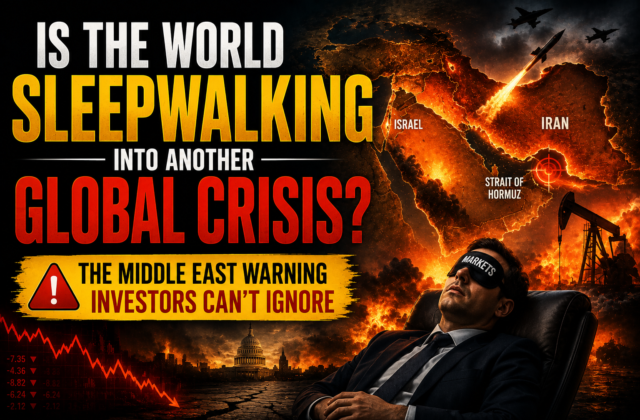
Is the World Sleepwalking Into Another Global Crisis? The Middle East Warning Investors Can’t Ignore
Is the World Sleepwalking Into Another Global Crisis? The Middle East Warning Investors Can’t Ignore For years, investors believed the biggest threats to the global economy would come from inflation, banking failures, or recession. But today, financial markets are watching something entirely different. A narrow stretch of water in the Middle East. Fresh reports of...
TheBusinessNow
Jul 21, 2026 · 3 min Read
Key Highlights
- 🚨 Fresh security concerns have renewed global attention on the Strait of Hormuz.
- 🛢️ Markets are closely monitoring oil supplies and shipping activity.
- 📈 Rising energy prices could complicate efforts to keep inflation under control.
- 📉 Global stock markets may experience increased volatility if tensions escalate.
- 🪙 Gold could attract renewed interest as a traditional safe-haven asset.
- 🚢 Global supply chains remain vulnerable to disruptions in key maritime routes.
- 🌍 Investors are watching for verified updates to assess the broader economic impact.
Is the World Sleepwalking Into Another Global Crisis? The Middle East Warning Investors Can’t Ignore
For years, investors believed the biggest threats to the global economy would come from inflation, banking failures, or recession.
But today, financial markets are watching something entirely different.
A narrow stretch of water in the Middle East.
Fresh reports of maritime security incidents near the Strait of Hormuz, including a commercial vessel reportedly struck by an unidentified projectile, have reignited fears over one of the world’s most important energy routes. While officials continue to assess the situation and details remain limited, the incident has forced investors to ask an uncomfortable question:
Are global markets underestimating the economic risks emerging from the Middle East?
History shows that some of the world’s biggest economic shocks have not begun inside financial institutions—they have started with geopolitical events that disrupted trade, energy, and investor confidence.
Why the Middle East Matters More Than Ever
The Middle East is not only a geopolitical hotspot; it is also one of the world’s most critical energy hubs.
The Strait of Hormuz connects the Persian Gulf with global shipping lanes and serves as the main export route for oil and liquefied natural gas from several Gulf producers.
Any disruption—whether real or feared—can quickly ripple through:
- Global oil prices
- Shipping costs
- Inflation
- Supply chains
- Financial markets
That is why even a single reported security incident receives worldwide attention.
Markets Don’t Wait for Confirmation—They React to Risk
One of the biggest lessons in financial history is that markets move on expectations.
If traders believe energy supplies could be affected, prices often react before any confirmed shortage occurs.
This can lead to:
- Increased oil price volatility
- Higher insurance costs for shipping
- Stronger demand for defensive assets
- Greater uncertainty across equity markets
In other words, perception alone can influence financial markets.
Why Oil Could Become the Biggest Story Again
Oil remains the foundation of the global economy.
If shipping risks around the Strait of Hormuz increase, energy traders may begin pricing in additional geopolitical risk.
A sustained rise in crude oil prices could affect:
- Fuel prices
- Transportation costs
- Manufacturing expenses
- Consumer inflation
Businesses across multiple industries would feel the impact if higher energy costs persist.
Could Inflation Return?
Central banks have spent years trying to bring inflation under control.
A significant increase in oil prices could make that challenge more difficult.
Higher fuel costs often spread through the economy, affecting:
- Food transportation
- Airline operations
- Logistics
- Industrial production
If inflation accelerates again, policymakers may face difficult decisions about future interest rates.
Stock Markets Could Face New Volatility
Financial markets generally respond negatively to uncertainty.
Sectors that depend heavily on stable energy prices may come under pressure.
Potentially Vulnerable
- Airlines
- Transportation
- Manufacturing
- Consumer discretionary businesses
Potential Beneficiaries
- Energy producers
- Oil service companies
- Defense-related industries
Market reactions will ultimately depend on how events unfold in the coming days.
Why Gold Is Back in Focus
Periods of geopolitical uncertainty often increase interest in traditional safe-haven assets.
Gold has historically attracted investors during times of:
- International conflict
- Rising inflation
- Market volatility
- Economic uncertainty
If geopolitical tensions remain elevated, gold may receive additional investor attention.
The Global Supply Chain Risk
The world economy depends on efficient maritime trade.
If shipping through the Strait of Hormuz becomes more difficult:
- Freight costs could rise.
- Insurance premiums may increase.
- Delivery times could lengthen.
- Businesses may face higher operating expenses.
Even temporary disruptions can create challenges for global supply chains.
Five Signals Investors Should Watch
Rather than reacting to headlines alone, investors should monitor:
- Oil price movements.
- Official updates from maritime authorities.
- Shipping activity through the Strait of Hormuz.
- Gold and other safe-haven assets.
- Statements from governments and central banks.
These developments will provide better insight into whether risks remain contained or begin affecting the broader economy.
Is a Global Crisis Inevitable?
Not necessarily.
At this stage, there is no confirmation that the current situation will develop into a global economic crisis.
However, investors are paying close attention because history has shown that disruptions involving major energy routes can influence inflation, financial markets, and global growth.
The key question is whether current tensions remain localized or evolve into a wider geopolitical challenge.
What This Means for Investors
Periods of uncertainty often remind investors of the importance of preparation rather than prediction.
Monitoring economic data, maintaining diversified portfolios, and following verified information may prove more valuable than reacting to speculation.
As events continue to develop, the Middle East is likely to remain one of the most closely watched regions by governments, businesses, and financial markets alike.
Conclusion
The recent security concerns surrounding the Strait of Hormuz have once again highlighted how closely geopolitics and the global economy are connected.
While it is too early to conclude that a broader crisis is underway, the developments serve as a reminder that key shipping routes, energy supplies, and investor confidence can all be affected by regional instability.
For now, markets remain alert, waiting to see whether this proves to be an isolated incident—or the beginning of a larger economic story.
Frequently Asked Questions
Why is the Strait of Hormuz important?
It is one of the world’s most strategically important maritime routes for oil and natural gas exports, making it critical to global energy markets.
Has a new global crisis begun?
There is currently no confirmation of a global crisis. Markets are responding to increased geopolitical uncertainty while awaiting further official information.
Could this affect oil prices?
Yes. Concerns about shipping risks can influence oil prices even before any confirmed disruption to supply.
Which investments are most sensitive to Middle East tensions?
Oil, energy stocks, shipping companies, airlines, gold, and broader equity markets often react to developments in the region.
About TheBusinessNow
TheBusinessNow delivers global coverage of business, finance, technology, geopolitics, commodities, and economic trends. Our goal is to provide readers with original, fact-based analysis that explains how world events shape markets and investment decisions.
Watch Gold Price Live – GoldPriceNow.in
Keep reading
Related Articles
 Crypto
₿ Bitcoin Breaks Above $72,000: Why Trump’s Crypto Push Is Sending Crypto Stocks Higher
Bitcoin’s $72,000 Move Is Bigger Than Bitcoin A typical crypto headline would be: Bitcoin jumps above $72,000. But that misses the most important part of today’s move. The interesting part is the simultaneous rally in: Bitcoin ↓ Coinbase ↓ Strategy ↓ Circle ↓ Robinhood ↓ Bitcoin miners ↓ Crypto infrastructure That tells us investors aren’t...
 Markets
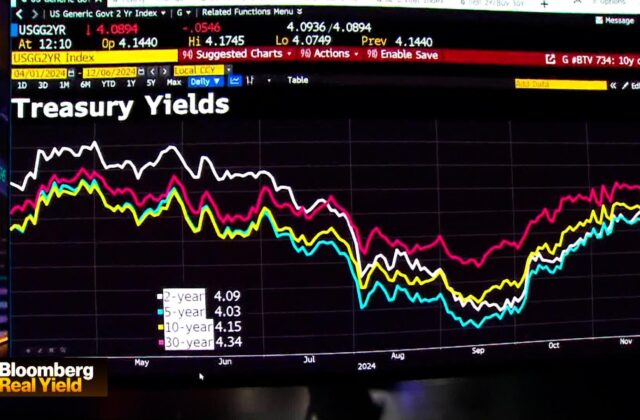
U.S. Treasury Doubles Bond Buybacks: Why Markets Are Still Worried About Rising Yields
The Treasury Just Sent Two Messages to Wall Street At first glance, this looks like a straightforward market-support operation. Treasury says: We want to improve liquidity in longer-dated Treasury securities. Investors hear: Washington is increasingly concerned about the rise in long-term borrowing costs. And that second interpretation is what makes this story important. The Treasury...
 Commodities
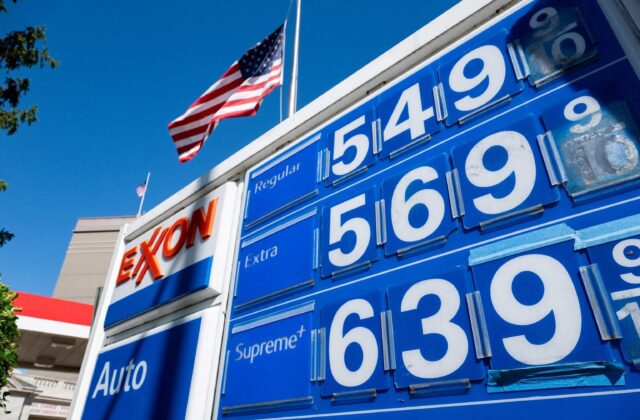
Oil Nears $95: Could the Iran War Trigger a New U.S. Inflation Shock?
Oil at $95 Is Not the Real Story A crude-oil headline is easy to write: “Oil prices rise as Iran tensions escalate.” Reuters, Bloomberg, CNBC and WSJ can publish that story within minutes. But for TheBusinessNow, that isn’t enough. The bigger question is: What happens to the American economy if oil stays near $95 —...
Comments (0)