
Dow Plunges 1,153 Points After Fed Decision as Wall Street Faces Fresh Rate Shock
Dow Plunges 1,153 Points After Fed Decision as Wall Street Faces Fresh Rate Shock The Dow Jones Industrial Average suffered its worst trading day in more than a year, tumbling 1,153.18 points, or 2.2%, to 51,594.14 on Wednesday after the Federal Reserve kept interest rates unchanged but delivered a message that investors interpreted as more...
John Mark
Jul 30, 2026 · 3 min Read
Key Highlights
- 📉 Dow plunges 1,153 points in its worst session in more than a year
- 🏦 Federal Reserve keeps interest rates unchanged for a fifth consecutive meeting
- ⚠️ Three Fed officials dissented in favor of a rate hike
- 📊 S&P 500 falls 1.5% while Nasdaq drops 1.7%
- 🛢️ Oil prices surge, adding to inflation and interest-rate concerns
- 💻 Technology and AI-related stocks suffer heavy selling
Dow Plunges 1,153 Points After Fed Decision as Wall Street Faces Fresh Rate Shock
The Dow Jones Industrial Average suffered its worst trading day in more than a year, tumbling 1,153.18 points, or 2.2%, to 51,594.14 on Wednesday after the Federal Reserve kept interest rates unchanged but delivered a message that investors interpreted as more hawkish than expected. The S&P 500 fell 1.5%, while the Nasdaq Composite dropped 1.7%.
The sell-off came as investors digested the Fed’s decision, rising oil prices and renewed geopolitical tensions. Brent crude also jumped sharply, adding another layer of inflation pressure to an already nervous market.
Why Did the Dow Fall So Sharply?
The immediate trigger was the Federal Reserve’s latest interest-rate decision.
While the Fed left rates unchanged, investors were particularly focused on the central bank’s commentary and the disagreement among policymakers.
Three officials voted for a 25-basis-point rate increase, revealing a significant divide over whether inflation risks remain high enough to justify tighter monetary policy.
That matters for stocks because higher interest rates can increase borrowing costs and reduce the relative attractiveness of riskier assets.
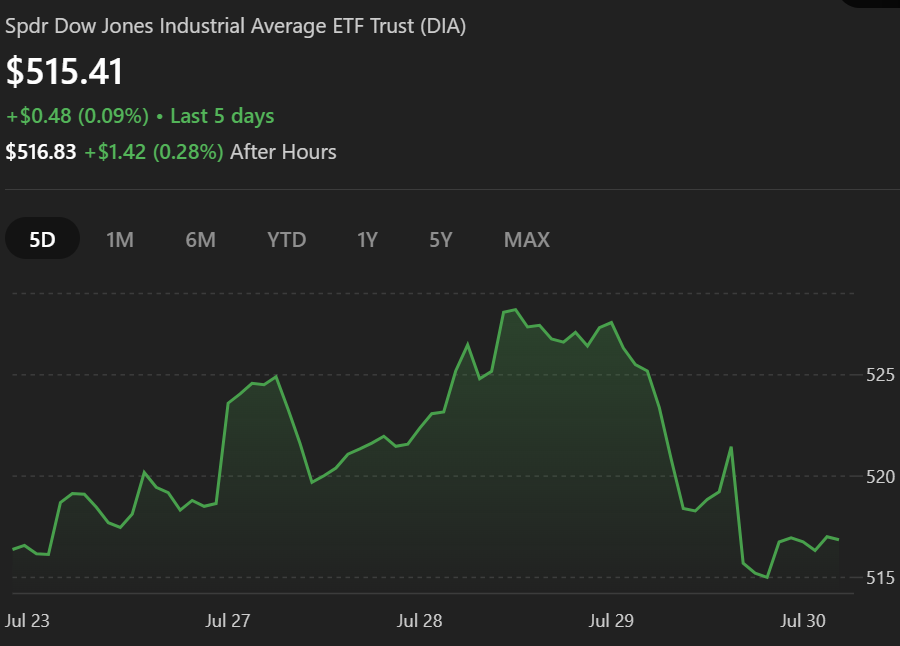
The Dow’s 1,153-Point Drop Is a Major Warning Signal
The Dow’s decline was significant not simply because of the number of points lost, but because of the speed and scale of the move.
The index fell 2.2%, its worst daily performance in more than a year.
The broader market also suffered:
| Index | Wednesday Move |
|---|---|
| Dow Jones | -2.2% |
| S&P 500 | -1.5% |
| Nasdaq Composite | -1.7% |
| Russell 2000 | -1.6% |
The sell-off was broad enough to demonstrate that investors were reassessing the outlook for monetary policy rather than simply reacting to weakness in one particular sector.
What the Fed Decision Means for Investors
The Federal Reserve’s decision to hold rates steady was not itself a major surprise.
The bigger issue was what comes next.
Investors had been hoping for clearer signs that borrowing costs could eventually decline. Instead, the dissenting votes for a hike reinforced the possibility that policymakers could remain focused on inflation for longer.
That creates uncertainty for markets because investors must reassess expectations for:
- Future rate cuts
- Treasury yields
- Corporate borrowing costs
- Mortgage rates
- Technology valuations
- The U.S. dollar
Oil Prices Add Another Inflation Threat
The stock-market sell-off was also accompanied by a sharp jump in crude oil prices.
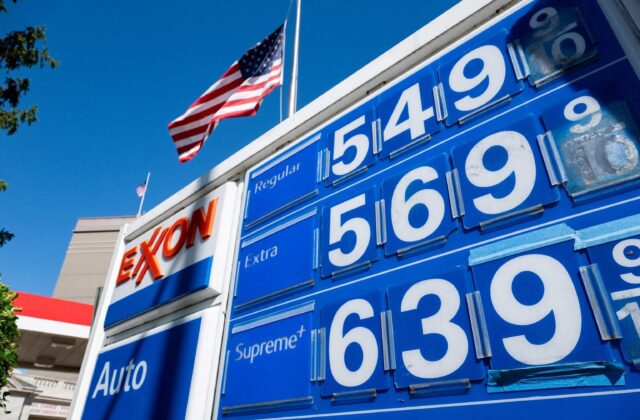
Brent crude rose more than 7% during Wednesday’s trading, settling above $88 a barrel, according to AP.
Higher oil prices can feed into inflation by increasing transportation, manufacturing and energy costs.
That creates a difficult situation for the Federal Reserve.
If energy prices remain elevated, inflation could prove more persistent — potentially reducing the central bank’s ability to cut interest rates.
Technology Stocks Take a Hit
Technology and AI-related stocks were among the areas hit by the broader market decline.
Investors have increasingly questioned whether enormous spending on artificial intelligence infrastructure will generate sufficient returns, while higher interest-rate expectations can put additional pressure on high-growth companies.
The Nasdaq’s 1.7% decline reflected the weakness across technology-heavy areas.
For investors heavily exposed to technology and AI stocks, the latest session is another reminder that market sentiment can change quickly when interest-rate expectations shift.
Has the Stock Market Crash Started?
A single bad trading session does not automatically mean a stock-market crash is beginning.
Despite Wednesday’s losses, the major U.S. indexes remained significantly higher for the year. The S&P 500 was still up 6.9% year-to-date, while the Dow remained up 7.3% and the Nasdaq was up 5.2%, according to AP.
However, the combination of:
higher oil prices + inflation concerns + Fed uncertainty + geopolitical risk
could create a more volatile environment for investors.
What Happened After Previous 1,000-Point Dow Drops?
History shows that a 1,000-point Dow decline does not automatically predict what happens next.
The raw point size also needs context because the Dow’s level has changed substantially over time. A 1,000-point decline represents a much smaller percentage move today than it would have decades ago.
Investors should therefore pay greater attention to percentage declines, market breadth, credit conditions and economic data rather than the headline point figure alone.
The latest 2.2% decline is considerably more meaningful than simply saying the Dow lost 1,153 points.
What Investors Should Watch Next
The next few trading sessions could be particularly important.
Markets will be watching:
📊 Inflation data
Any renewed acceleration could strengthen the case for keeping rates higher.
👷 Employment data
A weakening labor market could eventually support a less restrictive Fed stance.
🛢️ Oil prices
Persistent energy inflation could complicate the Fed’s policy outlook.
💵 Treasury yields
Higher yields can put additional pressure on stock valuations.
💻 Technology earnings
Investors will continue examining whether massive AI investments are translating into actual profits.
🌍 Geopolitical developments
Escalation in the Middle East could further affect oil prices and risk appetite.
What This Means for Gold
The market turmoil also matters for precious metals.
Gold can attract safe-haven demand when investors become concerned about inflation, geopolitical instability or financial-market volatility. However, higher interest-rate expectations can work against gold because the metal does not pay interest.
That creates a complicated environment for bullion investors.
The direction of real yields, the U.S. dollar, inflation expectations and geopolitical risk will remain crucial.
👉 Track live gold prices and precious-metal markets at GoldPriceNow.in.
The Bigger Picture for Wall Street
Wednesday’s sell-off demonstrates that markets remain highly sensitive to Federal Reserve policy.
The Fed does not need to raise rates for stocks to fall sharply. Even holding rates steady can trigger a sell-off if investors interpret the central bank’s communication as more hawkish than expected.
With oil prices rising and inflation concerns still present, investors may have to prepare for a longer period of uncertainty before the path of interest rates becomes clearer.
Conclusion
The Dow’s 1,153-point plunge was one of the biggest Wall Street declines of the year and the index’s worst session in more than a year.
The Federal Reserve’s decision to hold rates steady, combined with three dissenting votes for a hike, rising oil prices and geopolitical uncertainty, created a difficult environment for stocks.
For investors, the key question is no longer simply whether the Fed will cut rates. The bigger question is whether persistent inflation will force policymakers to keep borrowing costs elevated for longer than markets expect.
❓ FAQs
Why did the Dow fall 1,153 points?
The Dow dropped after investors reacted to the Federal Reserve’s interest-rate decision, policymakers’ hawkish signals, rising oil prices and broader economic uncertainty.
Did the Fed raise interest rates?
No. The Federal Reserve kept interest rates unchanged, but three policymakers voted for a 25-basis-point increase.
How much did the S&P 500 fall?
The S&P 500 dropped 1.5%, while the Nasdaq Composite fell 1.7%.
Is the Dow entering a stock-market crash?
Not necessarily. A single large decline does not establish a crash. The Dow and other major indexes remained substantially higher for the year despite Wednesday’s losses.
Could the Fed raise rates later?
The three dissenting votes show that a rate increase remains a possibility if inflation becomes more persistent, although future decisions will depend on incoming economic data.
What could happen to gold if stocks remain volatile?
Gold could benefit from safe-haven demand during periods of market and geopolitical uncertainty, although higher interest-rate expectations can create pressure on the metal.
📰 About The Business Now
The Business Now delivers coverage of global business, finance, markets, technology, AI, entertainment and breaking world news with fact-based reporting and analysis.
🪙 Check Live Gold Prices
Track Gold, Silver, Platinum and Palladium prices, historical charts, calculators and daily market updates at:
🌐 External Resources
Keep reading
Related Articles
 Crypto
₿ Bitcoin Breaks Above $72,000: Why Trump’s Crypto Push Is Sending Crypto Stocks Higher
Bitcoin’s $72,000 Move Is Bigger Than Bitcoin A typical crypto headline would be: Bitcoin jumps above $72,000. But that misses the most important part of today’s move. The interesting part is the simultaneous rally in: Bitcoin ↓ Coinbase ↓ Strategy ↓ Circle ↓ Robinhood ↓ Bitcoin miners ↓ Crypto infrastructure That tells us investors aren’t...
 Markets
U.S. Treasury Doubles Bond Buybacks: Why Markets Are Still Worried About Rising Yields
The Treasury Just Sent Two Messages to Wall Street At first glance, this looks like a straightforward market-support operation. Treasury says: We want to improve liquidity in longer-dated Treasury securities. Investors hear: Washington is increasingly concerned about the rise in long-term borrowing costs. And that second interpretation is what makes this story important. The Treasury...
 Commodities
Oil Nears $95: Could the Iran War Trigger a New U.S. Inflation Shock?
Oil at $95 Is Not the Real Story A crude-oil headline is easy to write: “Oil prices rise as Iran tensions escalate.” Reuters, Bloomberg, CNBC and WSJ can publish that story within minutes. But for TheBusinessNow, that isn’t enough. The bigger question is: What happens to the American economy if oil stays near $95 —...
Comments (0)