
Dollar vs Gold: Which Asset Could Win the Rest of 2026? The Investment Battle Every Investor Is Watching
Dollar vs Gold: Which Asset Could Win the Rest of 2026? The battle between the U.S. Dollar and Gold is once again dominating global financial markets. With central banks navigating inflation, interest rate uncertainty, geopolitical tensions, and slowing global growth, investors are asking one critical question: Should you hold dollars or buy gold for the...
TheBusinessNow
Jul 20, 2026 · 3 min Read
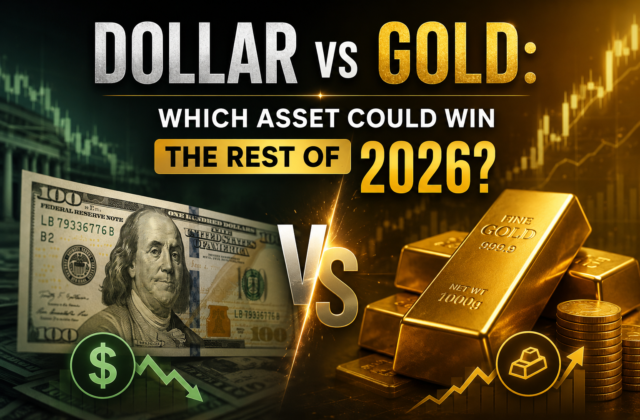
Key Highlights
- 💵 The Dollar vs Gold debate is intensifying as investors weigh inflation, interest rates, and geopolitical risks heading into the rest of 2026.
- 🏦 Federal Reserve policy and central bank gold buying could become the biggest catalysts for both assets in the coming months.
- 🌍 Global conflicts and economic uncertainty continue to boost demand for traditional safe-haven investments.
- 📈 A stronger U.S. economy could support the dollar, while falling interest rates may create favorable conditions for gold.
- 🪙 Central banks remain major buyers of gold, reinforcing its long-term role as a strategic reserve asset.
- 📊 Many institutional investors are choosing diversification instead of betting exclusively on either gold or the dollar.
Dollar vs Gold: Which Asset Could Win the Rest of 2026?
The battle between the U.S. Dollar and Gold is once again dominating global financial markets. With central banks navigating inflation, interest rate uncertainty, geopolitical tensions, and slowing global growth, investors are asking one critical question:
Should you hold dollars or buy gold for the rest of 2026?
Both assets have historically served as safe havens—but they often perform differently depending on economic conditions. While the U.S. dollar benefits from strong interest rates and global demand, gold thrives during uncertainty, inflation fears, and declining confidence in fiat currencies.
As the second half of 2026 unfolds, the stakes have never been higher.
Here’s an in-depth analysis of what could determine the winner.
Why the Dollar vs Gold Battle Matters
For decades, the U.S. Dollar has been the world’s primary reserve currency, while gold has been considered the ultimate store of value.
When markets become volatile, investors often rotate between these two assets.
Their performance influences:
- Global stock markets
- Commodity prices
- Inflation expectations
- Emerging market currencies
- Central bank reserves
- International trade
The outcome of this battle affects not only investors but also governments, businesses, and consumers around the world.
Why the Dollar Has Remained Strong
Several factors have supported the U.S. Dollar during 2026.
Higher Interest Rates
Higher U.S. interest rates increase the appeal of dollar-denominated assets by offering relatively attractive yields.
Safe-Haven Demand
During periods of geopolitical uncertainty, investors often move capital into U.S. Treasury securities and dollars.
Strong Global Demand
International trade, debt markets, and reserve management continue to rely heavily on the U.S. Dollar.
Relative Economic Stability
Even during periods of slower growth, the U.S. economy remains one of the most resilient globally.
Why Gold Could Stage a Major Rally
Despite dollar strength, gold continues attracting significant institutional interest.
Central Banks Keep Buying Gold
Many central banks have steadily increased their gold reserves to diversify away from excessive dependence on foreign currencies.
Inflation Concerns
Even if inflation moderates, persistent price pressures encourage investors to hold assets that historically preserve purchasing power.
Geopolitical Risks
Conflicts, sanctions, trade disputes, and political uncertainty generally increase demand for gold.
Potential Rate Cuts
If major central banks begin lowering interest rates, gold could benefit as the opportunity cost of holding non-yielding assets declines.
Dollar vs Gold: Historical Relationship
Historically, gold and the U.S. Dollar often move in opposite directions.
When the dollar strengthens:
- Gold frequently faces downward pressure.
When the dollar weakens:
- Gold often attracts increased investment demand.
However, exceptions occur during periods of extreme uncertainty when both assets receive safe-haven inflows simultaneously.
What Could Decide the Winner in the Rest of 2026?
1. Federal Reserve Policy
Interest rate decisions remain one of the most important drivers.
- Higher rates generally support the dollar.
- Lower rates often improve gold’s outlook.
2. Inflation
If inflation remains stubbornly high:
Gold could outperform.
If inflation falls sharply:
The dollar may retain its advantage.
3. Global Conflicts
Geopolitical tensions continue influencing investor behavior.
Escalating conflicts could increase demand for both assets, with gold historically benefiting from prolonged uncertainty.
4. Central Bank Gold Purchases
Record gold purchases by central banks remain one of the strongest long-term bullish factors.
If this trend continues, gold could receive additional structural support.
5. Economic Growth
A stronger global economy usually favors risk assets.
A slowing economy tends to increase demand for defensive investments such as gold and high-quality government bonds.
Investment Scenario Analysis
Scenario 1: Dollar Wins
If:
- Inflation cools significantly.
- U.S. growth remains resilient.
- Interest rates stay elevated.
Then:
- The dollar may outperform.
- Gold could trade sideways or experience moderate weakness.
Scenario 2: Gold Wins
If:
- Interest rates begin falling.
- Geopolitical risks intensify.
- Inflation remains persistent.
- Global uncertainty increases.
Then:
- Gold could outperform many traditional financial assets.
Scenario 3: Both Perform Well
This is also possible.
Periods of severe global uncertainty sometimes increase demand for both:
- U.S. Dollars
- Gold
As investors prioritize capital preservation.
What Billionaires and Institutions Are Doing
Institutional investors increasingly favor diversification rather than choosing only one asset.
Many large portfolios include:
- Gold
- U.S. Treasury securities
- Cash
- Equities
- Alternative investments
The goal is reducing concentration risk while maintaining flexibility during volatile markets.
How Individual Investors Should Think
Instead of asking:
Dollar or Gold?
A better question may be:
How much exposure should each asset have in a diversified portfolio?
Every investor’s objectives, time horizon, and risk tolerance differ.
Holding a mix of cash, diversified investments, and defensive assets may provide greater resilience than relying on a single market outcome.
Market Impact
The outcome of the Dollar vs Gold battle could influence:
Stock Markets
A stronger dollar can pressure multinational earnings, while a weaker dollar often supports commodity-linked sectors.
Commodities
Gold, silver, and oil frequently respond to shifts in dollar strength and global risk sentiment.
Emerging Markets
Many emerging economies are sensitive to changes in the U.S. Dollar because of trade and dollar-denominated debt.
Cryptocurrency
Some investors compare Bitcoin with gold as an alternative store of value, making currency trends relevant for digital assets as well.
What Should Investors Watch Next?
Key events for the remainder of 2026 include:
- Federal Reserve meetings
- U.S. inflation data
- Employment reports
- Central bank policy announcements
- Geopolitical developments
- Global economic growth indicators
- Gold reserve purchases by central banks
These factors are likely to determine which asset gains the upper hand.
Conclusion
The Dollar vs Gold debate is unlikely to produce a single definitive winner because both assets serve different purposes within global financial markets.
The dollar remains the foundation of international finance and often benefits during periods of economic resilience and higher interest rates.
Gold, meanwhile, continues proving its value during inflationary periods, geopolitical uncertainty, and long-term wealth preservation.
For investors, the smartest strategy may not be choosing one over the other—but understanding when each asset historically performs best and maintaining a diversified portfolio capable of adapting to changing market conditions.
As 2026 progresses, the competition between these two financial giants will remain one of the most important stories shaping global markets.
Frequently Asked Questions
Is gold better than the U.S. Dollar in 2026?
Neither is universally better. Their performance depends on inflation, interest rates, economic growth, and geopolitical developments.
Why do gold and the dollar often move in opposite directions?
Gold is priced internationally in U.S. Dollars. A stronger dollar can make gold more expensive for foreign buyers, while a weaker dollar may support gold demand.
Can both gold and the dollar rise together?
Yes. During periods of extreme global uncertainty, investors sometimes seek safety in both assets simultaneously.
What factors should investors monitor?
Federal Reserve decisions, inflation reports, geopolitical events, central bank gold purchases, and global economic growth are among the most important drivers.
About TheBusinessNow
TheBusinessNow delivers global coverage of business, finance, technology, geopolitics, commodities, and economic trends. Our goal is to provide readers with original, fact-based analysis that explains how world events shape markets and investment decisions.
Watch Gold Price Live – GoldPriceNow.in
Keep reading
Related Articles
 Crypto
₿ Bitcoin Breaks Above $72,000: Why Trump’s Crypto Push Is Sending Crypto Stocks Higher
Bitcoin’s $72,000 Move Is Bigger Than Bitcoin A typical crypto headline would be: Bitcoin jumps above $72,000. But that misses the most important part of today’s move. The interesting part is the simultaneous rally in: Bitcoin ↓ Coinbase ↓ Strategy ↓ Circle ↓ Robinhood ↓ Bitcoin miners ↓ Crypto infrastructure That tells us investors aren’t...
 Markets
U.S. Treasury Doubles Bond Buybacks: Why Markets Are Still Worried About Rising Yields
The Treasury Just Sent Two Messages to Wall Street At first glance, this looks like a straightforward market-support operation. Treasury says: We want to improve liquidity in longer-dated Treasury securities. Investors hear: Washington is increasingly concerned about the rise in long-term borrowing costs. And that second interpretation is what makes this story important. The Treasury...
 Commodities
Oil Nears $95: Could the Iran War Trigger a New U.S. Inflation Shock?
Oil at $95 Is Not the Real Story A crude-oil headline is easy to write: “Oil prices rise as Iran tensions escalate.” Reuters, Bloomberg, CNBC and WSJ can publish that story within minutes. But for TheBusinessNow, that isn’t enough. The bigger question is: What happens to the American economy if oil stays near $95 —...
Comments (0)