
Why Millions Could Default on Credit Card Debt in 2026—The Financial Crisis Most People Don’t See Coming
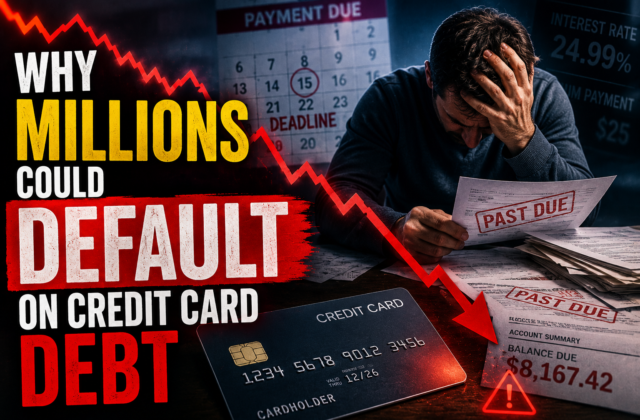
Why Millions Could Default on Credit Card Debt in 2026—The Financial Crisis Most People Don’t See Coming The world’s attention is fixed on artificial intelligence, wars, tariffs, and stock market volatility, but another financial threat is quietly growing beneath the surface. Millions of households are carrying more credit card debt than ever before. At the...
TheBusinessNow
Jul 26, 2026 · 3 min Read
Key Highlights
- 💳 Rising credit card balances and high interest rates are increasing financial pressure on households.
- 📈 Inflation may be cooling, but everyday living costs remain significantly higher than before, squeezing consumer budgets.
- 🤖 AI-driven automation and ongoing layoffs are creating uncertainty for workers in multiple industries.
- 🏦 Higher credit card default rates could impact banks, consumer spending, and overall economic growth.
- 🛒 Slower consumer spending may affect retail businesses, corporate earnings, and stock market performance.
- 📉 Investors are closely watching delinquency rates, unemployment data, and consumer confidence as recession indicators.
- 💰 Paying more than the minimum balance and reducing high-interest debt can improve long-term financial stability.
- 🌍 The combination of AI disruption, geopolitical tensions, inflation, and debt is creating a unique economic environment in 2026.
Why Millions Could Default on Credit Card Debt in 2026—The Financial Crisis Most People Don’t See Coming
The world’s attention is fixed on artificial intelligence, wars, tariffs, and stock market volatility, but another financial threat is quietly growing beneath the surface.
Millions of households are carrying more credit card debt than ever before. At the same time, borrowing costs remain elevated, wage growth is slowing in many sectors, and layoffs continue across technology, retail, manufacturing, and finance. Together, these pressures are creating the conditions for what economists describe as a consumer credit squeeze.
Unlike the 2008 mortgage crisis, this risk isn’t centered on housing. It’s centered on household cash flow—and the possibility that many families could struggle to keep up with revolving debt if economic conditions weaken further.
Why This Story Matters
Credit cards are often the first financial tool consumers use when everyday expenses outpace income.
When millions of people rely on borrowing to pay for essentials such as groceries, fuel, healthcare, or rent, rising debt levels become more than a personal finance issue—they can become an economic one.
Higher default rates can affect:
- Consumers
- Banks
- Retail spending
- Stock markets
- Economic growth
The Perfect Storm Behind Rising Credit Card Debt
Several trends are converging at the same time.
1. High Interest Rates
Over the past few years, central banks raised interest rates to combat inflation. While inflation has eased in many economies, borrowing costs remain relatively high.
For credit card holders, that means balances become more expensive to carry, especially when only minimum payments are made.
2. Inflation Has Reduced Purchasing Power
Even where inflation has slowed, many prices remain well above pre-2022 levels.
Consumers continue paying more for:
- Food
- Housing
- Utilities
- Insurance
- Healthcare
- Transportation
When incomes don’t rise at the same pace, many households fill the gap with credit.
3. AI Is Reshaping the Labor Market
Artificial intelligence is increasing productivity across many industries, but it is also changing hiring patterns.
Some companies are:
- Freezing recruitment
- Automating repetitive tasks
- Restructuring departments
- Reducing administrative roles
Not every job is disappearing, but uncertainty can make households more cautious—and more financially vulnerable if income falls unexpectedly.
4. Layoffs Are Continuing Across Key Industries
Technology, media, manufacturing, retail, and some financial firms have all announced workforce reductions over the past year.
Even workers who remain employed may postpone major purchases, increase borrowing, or reduce savings because of uncertainty.
5. Consumers Are Spending More on Essentials
A growing share of household budgets now goes toward fixed expenses.
That leaves less room for:
- Emergency savings
- Debt repayment
- Long-term investing
Who Is Most at Risk?
While every household is different, financial pressure tends to affect some groups more quickly than others.
These include:
- Younger workers with limited savings
- Families carrying multiple high-interest debts
- Individuals with variable income
- Consumers relying on minimum payments
- Households without emergency funds
Default risk increases when several financial pressures occur simultaneously rather than from one factor alone.
What Happens When Credit Card Defaults Rise?
Higher default rates affect more than individual borrowers.
Banks
Financial institutions may experience:
- Higher loan losses
- Tighter lending standards
- Greater risk management costs
Consumers
Borrowers may face:
- Lower credit scores
- Higher borrowing costs
- Reduced access to future credit
- Collection activity
Retail Businesses
If consumers reduce spending to manage debt, retailers may see weaker sales, especially for discretionary goods.
The Economy
Consumer spending represents a significant portion of economic activity in many countries.
If households spend less because they are focused on debt repayment, economic growth may slow.
Could This Become Another Financial Crisis?
There are important differences between today’s situation and previous crises.
Unlike the 2008 financial crisis, banks today generally operate under stronger capital requirements and tighter regulation.
That means higher credit card defaults alone are not automatically equivalent to a systemic banking crisis.
However, elevated consumer debt can still weigh on:
- Household finances
- Retail activity
- Consumer confidence
- Economic momentum
The overall impact depends on how labor markets, interest rates, and inflation evolve over the coming months.
Warning Signs Investors Should Watch
Investors often monitor indicators such as:
- Consumer confidence
- Retail sales
- Household debt trends
- Credit card delinquency rates
- Bank earnings
- Unemployment data
These metrics can provide clues about whether financial stress is increasing or stabilizing.
What Consumers Can Do Now
Financial experts often recommend several practical steps during periods of economic uncertainty.
Build an Emergency Fund
Even modest savings can reduce reliance on high-interest borrowing during unexpected expenses.
Pay More Than the Minimum
Reducing principal balances more quickly lowers long-term interest costs.
Review Monthly Spending
Identifying recurring subscriptions and discretionary expenses may free up additional cash flow.
Prioritize High-Interest Debt
Paying down the most expensive debt first can improve financial flexibility over time.
Avoid New High-Interest Borrowing
Limiting unnecessary debt reduces future repayment pressure.
Why This Matters for Markets
Consumer debt is closely linked to broader economic performance.
If households remain financially healthy:
- Spending supports business growth.
- Corporate earnings improve.
- Employment remains stronger.
If financial stress increases:
- Spending slows.
- Businesses become more cautious.
- Economic growth may weaken.
This is why investors increasingly watch consumer balance sheets alongside inflation and interest rates.
What Comes Next?
Several developments could influence the outlook.
Positive factors:
- Lower inflation
- Interest-rate reductions
- Strong employment
- Wage growth
Negative factors:
- Persistent inflation
- Additional layoffs
- Slower economic growth
- Rising borrowing costs
The balance between these forces will determine whether today’s consumer debt pressure remains manageable or develops into a broader economic challenge.
Final Analysis
The discussion around artificial intelligence, geopolitical tensions, and global markets often dominates financial headlines, but the health of household finances remains one of the most important indicators of economic stability.
While a widespread wave of credit card defaults is not inevitable, the combination of elevated borrowing costs, higher living expenses, labor-market uncertainty, and changing employment patterns means consumers and policymakers alike are paying closer attention to revolving debt.
For households, managing high-interest debt early can improve financial resilience. For investors, monitoring consumer credit trends may provide valuable insight into where the broader economy could be headed next.
❓ FAQs
1. Why is credit card debt rising in 2026?
Higher living costs, elevated interest rates, inflation, and financial uncertainty have caused many households to rely more heavily on credit cards for everyday expenses.
2. What happens if someone defaults on credit card debt?
Defaulting may lead to a lower credit score, additional fees, higher borrowing costs, debt collection efforts, and possible legal action depending on the jurisdiction.
3. Could rising credit card defaults trigger another financial crisis?
Not necessarily. Today’s banking system is generally better capitalized than it was before the 2008 financial crisis, but widespread consumer financial stress could still slow economic growth.
4. How do high interest rates affect credit card debt?
Higher interest rates increase the cost of carrying balances, making it more difficult for borrowers to reduce debt if they only make minimum payments.
5. Is AI contributing to financial uncertainty?
AI is changing hiring patterns and automating certain tasks, creating uncertainty in some industries. While it also creates opportunities, workforce transitions can affect household finances.
6. How can consumers reduce credit card debt?
Creating a budget, paying more than the minimum payment, prioritizing high-interest balances, limiting new borrowing, and building an emergency fund are common strategies.
7. What indicators should investors monitor?
Consumer confidence, retail sales, unemployment, bank earnings, delinquency rates, inflation, and interest rate decisions are key indicators.
8. Can inflation still hurt consumers even if it is slowing?
Yes. Slower inflation means prices are rising more slowly—it does not mean prices return to previous levels. Many essential goods and services remain more expensive than they were a few years ago.
🌐 Suggested External Resources
- Federal Reserve (Interest rates, consumer credit, monetary policy)
- U.S. Bureau of Labor Statistics (Employment and inflation data)
- Federal Reserve Bank of New York (Household Debt and Credit Report)
- Consumer Financial Protection Bureau (Credit card guidance)
- International Monetary Fund (Global economic outlook)
- OECD (Consumer confidence and economic indicators)
Keep reading
Related Articles
 Crypto
₿ Bitcoin Breaks Above $72,000: Why Trump’s Crypto Push Is Sending Crypto Stocks Higher
Bitcoin’s $72,000 Move Is Bigger Than Bitcoin A typical crypto headline would be: Bitcoin jumps above $72,000. But that misses the most important part of today’s move. The interesting part is the simultaneous rally in: Bitcoin ↓ Coinbase ↓ Strategy ↓ Circle ↓ Robinhood ↓ Bitcoin miners ↓ Crypto infrastructure That tells us investors aren’t...
 Markets
U.S. Treasury Doubles Bond Buybacks: Why Markets Are Still Worried About Rising Yields
The Treasury Just Sent Two Messages to Wall Street At first glance, this looks like a straightforward market-support operation. Treasury says: We want to improve liquidity in longer-dated Treasury securities. Investors hear: Washington is increasingly concerned about the rise in long-term borrowing costs. And that second interpretation is what makes this story important. The Treasury...
 Commodities
Oil Nears $95: Could the Iran War Trigger a New U.S. Inflation Shock?
Oil at $95 Is Not the Real Story A crude-oil headline is easy to write: “Oil prices rise as Iran tensions escalate.” Reuters, Bloomberg, CNBC and WSJ can publish that story within minutes. But for TheBusinessNow, that isn’t enough. The bigger question is: What happens to the American economy if oil stays near $95 —...
Comments (0)