
AI Stock Boom Hits Its Biggest Test Yet: Is Wall Street’s Hottest Rally Starting to Crack?
AI Stock Boom Hits Its Biggest Test Yet: Is Wall Street’s Hottest Rally Starting to Crack? For nearly three years, artificial intelligence has been the engine powering Wall Street. Companies linked to AI transformed into trillion-dollar giants, semiconductor stocks reached record highs, and investors poured billions into anything connected to machine learning, data centers, cloud...
TheBusinessNow
Jul 19, 2026 · 2 min Read
Key Highlights
- 📉 AI-related stocks have experienced increased volatility after an extended rally.
- 💻 Semiconductor companies remain central to AI investment themes.
- 📊 Investors are shifting attention from AI hype to earnings and profitability.
- ⚡ Data center demand continues to support long-term growth expectations.
- 💰 Valuation concerns are becoming more prominent after rapid share-price appreciation.
- 🚀 Analysts remain divided on whether current weakness represents a buying opportunity or a normal market correction.
AI Stock Boom Hits Its Biggest Test Yet: Is Wall Street’s Hottest Rally Starting to Crack?
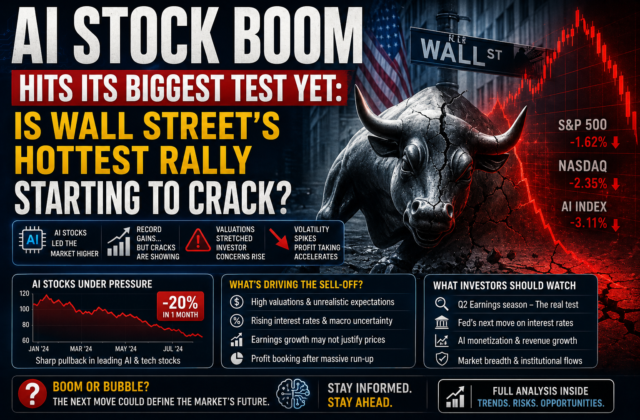
For nearly three years, artificial intelligence has been the engine powering Wall Street.
Companies linked to AI transformed into trillion-dollar giants, semiconductor stocks reached record highs, and investors poured billions into anything connected to machine learning, data centers, cloud computing, and advanced chips.
Now, that unstoppable rally is facing its toughest test yet.
Recent weakness across several AI-related stocks has prompted investors to ask an increasingly important question:
Is this simply a healthy correction after extraordinary gains, or is the AI investment boom entering a more challenging phase?
The answer could shape the next chapter of the US stock market.
The AI Rally That Changed Wall Street
Artificial intelligence has become one of the strongest investment themes of the decade.
Since generative AI gained mainstream attention, investors have aggressively allocated capital to companies involved in:
- AI chips
- Cloud infrastructure
- Enterprise software
- Robotics
- Autonomous systems
- Cybersecurity
- Data centers
- AI networking equipment
This enthusiasm pushed many AI-focused companies to record valuations.
Why AI Stocks Are Facing Pressure
Several factors are contributing to the recent pullback.
1. High Expectations
Many AI companies are valued on expectations of future growth.
When expectations become exceptionally high, even solid results can disappoint investors.
2. Valuation Concerns
Some leading AI stocks trade at premium earnings multiples compared with historical averages.
This has prompted investors to reassess how much future growth is already reflected in current prices.
3. Profit-Taking
After substantial gains, institutional investors often lock in profits.
This can create short-term selling pressure without necessarily changing the long-term outlook.
4. Broader Market Volatility
Higher Treasury yields, geopolitical uncertainty, and cautious investor sentiment have affected growth stocks more broadly.
AI companies, many of which are viewed as high-growth investments, can be especially sensitive during such periods.
Nvidia Remains the Market Leader
Nvidia continues to play a central role in the AI ecosystem.
Its graphics processing units power many of the world’s largest AI models, making the company a key beneficiary of ongoing investment in artificial intelligence.
Investors will continue to watch:
- AI chip demand
- Data center expansion
- Enterprise AI adoption
- Cloud spending
- Quarterly earnings
AMD, Broadcom and Other AI Players
The AI ecosystem extends beyond a single company.
Businesses involved in networking, memory, semiconductor manufacturing, cloud infrastructure, and enterprise software also stand to benefit from continued AI adoption.
However, they also face similar challenges related to valuation, execution, and competition.
The Biggest Opportunity Is Still Ahead
Despite short-term volatility, several structural trends remain supportive:
| Growth Driver | Long-Term Outlook |
|---|---|
| AI Data Centers | Strong |
| Enterprise AI Software | Strong |
| Cloud Computing | Strong |
| AI Infrastructure | Strong |
| Autonomous Technologies | Positive |
| Robotics | Positive |
Many analysts believe AI investment is still in its early stages, although growth may become less uniform across companies.
Winners and Risks
| Potential Winners | Key Risks |
|---|---|
| Semiconductor Leaders | High Valuations |
| Cloud Providers | Slower Enterprise Spending |
| AI Infrastructure Firms | Increased Competition |
| Cybersecurity Companies | Regulatory Changes |
| Enterprise Software | Margin Pressure |
Could This Be Another Dot-Com Moment?
The comparison is increasingly common.
There are similarities:
- Strong investor enthusiasm
- Rapid capital inflows
- Elevated valuations
There are also important differences:
- Today’s leading AI companies generally generate significant revenue and profits.
- AI adoption is already occurring across multiple industries.
This makes direct comparisons with the dot-com era imperfect.
What Investors Should Watch
Over the coming months, markets will focus on:
- Quarterly earnings
- AI spending by large technology companies
- Enterprise adoption
- Semiconductor demand
- Capital expenditure trends
- Regulatory developments
These factors are likely to have a greater influence on AI stocks than headlines alone.
Why This Story Is Trending
Search interest in terms such as “AI Stock Boom,” “Why AI Stocks Are Falling Today,” and “Nvidia Stock Outlook” has increased as investors evaluate whether recent weakness marks a temporary correction or a broader shift in sentiment.
Final Analysis
Artificial intelligence remains one of the most significant technological and investment themes of this decade.
Recent volatility highlights a shift in investor focus—from excitement about AI’s potential to scrutiny of execution, profitability, and valuation.
Whether the current pullback becomes a buying opportunity or signals a longer period of consolidation will depend on future earnings, AI adoption, and broader market conditions.
For investors, the key question is no longer whether AI will transform industries, but which companies are best positioned to translate that transformation into sustainable financial performance.
FAQs
Why are AI stocks under pressure?
Several factors, including valuation concerns, profit-taking, and broader market volatility, have contributed to recent weakness.
Is the AI boom over?
There is no clear evidence that the AI investment theme has ended. Many analysts continue to expect long-term growth, although short-term volatility may persist.
Which sectors benefit most from AI?
Semiconductors, cloud computing, enterprise software, cybersecurity, networking, and data center infrastructure are among the key beneficiaries.
Is Nvidia still leading the AI market?
Nvidia remains a major player in AI hardware, though competition across the industry continues to evolve.
What should investors monitor?
Earnings reports, AI spending trends, enterprise adoption, and infrastructure investment are likely to remain important indicators.
About TheBusinessNow
TheBusinessNow delivers global coverage of business, finance, technology, geopolitics, commodities, and economic trends. Our goal is to provide readers with original, fact-based analysis that explains how world events shape markets and investment decisions.
Keep reading
Related Articles
 Crypto
₿ Bitcoin Breaks Above $72,000: Why Trump’s Crypto Push Is Sending Crypto Stocks Higher
Bitcoin’s $72,000 Move Is Bigger Than Bitcoin A typical crypto headline would be: Bitcoin jumps above $72,000. But that misses the most important part of today’s move. The interesting part is the simultaneous rally in: Bitcoin ↓ Coinbase ↓ Strategy ↓ Circle ↓ Robinhood ↓ Bitcoin miners ↓ Crypto infrastructure That tells us investors aren’t...
 Markets
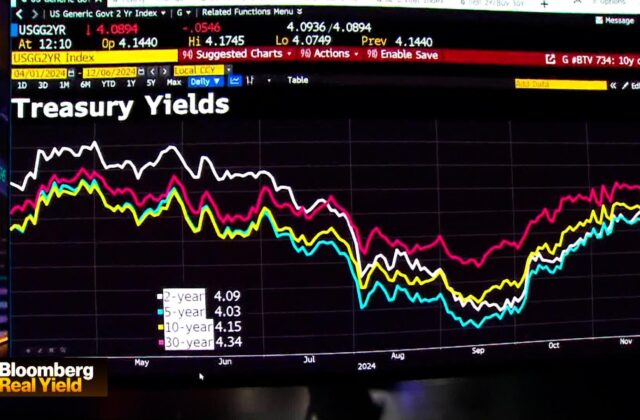
U.S. Treasury Doubles Bond Buybacks: Why Markets Are Still Worried About Rising Yields
The Treasury Just Sent Two Messages to Wall Street At first glance, this looks like a straightforward market-support operation. Treasury says: We want to improve liquidity in longer-dated Treasury securities. Investors hear: Washington is increasingly concerned about the rise in long-term borrowing costs. And that second interpretation is what makes this story important. The Treasury...
 Commodities
Oil Nears $95: Could the Iran War Trigger a New U.S. Inflation Shock?
Oil at $95 Is Not the Real Story A crude-oil headline is easy to write: “Oil prices rise as Iran tensions escalate.” Reuters, Bloomberg, CNBC and WSJ can publish that story within minutes. But for TheBusinessNow, that isn’t enough. The bigger question is: What happens to the American economy if oil stays near $95 —...
Comments (0)