
India’s First Private Rocket Launch: Skyroot’s Vikram-1 Creates Space History With Mission Aagaman
India’s First Private Rocket Launch Changes Everything: Skyroot’s Vikram-1 Successfully Reaches Orbit India has officially entered a new era of commercial space exploration. The India’s First Private Rocket Launch has become one of the biggest technology stories of 2026 after Skyroot Aerospace successfully launched Vikram-1 into Low Earth Orbit from the Satish Dhawan Space Centre...
TheBusinessNow
Jul 18, 2026 · 3 min Read
Key Highlights
- 🚀 Skyroot Aerospace successfully completed India's First Private Rocket Launch.
- 🌍 Vikram-1 successfully deployed payloads into a 450 km Low Earth Orbit.
- 🛰️ Mission Aagaman carried multiple Indian and international technology payloads.
- 🇮🇳 India becomes one of the few nations with proven private orbital launch capability.
- 💰 India's commercial space industry receives a major boost after the landmark mission.
- 📈 The successful launch could accelerate investment into Indian space startups.
India’s First Private Rocket Launch Changes Everything: Skyroot’s Vikram-1 Successfully Reaches Orbit
India has officially entered a new era of commercial space exploration.
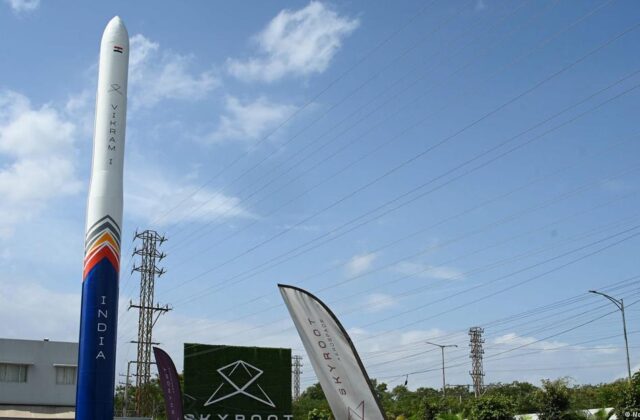
The India’s First Private Rocket Launch has become one of the biggest technology stories of 2026 after Skyroot Aerospace successfully launched Vikram-1 into Low Earth Orbit from the Satish Dhawan Space Centre in Sriharikota. The mission, named Mission Aagaman, marks the first time an Indian private company has developed, launched, and placed an orbital-class rocket into space from Indian soil.
This achievement is far more than a successful rocket launch—it signals the rise of India’s private space economy and positions the country as a serious competitor in the rapidly expanding global commercial launch market.
What Is India’s First Private Rocket Launch?
The India’s First Private Rocket Launch refers to the successful orbital mission of Skyroot Aerospace’s Vikram-1, developed entirely by the Hyderabad-based startup following India’s space-sector reforms.
Unlike previous launches led by ISRO, Vikram-1 demonstrates that Indian private companies are now capable of building complete orbital launch systems for commercial customers.
The milestone represents years of engineering development and reflects the growing maturity of India’s private aerospace ecosystem.
Mission Aagaman: Why Vikram-1 Is Historic
Mission Aagaman is not just another rocket launch.
It validates critical technologies including:
- Multi-stage rocket architecture
- Advanced propulsion systems
- Flight computers
- Navigation systems
- Guidance software
- Payload deployment capability
- Precision orbital insertion
Skyroot confirmed the mission successfully completed its planned objectives by placing customer payloads into orbit while validating key flight systems.
How Vikram-1 Compares With Global Private Rockets
Vikram-1 has immediately placed India among an elite group of countries capable of supporting private orbital launch providers.
Key specifications include:
- Height: Approximately 22 metres
- Payload Capacity: Up to 350 kilograms to Low Earth Orbit
- Mission Orbit: Around 450 km
- Rocket Design: Multi-stage launch vehicle
- Advanced Engine Technology including 3D-printed components.
The mission highlights India’s ambition to compete in the growing small-satellite launch market.
Why This Launch Could Transform India’s Space Economy
The global satellite industry is expanding rapidly.
Thousands of satellites are expected to be launched during the coming decade for:
- Internet connectivity
- Earth observation
- Climate monitoring
- Defense
- Agriculture
- Navigation
- Artificial Intelligence infrastructure
Private launch providers like Skyroot could help India capture a larger share of this multibillion-dollar market. The Indian government has also set ambitious targets for expanding the country’s space economy over the next decade.
Who Is Skyroot Aerospace?
Founded in 2018 by former ISRO engineers, Skyroot Aerospace has quickly become one of India’s most successful space startups.
The company previously demonstrated its capabilities with the Vikram-S suborbital mission in 2022.
With Vikram-1 successfully reaching orbit, Skyroot has now achieved a milestone that many aerospace startups worldwide never accomplish.
Prime Minister Congratulates Team Skyroot
Following the successful mission, Prime Minister Narendra Modi congratulated Skyroot Aerospace founder Pawan Kumar Chandana and the entire engineering team, calling the launch a proud milestone for India’s innovation and private space sector.
The recognition underscores the strategic importance of private participation in India’s future space ambitions.
What Happens After Mission Aagaman?
The successful launch opens several new opportunities for Skyroot Aerospace.
Future priorities include:
- Commercial satellite launches
- International customers
- Expanded launch cadence
- Larger launch vehicles
- Global partnerships
- Advanced orbital missions
Industry analysts believe this mission could significantly increase investor confidence in India’s private aerospace ecosystem.
Why Global Investors Are Watching India
The success of India’s First Private Rocket Launch comes as governments and private companies race to secure leadership in the rapidly growing commercial space industry.
India now offers:
- Competitive launch costs
- Strong engineering talent
- Government support
- Growing startup ecosystem
- Proven launch infrastructure
- Expanding satellite demand
These advantages could make India one of the world’s fastest-growing space economies.
Final Thoughts
The success of India’s First Private Rocket Launch is a defining moment for the country’s technology sector.
With Skyroot Aerospace’s Vikram-1 successfully reaching orbit under Mission Aagaman, India has demonstrated that its private companies are ready to compete on the global stage. The mission not only validates years of engineering innovation but also opens the door to new commercial opportunities, increased investment, and a stronger role in the international space economy.
Frequently Asked Questions (FAQs)
What was India’s First Private Rocket Launch?
It was Skyroot Aerospace’s successful orbital launch of Vikram-1 under Mission Aagaman from Sriharikota.
Why is Vikram-1 important?
It is the first privately developed Indian rocket to successfully reach orbit, marking a major milestone for India’s commercial space industry.
Where was Vikram-1 launched?
The rocket lifted off from the Satish Dhawan Space Centre in Sriharikota, Andhra Pradesh.
Who developed Vikram-1?
Hyderabad-based Skyroot Aerospace, founded by former ISRO engineers, designed and built the rocket.
What is Mission Aagaman?
Mission Aagaman is the inaugural orbital test mission of Vikram-1, designed to validate launch systems and deploy customer payloads into Low Earth Orbit.
About TheBusinessNow
TheBusinessNow delivers global coverage of business, finance, technology, geopolitics, commodities, and economic trends. Our goal is to provide readers with original, fact-based analysis that explains how world events shape markets and investment decisions.
Keep reading
Related Articles
 Crypto
₿ Bitcoin Breaks Above $72,000: Why Trump’s Crypto Push Is Sending Crypto Stocks Higher
Bitcoin’s $72,000 Move Is Bigger Than Bitcoin A typical crypto headline would be: Bitcoin jumps above $72,000. But that misses the most important part of today’s move. The interesting part is the simultaneous rally in: Bitcoin ↓ Coinbase ↓ Strategy ↓ Circle ↓ Robinhood ↓ Bitcoin miners ↓ Crypto infrastructure That tells us investors aren’t...
 Commodities
Oil Nears $95: Could the Iran War Trigger a New U.S. Inflation Shock?
Oil at $95 Is Not the Real Story A crude-oil headline is easy to write: “Oil prices rise as Iran tensions escalate.” Reuters, Bloomberg, CNBC and WSJ can publish that story within minutes. But for TheBusinessNow, that isn’t enough. The bigger question is: What happens to the American economy if oil stays near $95 —...
 Economy
U.S. National Debt Hits $40 Trillion: Why Treasury Yields Are Rising Again
The $40 Trillion Number Is Not the Whole Story The United States has crossed a psychological and financial milestone. $40 trillion. But simply writing “America owes $40 trillion” misses the more important story. The real question for markets is: Who is willing to finance America’s growing debt — and at what interest rate? That question...
Comments (0)