
Walmart Stock Plunges 6%: What Its Weak Outlook Says About the U.S. Consumer
Walmart Stock Plunges 6% — But the Earnings Were Not Actually Bad This is where the headline can be misleading. Walmart did not report a disastrous quarter. Quite the opposite. Revenue rose 5.9%, operating income increased 28.8%, e-commerce remained extremely strong and Walmart raised its full-year sales and profit expectations. Yet investors immediately sold the...
TheBusinessNow
Aug 20, 2026 · 8 min Read

Key Highlights
- Walmart shares fell about 6% in premarket trading after the company reported weaker-than-expected U.S. comparable sales and a cautious third-quarter outlook.
- U.S. comparable sales increased 2.6%, below the 3.8% Wall Street expectation.
- Average spending per transaction increased only 1.1%, sharply slower than the 3.1% increase a year earlier.
- Store traffic growth slowed to 1.5%, from 3% in the previous quarter.
- Walmart's total revenue nevertheless rose 5.9% to about $187.9 billion and operating income jumped 28.8%.
- Global e-commerce increased 23%, while U.S. Walmart Connect advertising revenue grew 43% excluding VIZIO.
Walmart Stock Plunges 6% — But the Earnings Were Not Actually Bad
This is where the headline can be misleading.
Walmart did not report a disastrous quarter.
Quite the opposite.
Revenue rose 5.9%, operating income increased 28.8%, e-commerce remained extremely strong and Walmart raised its full-year sales and profit expectations.
Yet investors immediately sold the stock.
Why?
Because markets don’t trade yesterday’s numbers. They trade tomorrow’s expectations.
And Walmart’s forward-looking numbers contained something investors didn’t like.
The U.S. consumer is showing signs of fatigue.
That’s the bigger story.
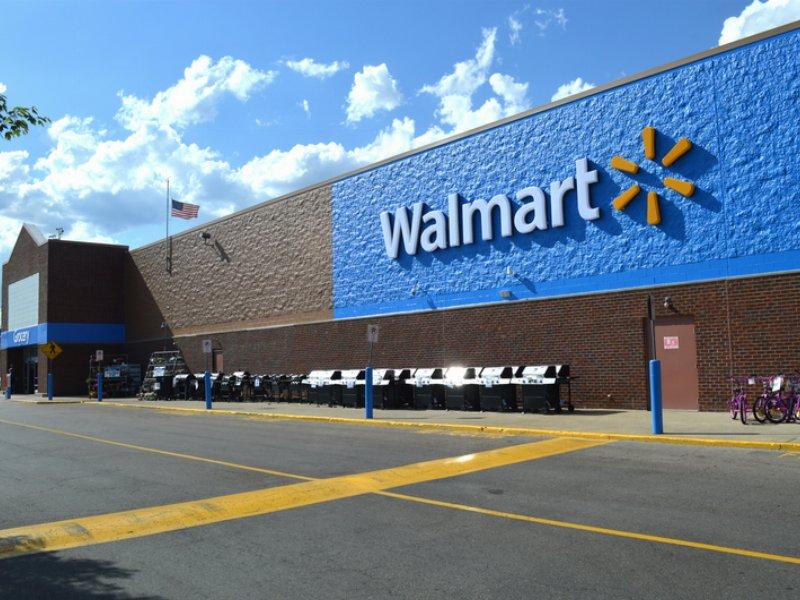
Walmart Stock Plunges 6% — But the Earnings Were Not Actually Bad
This is where the headline can be misleading.
Walmart did not report a disastrous quarter.
Quite the opposite.
Revenue rose 5.9%, operating income increased 28.8%, e-commerce remained extremely strong and Walmart raised its full-year sales and profit expectations.
Yet investors immediately sold the stock.
Why?
Because markets don’t trade yesterday’s numbers. They trade tomorrow’s expectations.
And Walmart’s forward-looking numbers contained something investors didn’t like.
The U.S. consumer is showing signs of fatigue.
That’s the bigger story.
🛒 Walmart Is America’s Consumer Thermometer
Walmart is uniquely important to the U.S. economy because it sells almost everything:
- groceries
- household products
- electronics
- apparel
- pharmacy products
- discretionary goods
- online merchandise
Its customers also span different income groups.
That makes Walmart more than just a retailer.
It is a real-time window into American household spending.
Reuters described the latest result as a key read on Walmart’s ability to attract price-sensitive shoppers, particularly as consumers prioritize essentials over discretionary purchases.
And today’s numbers provide an interesting signal:
Americans are still spending — but they’re becoming more selective about how they spend.
📊 Walmart Q2 FY2027: The Numbers Investors Need to Know
| Metric | Q2 FY2027 |
|---|---|
| Total revenue | $187.9B |
| Revenue growth | +5.9% |
| Operating income | +28.8% |
| U.S. comparable sales | +2.6% |
| Global e-commerce | +23% |
| U.S. Walmart Connect | +43% |
| Store traffic growth | +1.5% |
| Average transaction spending | +1.1% |
| Full-year sales guidance | +4% to +5% |
| FY adjusted EPS guidance | $2.80-$2.87 |
| Q3 adjusted EPS guidance | $0.62-$0.64 |
Sources: Walmart and Reuters.
⚠️ The Number That Matters Most: 2.6%
Walmart’s U.S. comparable sales increased 2.6%.
That sounds healthy.
But Wall Street expected roughly 3.8%.
That’s a significant miss for a company that investors often view as one of the most reliable gauges of American consumer demand.
More importantly, this wasn’t simply a one-number problem.
Look at the underlying signals:
Store traffic:
3% → 1.5%
Average transaction:
3.1% growth a year earlier → 1.1%
That’s why investors became nervous.
The concern isn’t:
“Is Walmart still growing?”
It is.
The concern is:
“Is Walmart’s consumer momentum slowing?”
⛽ Gas Prices Are Eating Into Household Budgets
One major factor is higher gasoline prices.
As fuel becomes more expensive, consumers have less disposable income available for other purchases.
The chain looks like this:
Higher oil prices
↓
Higher gasoline prices
↓
Higher household transportation costs
↓
Less money for discretionary purchases
↓
Slower retail spending
Reuters specifically linked Walmart’s weaker comparable-sales performance to consumers pulling back as gasoline prices rise.
That makes Walmart’s earnings particularly important beyond the retail sector.
🛢️ Why Walmart Is Connected to the Iran Conflict
This is where TheBusinessNow can go deeper than a standard earnings report.
The U.S. consumer story is increasingly connected to global geopolitics.
The current Iran conflict has pushed oil prices higher, creating additional pressure on gasoline costs.
And Walmart operates at the end of that chain.
The macro chain:
Middle East conflict
→ oil supply concerns
→ crude prices rise
→ gasoline becomes more expensive
→ household budgets tighten
→ discretionary spending weakens
→ Walmart sales mix changes
→ investors worry about consumer health
That’s why this isn’t simply a Walmart stock story.
It’s a U.S. economy story.
🥫 Consumers Are Prioritizing Essentials
Reuters reports that shoppers are increasingly prioritizing groceries and other essentials over discretionary purchases.
That distinction matters.
Imagine a household has an extra $100 available after paying:
- rent
- mortgage
- gasoline
- utilities
- insurance
- food
If gasoline suddenly costs more, that $100 becomes smaller.
The household may still shop at Walmart.
But instead of buying:
new clothing + electronics + home products
it may buy:
groceries + cleaning supplies + necessities.
That’s called a change in the consumer spending mix.
And Walmart is seeing that change.
💳 The U.S. Consumer Isn’t Collapsing
This is an important nuance.
It would be wrong to conclude:
“Walmart’s results prove Americans have stopped spending.”
They haven’t.
Walmart’s total revenue increased 5.9%. E-commerce rose 23%, and the company continues to attract customers across income groups.
The better conclusion is:
The U.S. consumer is becoming more price-sensitive.
That is a much more useful economic signal.
🏪 Walmart Is Fighting Back With Lower Prices
Walmart has responded aggressively.
During Q2, it delivered more than 11,000 price rollbacks.
The company also received almost $2.9 billion in tariff refunds and said it was directing that money toward price investment.
That creates an interesting strategic trade-off.
Lower prices can:
✅ attract customers
✅ increase market share
✅ strengthen Walmart’s value proposition
✅ protect traffic
But they can also:
⚠️ pressure margins
⚠️ reduce revenue per item
⚠️ force competitors to respond
This is why Walmart’s pricing strategy deserves as much attention as the headline earnings.
💻 Walmart’s Secret Weapon Is Growing Fast
There is another side of this story that investors shouldn’t overlook.
E-commerce.
Walmart reported:
Global e-commerce: +23%
and
U.S. Walmart Connect advertising: +43%.
This is extremely important.
Walmart isn’t just a traditional supermarket anymore.
Its business increasingly includes:
- e-commerce
- advertising
- marketplace services
- fulfillment
- membership
- digital services
Walmart said nearly 50% of its marketplace business flowed through fulfillment services during the quarter.
That means Walmart is building businesses with potentially different economics from traditional physical retail.
💰 Why Walmart Connect Matters
This is one of the less-discussed parts of today’s earnings.
Walmart’s U.S. advertising business, Walmart Connect, grew 43% excluding VIZIO.
Advertising can be strategically attractive because retailers can monetize their enormous customer and transaction data ecosystems.
The model becomes:
Customer visits Walmart
↓
Customer searches for products
↓
Brands pay Walmart for visibility
↓
Walmart generates advertising revenue
↓
Retail + digital advertising reinforce each other
This is similar to the broader retail-media trend across Amazon, Walmart, Target and other major retailers.
💊 Another Drag: Pharmacy
There is also a less obvious reason behind Walmart’s U.S. sales slowdown.
Walmart’s U.S. pharmacy business was affected by lower prices under the Inflation Reduction Act’s Medicare drug-pricing provisions.
Reuters reported that excluding the impact of the law, Walmart’s core U.S. comparable sales would have been 3.4%, rather than 2.6%.
That’s an important distinction.
In other words:
The headline 2.6% number doesn’t represent the entire underlying retail business.
But even the adjusted 3.4% figure was Walmart’s slowest core U.S. comparable-sales growth since Q1 2022.
So there is still a genuine slowdown signal.
📉 Why Did Walmart Stock Fall If Profit Beat Estimates?
This is the question investors are asking.
Walmart’s adjusted EPS came in at $0.81, above the roughly $0.74 expected by analysts.
Revenue also exceeded expectations.
Yet the stock fell.
Because Q3 guidance disappointed.
Walmart expects Q3 adjusted EPS of:
$0.62–$0.64
versus an analyst expectation around:
$0.68
Its Q3 sales-growth expectation was also below market expectations.
This is the classic earnings-market lesson:
A company can beat earnings and still see its stock fall if future expectations are reduced.
📈 What Does This Mean for Walmart Stock?
There are two competing narratives.
🟢 Bull Case
Walmart still has:
- enormous scale
- strong e-commerce growth
- growing advertising revenue
- expanding marketplace operations
- strong customer traffic relative to many retailers
- growing wealthier-customer penetration
- significant pricing power
And Walmart actually raised its full-year sales and earnings outlook.
🔴 Bear Case
Investors now have to worry about:
- slower U.S. comparable sales
- weaker store traffic
- higher gasoline costs
- cautious consumers
- pharmacy pricing pressure
- expensive valuation
- pressure to maintain low prices
- weaker Q3 guidance
The most important question is whether the Q2 slowdown is temporary or the beginning of a broader consumer slowdown.
🇺🇸 What Walmart Says About the U.S. Economy
This may ultimately be the most valuable part of the story.
Walmart’s data suggests the U.S. consumer isn’t necessarily broken.
Instead, consumers appear to be:
Prioritizing value.
That’s a crucial distinction.
High-income consumers can continue spending.
Middle-income households may remain active.
Lower-income households may become more price-sensitive.
And Walmart sits directly in the middle of all three groups.
That makes the retailer a powerful economic signal.
🔥 The Bigger Economic Picture
Put Walmart together with:
Oil
Gasoline
Inflation
Interest rates
Consumer spending
Retail sales
and you get a much clearer picture of the U.S. economy.
The current chain:
Oil prices ↑
→ gasoline prices ↑
→ household disposable income ↓
→ discretionary spending pressure ↑
→ Walmart transaction growth ↓
→ retailer guidance becomes cautious
→ investors reassess consumer strength.
That’s the story Wall Street is really trading.
📊 Walmart vs. the U.S. Consumer: What to Watch Next
| Indicator | Why it matters |
|---|---|
| Walmart store traffic | Direct consumer activity |
| Average transaction size | Spending power |
| Gasoline prices | Household budget pressure |
| Retail sales | Broader consumer health |
| Inflation | Purchasing power |
| Credit-card balances | Household borrowing |
| Delinquencies | Financial stress |
| Personal income | Consumer capacity |
| Walmart e-commerce | Digital demand |
| Retail earnings | Cross-company confirmation |
The next earnings reports from other major retailers will therefore be extremely important.
If Target, Costco, TJX, Ross and other retailers begin reporting similar spending weakness, the Walmart signal becomes much more powerful.
🔮 Three Possible Paths From Here
🟢 Scenario 1 — Walmart’s slowdown is temporary
Oil prices stabilize.
Gasoline costs fall.
Consumers regain confidence.
Walmart’s traffic accelerates.
Walmart stock could recover.
🟡 Scenario 2 — Consumers remain cautious
Consumers continue spending but focus heavily on essentials.
Walmart maintains market share.
E-commerce keeps growing.
Margins remain under pressure.
The stock could remain volatile.
🔴 Scenario 3 — Consumer weakness spreads
Higher fuel costs combine with inflation and expensive borrowing.
Retailers begin cutting forecasts.
Credit stress rises.
Discretionary spending falls.
Then Walmart’s Q2 result could become an early warning rather than an isolated miss.
🧠 TheBusinessNow Analysis
The most important takeaway isn’t:
“Walmart stock fell 6%.”
The important takeaway is:
Walmart is still growing, but the U.S. consumer is becoming more selective.
The company delivered impressive growth in e-commerce, advertising and operating income while raising its annual outlook. But slower U.S. comparable sales, weaker store-traffic growth and a softer Q3 earnings forecast explain why investors reacted negatively.
For investors, the next question isn’t whether Walmart can survive.
It clearly can.
The bigger question is:
How much more can the American consumer spend if gasoline, food, housing and borrowing costs remain elevated?
That’s the number Wall Street will be watching next.
📌 THE BUSINESSNOW MARKET TAKEAWAY
Walmart Stock
🔴 Short-term sentiment: Negative
Walmart Business
🟢 Long-term fundamentals: Still strong
U.S. Consumer
🟡 Signal: Cautious / increasingly value-focused
E-commerce
🟢 Strong
Advertising
🟢 Very strong
Physical-store momentum
🟡 Needs improvement
Gasoline pressure
🔴 Negative
Q3 guidance
🔴 Below expectations
Full-year outlook
🟢 Raised
Bottom line: Walmart’s 6% stock drop is less about a bad quarter and more about investors questioning the strength of the U.S. consumer heading into the second half of 2026.
🔗 Related Reading on TheBusinessNow
1. U.S. Economy — Primary internal link
Which Economy Is Winning in 2026? Comparing the U.S., China, India, Europe & Japan Through the Numbers
Read TheBusinessNow’s 2026 global economy comparison
2. U.S. Markets / Stocks
Wall Street Rally: Nasdaq, S&P 500 and Dow Jones
3. Geopolitics → Oil → Consumer
US-Iran Tensions and Global Markets
🪙 A Word From GoldPriceNow.in
When inflation, oil prices, Treasury yields and geopolitical risk move sharply, investors also watch precious metals.
For readers following that side of the market:
GoldPriceNow.in — Gold prices and market analysis
Watching the consumer economy is only one side of the macro picture. For the other side of the trade, follow gold prices, precious-metals markets and macroeconomic signals at GoldPriceNow.in.
📚 Key Resources
For this article, primary sources should be visible, rather than making the page look like a rewritten Reuters story.
Walmart — Official Q2 FY27 Results
Walmart Q2 FY27 Earnings Release
Walmart Investor Relations
Reuters — Consumer Spending & Walmart
Reuters: Walmart reports rare sales miss as consumers cut spending
Financial Times — Walmart Sales & Price Cuts
Financial Times: Walmart pledges price cuts as sales growth slows
MarketWatch — Walmart Shares
MarketWatch: Walmart shares slide after results
Investopedia — Walmart Earnings
Investopedia: Walmart earnings and stock-market reaction
AP — U.S. Consumer Context
AP: Walmart’s slowest U.S. comparable-sales growth in six years
❓ FAQs
Why did Walmart stock fall 6% today?
Walmart shares fell roughly 6% in premarket trading after U.S. comparable sales missed expectations and the company’s Q3 adjusted EPS forecast came in below Wall Street estimates.
Did Walmart actually have a bad quarter?
Not exactly. Revenue increased 5.9%, operating income rose 28.8%, e-commerce grew strongly and Walmart raised its full-year sales and earnings outlook. The problem was weaker U.S. comparable sales and cautious near-term guidance.
What does Walmart’s earnings report say about the U.S. consumer?
It suggests consumers remain active but are increasingly price-sensitive, with essentials taking priority as higher gasoline costs pressure household budgets.
Why are gas prices important to Walmart?
Higher gasoline costs can reduce the amount of disposable income households have available for discretionary purchases.
Is Walmart stock a buy after the 6% drop?
A one-day decline does not by itself determine whether Walmart is attractive. Investors should evaluate valuation, earnings growth, future guidance, consumer spending and the company’s competitive position. This article is market analysis, not individualized investment advice.
Is Walmart still growing?
Yes. Walmart reported 5.9% total-revenue growth, 23% global e-commerce growth and 43% growth in U.S. Walmart Connect advertising revenue excluding VIZIO.
What is Walmart’s Q3 earnings forecast?
Walmart expects Q3 adjusted EPS of $0.62-$0.64, below the approximately $0.68 analyst expectation reported by Reuters.
What is Walmart’s full-year sales outlook?
Walmart raised its fiscal 2027 net-sales growth outlook to 4%-5%, from its previous 3.5%-4.5% target.
Why is Walmart important to investors?
Because its enormous retail footprint and broad customer base make its sales trends a useful indicator of U.S. consumer spending.
What should investors watch next?
Watch U.S. retail sales, gasoline prices, inflation, credit conditions and upcoming earnings from other major retailers. If multiple retailers report similar weakness, Walmart’s slowdown could become a broader consumer-economy signal.
Keep reading
Related Articles
 Crypto
₿ Bitcoin Breaks Above $72,000: Why Trump’s Crypto Push Is Sending Crypto Stocks Higher
Bitcoin’s $72,000 Move Is Bigger Than Bitcoin A typical crypto headline would be: Bitcoin jumps above $72,000. But that misses the most important part of today’s move. The interesting part is the simultaneous rally in: Bitcoin ↓ Coinbase ↓ Strategy ↓ Circle ↓ Robinhood ↓ Bitcoin miners ↓ Crypto infrastructure That tells us investors aren’t...
 Markets
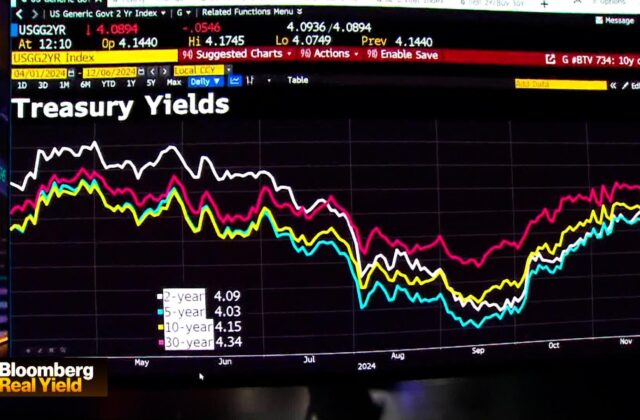
U.S. Treasury Doubles Bond Buybacks: Why Markets Are Still Worried About Rising Yields
The Treasury Just Sent Two Messages to Wall Street At first glance, this looks like a straightforward market-support operation. Treasury says: We want to improve liquidity in longer-dated Treasury securities. Investors hear: Washington is increasingly concerned about the rise in long-term borrowing costs. And that second interpretation is what makes this story important. The Treasury...
 Economy
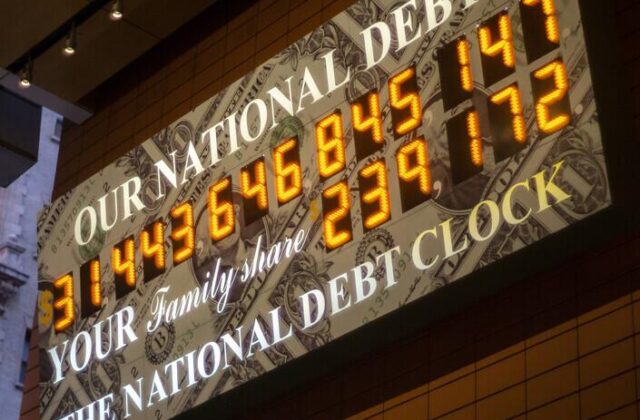
U.S. National Debt Hits $40 Trillion: Why Treasury Yields Are Rising Again
The $40 Trillion Number Is Not the Whole Story The United States has crossed a psychological and financial milestone. $40 trillion. But simply writing “America owes $40 trillion” misses the more important story. The real question for markets is: Who is willing to finance America’s growing debt — and at what interest rate? That question...
Comments (0)