
NASA’s Curiosity Rover Finds a ‘Sea of Polygons’ on Mars — Scientists Are Still Trying to Explain It
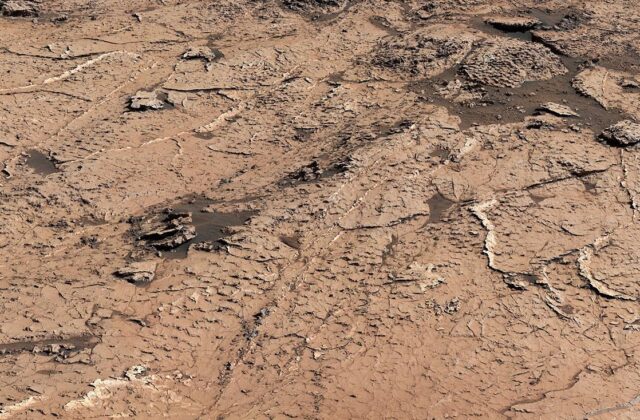
NASA’s Curiosity Rover Finds a ‘Sea of Polygons’ on Mars — Scientists Are Still Trying to Explain It NASA’s Curiosity Mars rover has captured an extraordinary landscape on the Red Planet: a vast field of small, honeycomb-like polygons covering the Martian surface. The discovery was made as Curiosity climbed through a valley nicknamed “Valle Grande”...
Linda Mark
Jul 30, 2026 · 4 min Read
Key Highlights
- 🔴 NASA’s Curiosity rover discovered an unusually large field of polygonal fractures on Mars.
- 🍯 The formations resemble a giant honeycomb or cracked mud surface.
- 📏 Individual polygons are approximately 1.5 to 3 inches (4 to 8 centimeters) across.
- 🔬 Curiosity is using multiple scientific instruments to study their chemistry and structure.
- ❓ Scientists have not yet determined exactly how the unusual patterns formed.
- 🏔️ The discovery occurred while Curiosity was climbing through the Martian valley known as Valle Grande.
NASA’s Curiosity Rover Finds a ‘Sea of Polygons’ on Mars — Scientists Are Still Trying to Explain It
NASA’s Curiosity Mars rover has captured an extraordinary landscape on the Red Planet: a vast field of small, honeycomb-like polygons covering the Martian surface.
The discovery was made as Curiosity climbed through a valley nicknamed “Valle Grande” near Mount Sharp inside Gale Crater. NASA says scientists have seen similar polygonal fractures before, but never on anything close to this scale.
The geometric patterns may contain clues about the geological history of Mars — but researchers still do not know exactly how they formed.
What Did Curiosity Discover on Mars?
The latest images from Curiosity show a remarkable surface covered with many-sided geological features known as polygons.
From a distance, the terrain might look like ordinary Martian rock.
But Curiosity’s cameras revealed something much more unusual.
The surface is covered with interconnected ridges and fractures that create shapes resembling honeycomb cells.
NASA scientists were surprised by the sheer number of these structures.
According to NASA’s Jet Propulsion Laboratory, mission scientists have never seen so many of these many-sided geological features concentrated in one location on Mars.
How Big Are the Martian Polygons?
The individual polygonal fractures are relatively small.
NASA estimates that many of the structures are approximately 1.5 to 3 inches (4 to 8 centimeters) across.
That small scale is one reason the formations were difficult to identify from orbit.
Curiosity has been able to examine them at much higher resolution because the rover is physically driving across the terrain.
NASA’s science team previously noted that similar centimeter-scale features can be difficult to see clearly from spacecraft orbiting Mars.
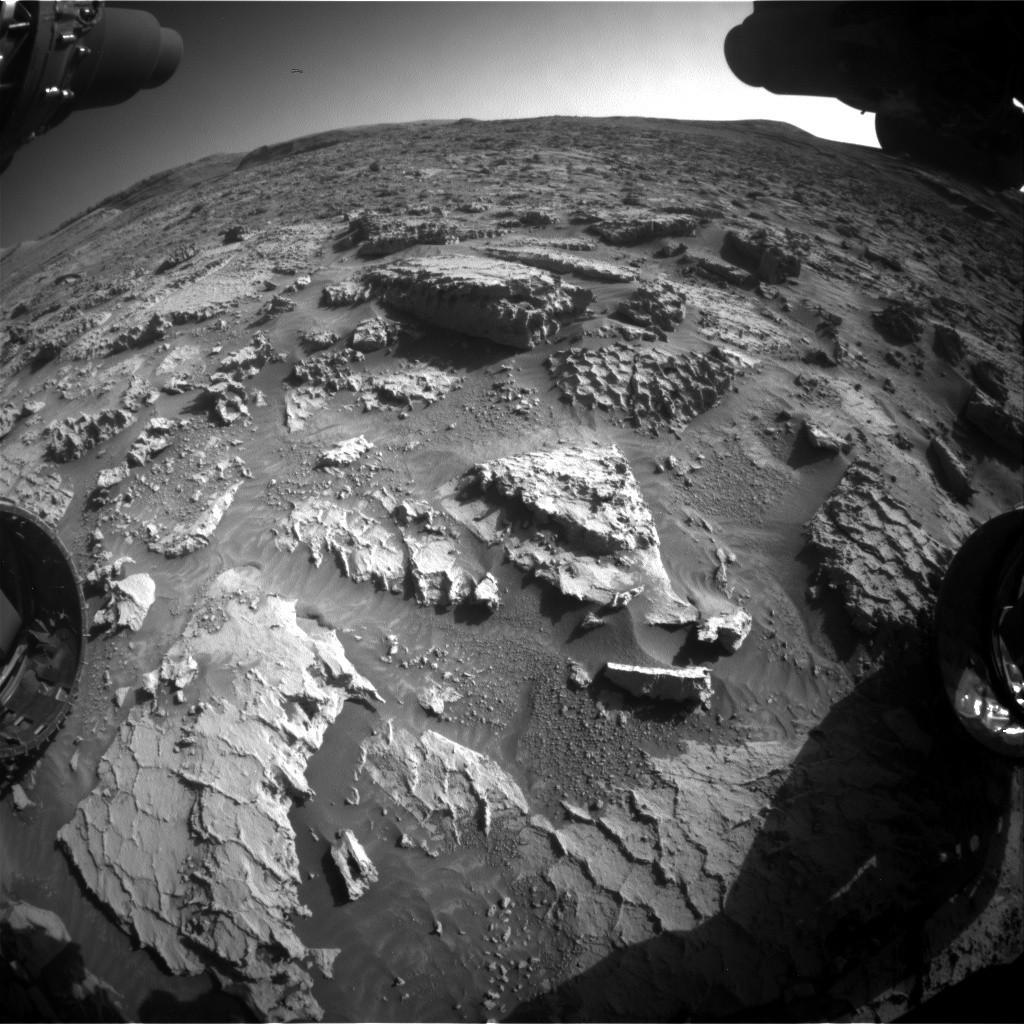
Why Do the Patterns Look Like Honeycombs?
The term “honeycomb” is mainly a description of their appearance.
The polygons aren’t biological structures, and NASA has not suggested that they were created by life.
Instead, they are geological formations known as polygonal fractures.
On Earth, polygon-like patterns can form through processes involving drying, shrinking, freezing, cooling or stresses within geological materials.
Mars has its own unique geological history, however, meaning scientists cannot simply assume the same process occurred there.
That is why Curiosity’s measurements are so important.
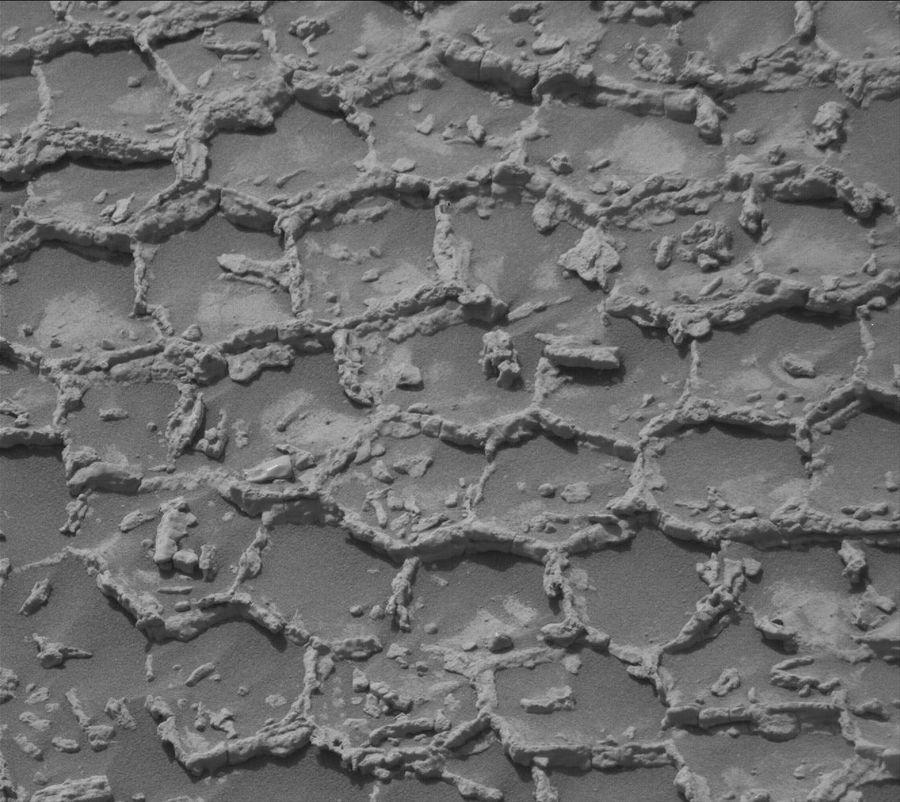
Scientists Still Don’t Know How They Formed
This may be the most intriguing part of the discovery.
NASA says researchers are still working to determine the origin of the structures.
Curiosity is examining both the shape and chemistry of the polygons to search for clues.
The rover’s instruments can investigate the material making up the ridges and the centers of the polygons.
By comparing their chemical compositions, scientists may be able to determine what geological process created them.
Curiosity Is Investigating the Polygons Up Close
Curiosity is equipped with several instruments that allow scientists to study Martian rocks in extraordinary detail.
The rover has been using instruments including:
- Mastcam for detailed imaging
- MAHLI for close-up photographs
- APXS to analyze chemical composition
- ChemCam to investigate rocks with laser spectroscopy
- ChemCam Remote Micro-Imager for high-resolution observations
NASA’s mission team has specifically targeted the polygon ridges and their centers for scientific measurements.
That combination of photography and chemical analysis could eventually reveal how the unusual terrain developed.
Where Is Curiosity Exploring?
The discovery occurred near Mount Sharp, a massive central mountain inside Gale Crater.
Curiosity has been climbing Mount Sharp for years, examining layers of rock that preserve evidence about ancient Martian environments.
The rover entered a region that orbital observations had suggested would be relatively smooth.
Instead, the ground turned out to be covered with an unexpectedly large concentration of polygonal structures.
That difference between orbital observations and what the rover sees on the ground highlights an important challenge in planetary exploration.
Sometimes the most interesting discoveries are simply too small to recognize from space.
Could These Polygons Reveal Mars’ Ancient Climate?
Potentially.
Scientists study geological structures because rocks can preserve evidence of the environmental conditions that existed billions of years ago.
The chemical composition and physical structure of the polygons could help researchers understand:
🌊 Whether water played a role
🌡️ How the Martian environment changed
🪨 How ancient sediments were altered
💨 How erosion shaped the landscape
⏳ What conditions existed when the rocks formed
However, it is too early to say that the polygons prove ancient water or any specific climate condition.
Researchers need additional data before reaching that conclusion.
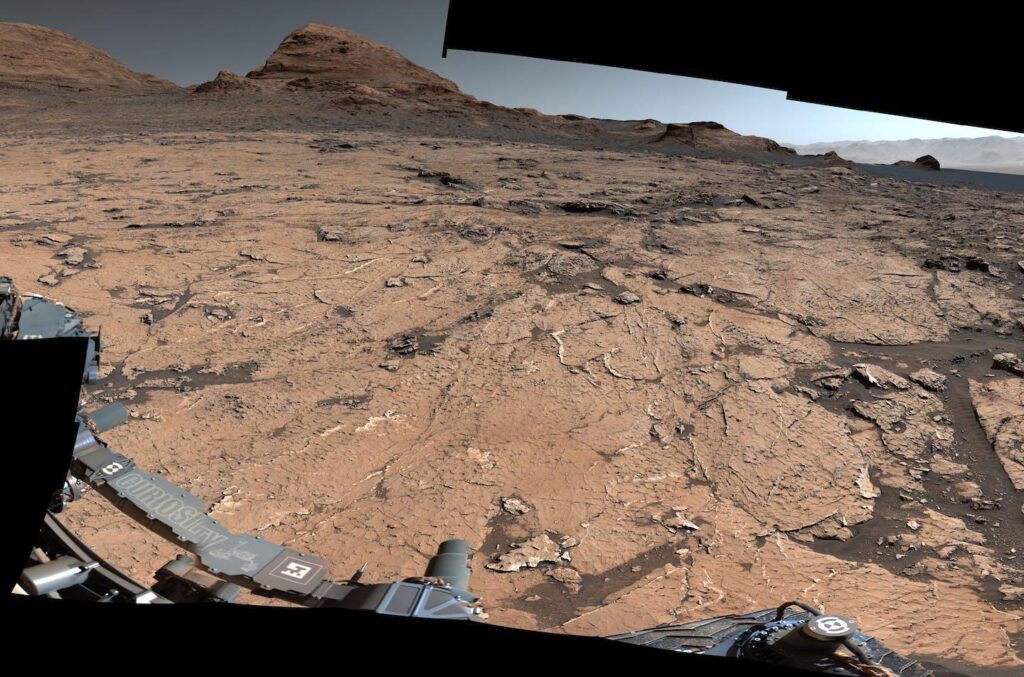
Curiosity Has Seen Polygons Before
The discovery isn’t Curiosity’s first encounter with polygonal terrain.
NASA’s rover has previously photographed areas containing polygon-like structures.
In June 2026, Curiosity encountered a unit that appeared from orbit to be relatively smooth but revealed a landscape covered with small polygons when examined at close range.
NASA scientists have now encountered an even more extensive concentration in the Valle Grande area.
The difference is the scale and density of the latest discovery.
Why the Discovery Matters
Mars has no active oceans on its surface today, and its atmosphere is much thinner than Earth’s.
Yet the planet contains an enormous geological record dating back billions of years.
Every unusual rock formation provides scientists with another piece of that history.
The polygon field is particularly interesting because its formation mechanism remains unresolved.
That makes it more than just a visually spectacular photograph.
It could become an important geological case study.
Could Water Have Created the Polygons?
Scientists have not established that yet.
Polygonal patterns on planetary surfaces can have multiple origins.
On Earth, cracked mud can create polygonal shapes as wet sediment dries and contracts.
Other polygonal structures can form through thermal contraction or other geological processes.
NASA is therefore analyzing the Martian examples rather than assuming a single explanation.
The chemistry of the ridges and the material inside the polygons could help narrow down the possibilities.
The Rover Is Also Finding Other Geological Clues
The polygon discovery comes during a broader period of fascinating geological observations by Curiosity.
NASA recently reported evidence of an ancient Martian sandstorm, preserved in layered rocks that record powerful wind activity billions of years ago.
Together, discoveries like these are helping scientists reconstruct what Mars looked like long before the cold, dry world we see today.
The Red Planet may once have experienced dramatically different environmental conditions.
What Happens Next?
Curiosity will continue moving through different geological units as it climbs Mount Sharp.
Scientists will compare the polygon terrain with other formations encountered during the mission.
The most important next step is determining why the polygons formed.
Researchers can examine:
- Their chemical composition
- The mineral content of surrounding rock
- The shape of individual polygons
- The thickness and structure of the ridges
- Their relationship to nearby geological layers
Over time, these observations could reveal whether the patterns were created by water, drying, temperature changes, geological stress or another process.
The Bigger Mars Mystery
The discovery demonstrates why robotic exploration remains so important.
Mars may look like a barren desert from millions of miles away, but close-up observations reveal a surprisingly complicated geological world.
Curiosity has already discovered evidence of ancient water-related environments, atmospheric changes, sedimentary processes and unusual mineral formations.
Now the rover has encountered what NASA describes as a “sea of polygons.”
And scientists still don’t know exactly why Mars created them.
That mystery is precisely what makes the discovery so valuable.
Conclusion
NASA’s Curiosity rover has discovered an extraordinary field of honeycomb-like polygonal fractures on Mars, providing scientists with one of the most unusual geological landscapes encountered during the mission.
The formations are only a few inches across, but their enormous concentration across the terrain has surprised mission scientists.
Curiosity is now examining their chemistry and structure in an effort to determine how they formed.
For now, there is no confirmed explanation.
But every new measurement could help scientists reconstruct the ancient history of Mars — and potentially explain how today’s cold, dry planet became the world we see today.
❓ FAQs
What did NASA’s Curiosity rover discover?
Curiosity discovered an extensive field of small polygonal fractures on Mars that resemble honeycomb patterns. NASA says scientists have never seen so many of these features concentrated in one location.
How large are the polygons?
NASA estimates the individual polygonal features are approximately 1.5 to 3 inches (4 to 8 centimeters) across.
Where did Curiosity find them?
The rover found the formations while climbing through a Martian valley nicknamed Valle Grande, near Mount Sharp inside Gale Crater.
Does this prove Mars once had water?
No. The structures could potentially provide information about ancient environmental conditions, but NASA has not confirmed that water created them.
Are the polygons signs of life?
There is currently no evidence that the structures were created by life. They are being investigated as geological formations.
How is Curiosity studying them?
Curiosity is using its cameras and scientific instruments, including MAHLI, APXS and ChemCam, to examine the polygons’ physical structure and chemistry.
Why is this discovery important?
Understanding how the polygons formed could provide new information about the geological and environmental history of Mars.
📰 About The Business Now
The Business Now delivers coverage of space, science, technology, AI, business, finance and major global news with fact-based reporting and analysis.
🪙 Check Live Gold Prices
Track Gold, Silver, Platinum and Palladium prices, historical charts, calculators and daily market updates at:
🌐 External Resources
Keep reading
Related Articles
 Crypto
₿ Bitcoin Breaks Above $72,000: Why Trump’s Crypto Push Is Sending Crypto Stocks Higher
Bitcoin’s $72,000 Move Is Bigger Than Bitcoin A typical crypto headline would be: Bitcoin jumps above $72,000. But that misses the most important part of today’s move. The interesting part is the simultaneous rally in: Bitcoin ↓ Coinbase ↓ Strategy ↓ Circle ↓ Robinhood ↓ Bitcoin miners ↓ Crypto infrastructure That tells us investors aren’t...
 Commodities
Oil Nears $95: Could the Iran War Trigger a New U.S. Inflation Shock?
Oil at $95 Is Not the Real Story A crude-oil headline is easy to write: “Oil prices rise as Iran tensions escalate.” Reuters, Bloomberg, CNBC and WSJ can publish that story within minutes. But for TheBusinessNow, that isn’t enough. The bigger question is: What happens to the American economy if oil stays near $95 —...
 Economy
U.S. National Debt Hits $40 Trillion: Why Treasury Yields Are Rising Again
The $40 Trillion Number Is Not the Whole Story The United States has crossed a psychological and financial milestone. $40 trillion. But simply writing “America owes $40 trillion” misses the more important story. The real question for markets is: Who is willing to finance America’s growing debt — and at what interest rate? That question...
Comments (0)