
US Jobless Claims Shock Economists: What the Lowest Reading in Months Means for the Fed, Stocks, and Interest Rates
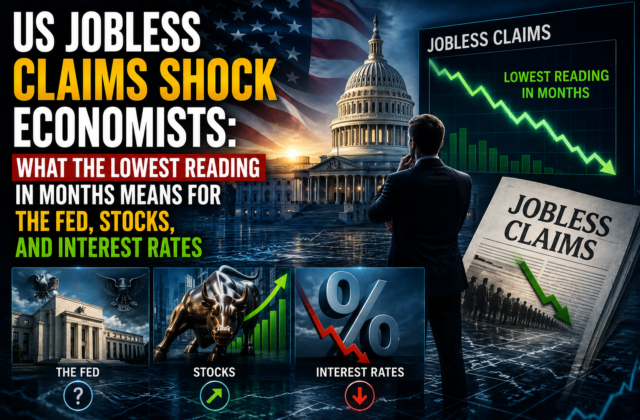
US Jobless Claims Shock Economists: What the Lowest Reading in Months Means for the Fed, Stocks, and Interest Rates The U.S. labor market has delivered another surprise—and it’s one that could reshape expectations for interest rates, stock markets, and the broader economy. The latest Initial Jobless Claims report showed that 187,000 Americans filed for unemployment...
TheBusinessNow
Jul 23, 2026 · 3 min Read
Key Highlights
- 📉 US Initial Jobless Claims fell sharply to 187,000, well below economists' forecast of 210,000 and the previous week's 208,000, signaling continued labor market resilience.
- 💼 The stronger-than-expected jobs data suggests American employers are still holding onto workers, despite elevated interest rates and slower global growth.
- 🏦 The report could influence the Federal Reserve's interest-rate strategy, potentially reducing expectations for near-term rate cuts if labor market strength continues.
- 📊 Investors are closely watching the data because it could impact Treasury yields, stock markets, bond prices, and the US dollar in the coming weeks.
- 📈 A resilient labor market supports consumer spending and corporate earnings, but it may also keep inflation pressures alive for longer.
- 🌍 The weekly jobless claims report is one of the most important leading indicators for the US economy, influencing global financial markets and investor sentiment.
US Jobless Claims Shock Economists: What the Lowest Reading in Months Means for the Fed, Stocks, and Interest Rates
The U.S. labor market has delivered another surprise—and it’s one that could reshape expectations for interest rates, stock markets, and the broader economy.
The latest Initial Jobless Claims report showed that 187,000 Americans filed for unemployment benefits, significantly below both the previous week’s 208,000 and economists’ consensus estimate of 210,000.
The unexpected decline suggests that layoffs remain historically low despite elevated interest rates, persistent inflation concerns, and slowing global economic growth.
For investors, the data is more than just a weekly labor market update. It is one of the Federal Reserve’s most closely watched indicators and could influence decisions on future monetary policy.
US Jobless Claims by the Numbers
| Indicator | Latest | Previous | Forecast |
|---|---|---|---|
| Initial Jobless Claims | 187,000 | 208,000 | 210,000 |
| Surprise vs Forecast | -23,000 | — | — |
The report significantly outperformed expectations, indicating that employers continue to retain workers despite higher borrowing costs.
Why Jobless Claims Matter So Much
Initial jobless claims measure the number of people filing for unemployment benefits for the first time.
Because the data is released every week, it provides one of the fastest snapshots of labor market conditions.
Generally:
- Lower claims indicate employers are holding onto workers.
- Higher claims suggest layoffs are increasing.
- Sustained increases can signal a slowing economy or rising recession risks.
The latest reading points toward continued labor market resilience.
What This Means for the Federal Reserve
The Federal Reserve has repeatedly stated that future interest-rate decisions depend on incoming economic data.
A strong labor market complicates that task.
If employment remains robust:
- Consumer spending may stay resilient.
- Wage pressures could remain elevated.
- Inflation may take longer to return to the Fed’s target.
- Policymakers may have less urgency to cut interest rates.
While one weekly report is not enough to determine policy, a series of strong labor-market readings could influence expectations for future Fed decisions.
How Wall Street Could React
Investors often interpret strong employment data in two different ways.
The Positive View
A resilient labor market suggests:
- Healthy consumer demand.
- Strong corporate earnings potential.
- Lower recession risks.
- Continued business confidence.
These factors can support equity markets over the medium term.
The Cautious View
At the same time, stronger-than-expected employment can reduce expectations for near-term rate cuts.
Higher interest rates generally increase borrowing costs for businesses and consumers, which can weigh on some sectors, particularly high-growth technology stocks.
What It Means for Interest Rates
Financial markets closely monitor labor-market data because it affects expectations for monetary policy.
If employment remains stronger than expected:
- Bond yields could remain elevated.
- Mortgage rates may stay higher for longer.
- Corporate borrowing costs could remain firm.
- Expectations for rapid policy easing may diminish.
Future inflation reports, wage data, and broader employment indicators will also influence the Fed’s outlook.
Could This Affect Inflation?
A strong labor market often supports household spending.
When consumers continue spending, demand for goods and services can remain elevated.
If demand consistently exceeds supply, inflationary pressures may persist.
However, inflation depends on multiple factors, including energy prices, housing costs, productivity, and global supply chains. One labor-market report alone does not determine the inflation outlook.
What It Means for the US Dollar
Economic data stronger than expected often supports the U.S. dollar.
If investors believe the Federal Reserve may maintain higher interest rates for longer, dollar-denominated assets can become relatively more attractive.
A stronger dollar can influence:
- Commodity prices such as gold and oil.
- Emerging-market currencies.
- International trade.
- Global capital flows.
Global Market Implications
Because the U.S. economy remains the world’s largest, American employment data has implications far beyond domestic markets.
Stronger labor conditions can affect:
- Global equity markets.
- Commodity demand.
- Currency markets.
- International bond yields.
- Central bank expectations worldwide.
Countries with close trade and investment links to the United States often monitor these releases carefully.
What Investors Should Watch Next
This week’s jobless claims provide an important signal, but they represent only one piece of the broader economic picture.
Key indicators to watch in the coming weeks include:
- Monthly Nonfarm Payrolls.
- Unemployment rate.
- Average hourly earnings.
- Consumer Price Index (CPI).
- Personal Consumption Expenditures (PCE) inflation.
- Federal Reserve policy statements.
Together, these reports will offer a clearer picture of whether the U.S. economy is slowing gradually or continuing to outperform expectations.
The Bigger Picture
For much of the past year, markets have debated whether aggressive interest-rate increases would eventually weaken employment.
The latest figures suggest that, at least for now, employers continue to retain workers despite higher financing costs and global uncertainty.
This resilience has become one of the defining features of the current U.S. economic cycle.
It also reinforces the challenge facing policymakers: balancing inflation control while maintaining economic growth.
Final Analysis
The drop in U.S. Initial Jobless Claims to 187,000 represents a meaningful upside surprise compared with both market expectations and the previous week’s reading.
The data points to continued labor-market strength, suggesting that layoffs remain limited even as the economy navigates higher interest rates and ongoing global uncertainties.
For investors, the report is important because it may influence expectations around Federal Reserve policy, Treasury yields, equity markets, and the U.S. dollar. However, it is only one data point. Upcoming inflation figures, payroll reports, and Fed communications will be crucial in determining whether this strength is sustained.
The central question now is whether America’s resilient labor market will support a soft economic landing—or whether it will convince policymakers that interest rates need to remain higher for longer.
❓ Frequently Asked Questions (FAQs)
1. What are US Initial Jobless Claims?
US Initial Jobless Claims measure the number of people filing for unemployment benefits for the first time. Released weekly by the US Department of Labor, they are one of the earliest indicators of labor market health.
2. What were the latest US Jobless Claims numbers?
The latest report showed 187,000 initial jobless claims, compared with the previous week’s 208,000 and economists’ forecast of 210,000.
3. Why is this report important for investors?
Jobless claims provide insight into employment trends, consumer confidence, and economic momentum. They also influence expectations for Federal Reserve interest-rate decisions.
4. How could lower jobless claims affect the Federal Reserve?
A strong labor market may encourage the Fed to keep interest rates higher for longer if policymakers believe economic activity remains robust and inflation risks persist.
5. How do jobless claims affect the stock market?
Lower jobless claims can boost confidence in the economy and support corporate earnings. However, they may also reduce expectations for interest-rate cuts, which can create mixed reactions in financial markets.
6. Can this report influence mortgage and loan rates?
Indirectly, yes. Strong labor market data can influence bond yields and Federal Reserve expectations, which may eventually affect mortgage rates, business loans, and consumer borrowing costs.
7. What economic reports should investors watch next?
Key upcoming reports include:
- Nonfarm Payrolls (NFP)
- US Unemployment Rate
- Consumer Price Index (CPI)
- PCE Inflation
- Federal Reserve policy announcements
- Average Hourly Earnings
8. Does one week’s jobless claims data confirm the economy is strong?
No. Weekly data can fluctuate. Economists look at several weeks of data and combine it with broader employment, inflation, and GDP reports before drawing long-term conclusions.
🌐 About The Business Now
The Business Now is a global business and financial news platform dedicated to delivering fact-based reporting, market intelligence, and in-depth analysis on the trends shaping the world economy.
Our editorial coverage spans:
- 📈 Global Financial Markets
- 💹 Stock Market & Investing
- 🏦 Central Banks & Monetary Policy
- 🌍 World Economy & Geopolitics
- 🛢️ Energy, Gold & Commodities
- 🤖 Artificial Intelligence & Technology
- 🚀 Space & Innovation
- 💼 Business & Entrepreneurship
- 📊 Economic Data & Market Insights
At The Business Now, we don’t just report the news—we explain what happened, why it matters, and how it could affect investors, businesses, and everyday readers.
Stay Ahead. Stay Informed. Stay with The Business Now.
Keep reading
Related Articles
 Crypto
₿ Bitcoin Breaks Above $72,000: Why Trump’s Crypto Push Is Sending Crypto Stocks Higher
Bitcoin’s $72,000 Move Is Bigger Than Bitcoin A typical crypto headline would be: Bitcoin jumps above $72,000. But that misses the most important part of today’s move. The interesting part is the simultaneous rally in: Bitcoin ↓ Coinbase ↓ Strategy ↓ Circle ↓ Robinhood ↓ Bitcoin miners ↓ Crypto infrastructure That tells us investors aren’t...
 Markets
U.S. Treasury Doubles Bond Buybacks: Why Markets Are Still Worried About Rising Yields
The Treasury Just Sent Two Messages to Wall Street At first glance, this looks like a straightforward market-support operation. Treasury says: We want to improve liquidity in longer-dated Treasury securities. Investors hear: Washington is increasingly concerned about the rise in long-term borrowing costs. And that second interpretation is what makes this story important. The Treasury...
 Commodities
Oil Nears $95: Could the Iran War Trigger a New U.S. Inflation Shock?
Oil at $95 Is Not the Real Story A crude-oil headline is easy to write: “Oil prices rise as Iran tensions escalate.” Reuters, Bloomberg, CNBC and WSJ can publish that story within minutes. But for TheBusinessNow, that isn’t enough. The bigger question is: What happens to the American economy if oil stays near $95 —...
Comments (0)