
Microsoft Cuts Thousands of Jobs While Doubling Down on AI: Is the Future of Work Already Here?
Microsoft has announced a major round of layoffs affecting thousands of employees as the company continues investing heavily in artificial intelligence (AI), cloud computing, and next-generation technologies. The move has sparked global discussion among investors, employees, and business leaders, with one question dominating the conversation: Is artificial intelligence beginning to replace human workers, or is...
Raman
Jul 7, 2026 · 8 mins
Key Highlights
- Wall Street Microsoft Layoffs Microsoft AI Artificial Intelligence AI Jobs Tech Layoffs
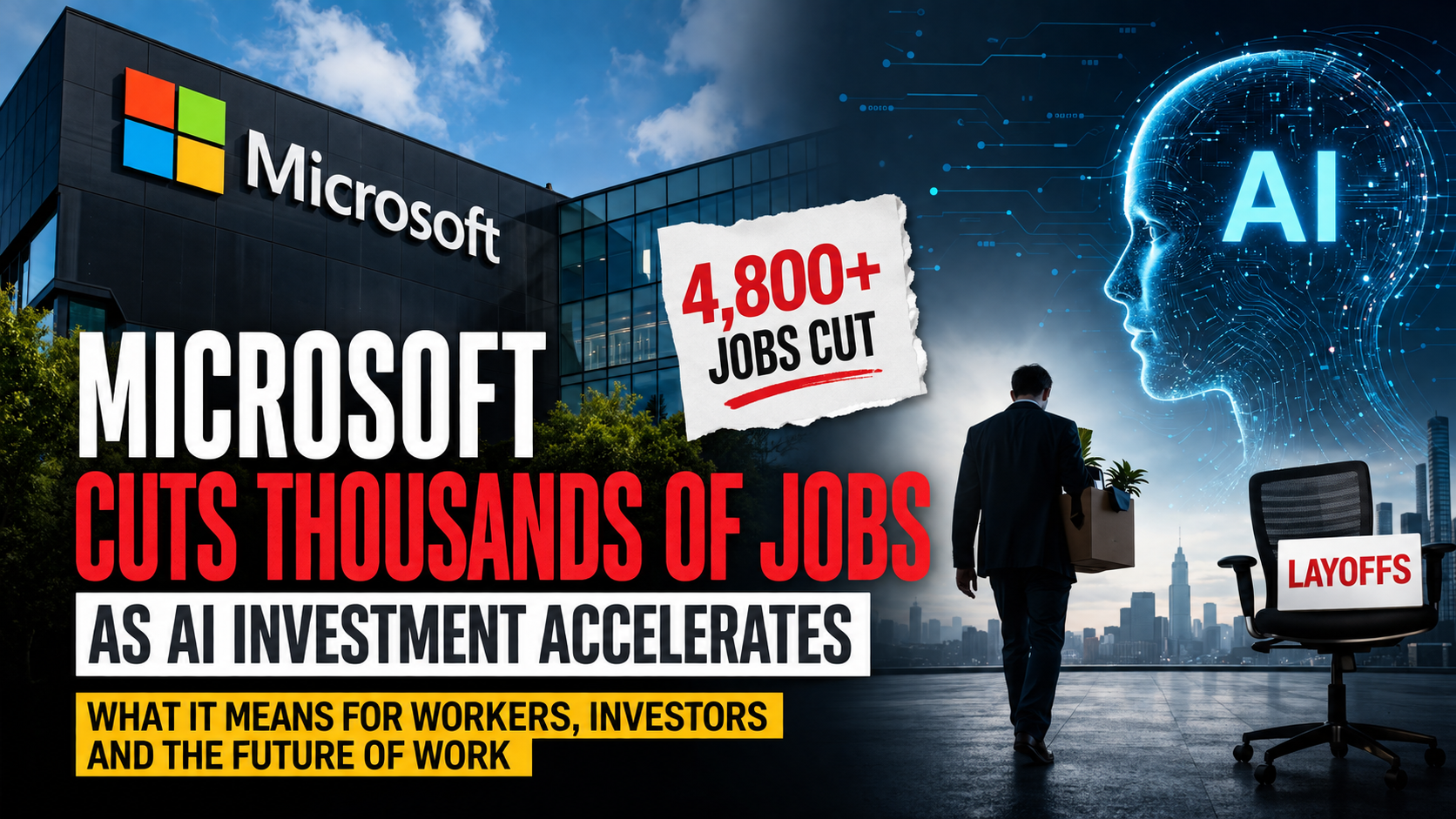
Microsoft has announced a major round of layoffs affecting thousands of employees as the company continues investing heavily in artificial intelligence (AI), cloud computing, and next-generation technologies. The move has sparked global discussion among investors, employees, and business leaders, with one question dominating the conversation: Is artificial intelligence beginning to replace human workers, or is this simply another phase in the evolution of the technology industry?
The restructuring comes at a time when AI is reshaping nearly every sector, from software development and customer service to healthcare and finance. As one of the world’s largest technology companies, Microsoft’s decisions often influence the broader tech industry, making this announcement significant well beyond its own workforce.
Why Is Microsoft Cutting Jobs?
According to the company, the workforce reduction is part of a broader effort to streamline operations, simplify management structures, and focus resources on long-term strategic priorities.
Like many global corporations, Microsoft regularly reviews its organizational structure to improve efficiency and respond to changing market conditions. While layoffs are difficult for affected employees, companies often make these decisions to redirect investment toward areas expected to drive future growth.
This latest restructuring reflects Microsoft’s continued focus on artificial intelligence, cloud infrastructure, enterprise software, cybersecurity, and advanced digital services.
Microsoft’s AI Strategy Continues to Expand
While reducing jobs in certain departments, Microsoft continues to invest billions of dollars in AI technologies.
Over the past few years, the company has introduced AI-powered features across many of its products, including productivity software, developer tools, cloud services, and enterprise solutions. AI-powered assistants are now helping users write documents, generate code, analyze data, and automate repetitive tasks.
At the same time, Microsoft continues expanding its global data center infrastructure to support increasing demand for AI computing.
These investments demonstrate that artificial intelligence remains one of the company’s highest strategic priorities.
Is AI Really Replacing Employees?
The growing popularity of AI has naturally led many people to believe that artificial intelligence is replacing workers.
The reality is more complex.
Rather than replacing every employee, AI is changing how work is performed. Many repetitive administrative tasks can now be automated, allowing employees to focus on creative problem-solving, decision-making, customer relationships, and innovation.
Companies across the technology sector are redesigning job roles instead of simply eliminating them. While some positions become less necessary, entirely new roles continue to emerge in areas such as AI engineering, machine learning, cybersecurity, cloud architecture, and data science.
The future workplace is likely to involve humans and AI working together rather than competing directly.
What This Means for Microsoft’s Employees
For employees, the restructuring creates understandable uncertainty. Job reductions affect livelihoods and careers, especially in an already competitive technology job market.
However, demand for skilled professionals remains strong in several high-growth areas, including:
- Artificial Intelligence
- Cloud Computing
- Cybersecurity
- Machine Learning
- Software Engineering
- Data Analytics
- Data Engineering
- Product Management
Technology professionals who continue learning and adapting to new tools are expected to remain highly valuable as the industry evolves.
Investors Are Watching Closely
Microsoft’s AI strategy has attracted significant attention from investors worldwide.
The company has positioned itself as one of the global leaders in enterprise AI through its cloud platform and AI-powered business solutions.
However, building advanced AI systems requires enormous investment in computing infrastructure, specialized hardware, and research.
Investors are closely monitoring whether these investments translate into sustainable revenue growth, stronger profit margins, and long-term competitive advantages.
If Microsoft’s AI initiatives continue delivering commercial success, the company could further strengthen its leadership position in the global technology sector.
A Wider Trend Across the Technology Industry
Microsoft is not the only technology company restructuring its workforce.
Across the industry, businesses are investing more heavily in automation, artificial intelligence, and cloud technologies while seeking greater operational efficiency.
This shift reflects changing customer expectations and increasing competition rather than a slowdown in technological innovation.
Many organizations are choosing to invest more in research, AI development, and digital infrastructure while reducing costs in other areas of their business.
Which Careers Could Grow Because of AI?
Although automation is changing many industries, it is also creating new career opportunities.
Some of the fastest-growing technology careers include:
- AI Engineer
- Machine Learning Engineer
- Cloud Solutions Architect
- Cybersecurity Specialist
- Data Scientist
- AI Product Manager
- Prompt Engineer
- DevOps Engineer
- AI Ethics Specialist
Businesses increasingly value professionals who know how to work effectively with AI rather than compete against it.
What Businesses Can Learn
Microsoft’s restructuring highlights several important lessons for business leaders.
Companies that successfully adapt to technological change are often those willing to rethink their organizational structures, invest in innovation, and continuously develop employee skills.
Artificial intelligence is becoming an important business tool, but long-term success will still depend on strategic leadership, creativity, and human expertise.
Organizations that combine technology with skilled talent are likely to remain the most competitive over the coming decade.
Looking Ahead
Artificial intelligence is transforming the global business landscape at an unprecedented pace.
Microsoft’s restructuring reflects a broader transition occurring throughout the technology sector as companies invest in AI while reshaping their workforces for the future.
Although concerns about automation will continue, AI is unlikely to replace every job. Instead, it is changing the skills employers value and creating new opportunities alongside new challenges.
For professionals, continuous learning and adaptability will become increasingly important.
For investors, Microsoft’s AI strategy remains one of the most closely watched developments in the global technology industry.
And for businesses, the message is clear: organizations that embrace innovation while investing in their people will be better positioned for long-term success.
Frequently Asked Questions
Why is Microsoft laying off employees?
Microsoft says the restructuring is intended to simplify its organization, improve efficiency, and focus more resources on strategic growth areas, including artificial intelligence and cloud computing.
Is AI replacing Microsoft employees?
The company has indicated that the restructuring is broader than simply replacing workers with AI. Artificial intelligence is changing how work is performed, but it is not the sole reason behind the layoffs.
Which industries are benefiting most from AI?
Technology, healthcare, finance, manufacturing, retail, and cybersecurity are among the industries experiencing rapid AI adoption.
What skills are most valuable in the AI era?
Cloud computing, artificial intelligence, machine learning, cybersecurity, software engineering, data analytics, and digital product management remain among the fastest-growing skills.
Disclaimer: This article is an original analysis based on publicly available information and official company statements. It is intended for informational purposes and does not constitute investment or financial advice.
About TheBusinessNow
TheBusinessNow covers global business, technology, finance, startups, markets, AI, and economic trends, providing fact-based analysis for readers worldwide.
Keep reading
Related Articles
 Crypto
₿ Bitcoin Breaks Above $72,000: Why Trump’s Crypto Push Is Sending Crypto Stocks Higher
Bitcoin’s $72,000 Move Is Bigger Than Bitcoin A typical crypto headline would be: Bitcoin jumps above $72,000. But that misses the most important part of today’s move. The interesting part is the simultaneous rally in: Bitcoin ↓ Coinbase ↓ Strategy ↓ Circle ↓ Robinhood ↓ Bitcoin miners ↓ Crypto infrastructure That tells us investors aren’t...
 News
News
GitHub Down Worldwide: Microsoft-Owned Platform Hit by Major Outage — What Developers and Businesses Need to Know
GitHub Down Today: Global Outage Disrupts Developers, GitHub Actions and Copilot GitHub is experiencing a major service disruption, leaving developers and businesses around the world unable to reliably access some of the platform’s most important services. The Microsoft-owned developer platform began reporting problems on August 17, 2026, with users experiencing errors across GitHub’s website, API,...
 Business
Is Bluesky Down Right Now? Users Report Widespread Outage, Login Problems and Feed Disruptions
Is Bluesky Down Right Now? Users Report Widespread Outage, Login Problems and Feed Disruptions Bluesky users are reporting widespread problems today, August 16, with the social platform failing to load properly for many people across different locations. Reports describe a range of issues, including login failures, blank or blue screens, feeds that refuse to load,...
Comments (0)