
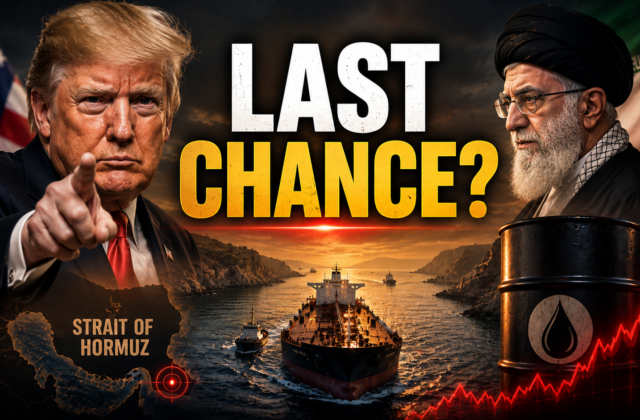
Trump Gives Iran a “Last Chance” as Hormuz Deal Moves Closer — But Tehran Wants Control of the Vital Oil Route
Trump Gives Iran a “Last Chance” as Hormuz Deal Moves Closer — But Tehran Wants Control of the Vital Oil Route President Donald Trump is warning Iran that time is running out for a deal as diplomatic efforts intensify over the Strait of Hormuz, one of the world’s most important energy chokepoints. Iran and Oman...
JK Triloki
Aug 4, 2026 · 4 min Read
Key Highlights
- 🚨 Trump says Iran has a “last chance” to reach a deal.
- 🇮🇷 Iran wants control over inbound shipping through the Strait of Hormuz.
- 🇴🇲 Oman would oversee outbound traffic under the proposed arrangement.
- 🛢️ Hormuz is crucial to global energy markets, carrying roughly one-fifth of global oil flows.
- 🤝 Iran and Oman have reportedly made significant progress toward a possible reopening agreement.
- ⚠️ Washington opposes giving Iran control over the waterway.
- 📉 Oil markets are closely watching the talks because a reopening could reduce supply-disruption fears.
- 🌍 A failure of negotiations could reignite concerns about energy prices, inflation and global markets.
Trump Gives Iran a “Last Chance” as Hormuz Deal Moves Closer — But Tehran Wants Control of the Vital Oil Route
President Donald Trump is warning Iran that time is running out for a deal as diplomatic efforts intensify over the Strait of Hormuz, one of the world’s most important energy chokepoints. Iran and Oman are reportedly making progress toward a temporary arrangement to reopen shipping, but a major dispute remains over who would control vessels moving through the strategic waterway.
The latest developments have created a striking split in the diplomatic picture.
On one side, U.S. officials are signaling that negotiations may be approaching a critical stage, with Trump describing the moment as Iran’s “last chance” to reach an agreement.
On the other, Iran is pushing for a level of control over maritime traffic that Washington has rejected.
According to Reuters, Tehran wants to control inbound shipping through the Strait while maintaining oversight of vessels heading out, with Oman providing clearance for outbound traffic.
That disagreement could determine whether the waterway reopens smoothly—or whether the latest diplomatic push stalls.
Why Trump Is Calling It Iran’s “Last Chance”
Trump’s latest warning adds significant pressure to negotiations that were already extremely delicate.
The U.S. position is that the Strait of Hormuz should remain open to international shipping without Iran gaining unilateral control over maritime traffic.
The proposed Iran-Oman arrangement, however, is built around a different concept.
Iran would control or manage the route used by vessels entering the Persian Gulf, while ships leaving the Gulf would use a route associated with Oman. AP reported that the proposed framework also involves service fees connected with security and environmental maintenance.
For Tehran, control over the waterway is closely tied to security concerns.
For Washington, allowing Iran to control shipping through such a strategically important international passage could create a precedent that the U.S. does not want to accept.
That makes the issue much bigger than simply reopening a shipping lane.
Iran Wants Control Over Inbound Ships
The most important new detail comes from Reuters.
A senior Iranian source told the news agency that Tehran wants control over inbound shipping, while seeking notification of outbound movements and the ability to intervene if necessary. Oman would provide exit clearance for ships leaving the Gulf.
The proposal represents a shift from an earlier Iranian position seeking broader control of maritime traffic.
But Tehran still reportedly rejects an Omani proposal based on an equal division of transit routes between Iran and Oman.
Iran’s argument is connected to unresolved security concerns.
That leaves negotiators facing a difficult question:
Can the Strait reopen without creating a new system that gives Iran substantial operational authority over international shipping?
Why the Strait of Hormuz Matters to the World
The Strait of Hormuz is one of the most important energy chokepoints on the planet.
The narrow waterway connects the Persian Gulf with the Gulf of Oman and the wider Indian Ocean.
A prolonged disruption therefore has consequences far beyond Iran and Oman.
Oil traders immediately watch the Strait whenever tensions rise because roughly 20% of global oil transit passes through the waterway.
That means developments around Hormuz can influence:
- Crude oil prices
- Gasoline prices
- Shipping costs
- Airline expenses
- Inflation expectations
- Energy stocks
- Global equity markets
- Central-bank policy expectations
A credible reopening agreement could therefore have an impact far beyond the Middle East.
Iran and Oman Are Making Progress — But the Hardest Issue Remains
The encouraging part of the latest developments is that negotiations appear to be moving forward.
AP reported that Iran and Oman have made significant progress toward an agreement that could allow shipping to resume through the Strait.
The proposed framework would divide maritime routes between the two countries.
But the disagreement over control is still fundamental.
Iran wants greater authority over vessels entering the Gulf.
The United States does not want the reopening of Hormuz to depend on Iranian permission or control.
That means negotiators have potentially solved one problem—how ships could physically move through the Strait—while still struggling with another:
Who gets to decide which ships can pass?
Why the U.S. Is Concerned About Iran Controlling Hormuz
From Washington’s perspective, the issue is not simply about shipping convenience.
If Iran gains recognized operational control over part of the Strait, it could potentially influence the movement of some of the world’s most important energy cargoes.
That could affect:
Energy Security
Importing countries would want assurance that shipments could move without political interference.
Global Trade
Oil tankers are not the only vessels affected. The Strait is important for other commercial traffic moving through the Gulf.
Market Stability
Any perception that access could again be restricted could keep a geopolitical risk premium embedded in crude prices.
U.S.-Iran Relations
A Hormuz agreement could become part of a much broader attempt to reduce tensions between Washington and Tehran.
What Could Happen to Oil Prices If Hormuz Reopens?
The oil market has been one of the clearest indicators of changing expectations.
A durable reopening would likely reduce the immediate risk premium associated with shipping disruptions.
That could put downward pressure on crude prices, especially if tanker traffic begins returning to normal levels.
But traders will likely distinguish between a political announcement and actual shipping normalization.
That distinction matters.
A deal on paper does not necessarily mean hundreds of vessels immediately return to the Strait.
Shipping companies, insurers and tanker operators would still need confidence that the route is safe.
What If the Deal Falls Apart?
This is where the market risk becomes much more serious.
If negotiations collapse, traders could quickly reassess the possibility of prolonged disruption.
That could lead to:
Higher crude prices
Higher transportation costs
Renewed inflation concerns
Pressure on airlines and fuel-intensive industries
Greater volatility in global stock markets
More uncertainty for central banks
The impact would not necessarily be limited to energy stocks.
Higher fuel costs can eventually feed into the broader economy.
That is why investors around the world are following what may appear to be a regional diplomatic dispute.
The Trump-Iran Nuclear Question Is Still Hanging Over the Talks
The Strait of Hormuz is only one part of the broader dispute.
The negotiations are also connected to Iran’s nuclear program and the wider conflict.
AP reported that broader discussions involving Iran’s nuclear capabilities have faced difficulties even as the Hormuz discussions continue.
That creates another complication.
A temporary agreement allowing shipping through the Strait may not automatically resolve the larger U.S.-Iran confrontation.
Instead, it could represent the first step toward a broader de-escalation.
Or it could become another temporary arrangement that collapses if the two sides cannot agree on the larger issues.
A Recent Ship Incident Shows the Risks Have Not Disappeared
Even as diplomats negotiate, the Strait remains dangerous.
AP reported that a cargo vessel was recently struck in the waterway, underscoring how quickly conditions could deteriorate.
That is an important reminder for shipping companies.
Even if Iran and Oman reach an agreement, commercial operators will need confidence that the arrangement is enforceable and that vessels will not face unexpected threats.
Insurance costs and security assessments could therefore remain elevated even after a political deal.
Why Oman Has Become So Important
Oman is playing a crucial diplomatic role because of its geographic position and relationships with both sides.
The emerging proposal effectively gives Oman responsibility for the outbound side of the proposed shipping system.
That makes Muscat an important intermediary between Tehran and the wider international shipping community.
If the agreement succeeds, Oman could become central to managing the practical reopening of the Strait.
But if the two sides cannot agree on control mechanisms, Oman could also find itself caught between competing demands.
What Happens Next?
The next stage of the negotiations could determine whether the current optimism becomes a genuine market-moving breakthrough.
Several developments deserve close attention.
1. Final Shipping Arrangement
Negotiators need to determine exactly which routes vessels will use.
2. Control and Clearance
The biggest sticking point remains who has authority over inbound and outbound traffic.
3. U.S. Position
Washington’s willingness—or refusal—to accept any Iranian role in controlling traffic will be crucial.
4. Iranian Guarantees
Tehran wants security assurances, while the U.S. wants unrestricted international passage.
5. Actual Tanker Traffic
The ultimate test will be whether commercial vessels begin moving through Hormuz at meaningful volumes.
Next Outlook for Oil and Global Markets
The immediate market outlook is increasingly dependent on whether the diplomatic momentum survives the dispute over maritime control.
🟢 Bull Case: Agreement and Reopening
If Iran and Oman finalize an arrangement acceptable to Washington, shipping could gradually resume.
Likely market effect: lower geopolitical risk and potential downward pressure on crude prices.
🟡 Base Case: Talks Continue
Negotiations continue but no final agreement is reached.
Likely market effect: oil remains highly headline-sensitive while investors wait for confirmation.
🔴 Risk Case: Talks Collapse
Iran maintains its position, Washington rejects the proposed control arrangement and shipping remains restricted.
Likely market effect: crude prices could regain geopolitical premium while global markets face renewed uncertainty.
The Bigger Economic Risk
The Hormuz dispute is ultimately about more than oil.
If the Strait remains disrupted for an extended period, the consequences can move through the global economy.
Higher energy prices can raise transportation costs.
Higher transportation costs can raise consumer prices.
Higher inflation can complicate central-bank decisions.
And tighter monetary policy can eventually pressure stock valuations.
That is why investors are watching the diplomatic negotiations almost as closely as economic data.
A successful reopening could remove one of the biggest geopolitical risks facing energy markets.
A failed agreement could do the opposite.
Final Thoughts
The latest developments suggest that a possible reopening of the Strait of Hormuz is getting closer—but the hardest part of the agreement may still be unresolved.
Iran and Oman are reportedly making progress toward a temporary shipping arrangement, while Tehran is demanding control over inbound traffic and oversight of outbound movements.
Trump, meanwhile, is applying additional pressure by describing the moment as Iran’s “last chance” for a deal.
The stakes are enormous.
Hormuz is responsible for a substantial share of global oil transportation, meaning a durable reopening could relieve pressure on crude prices and reduce some inflationary risks.
But the current disagreement over who controls shipping means the market should not treat diplomatic progress as a completed deal.
🔮 Next Outlook
The biggest signal will not be another political statement.
It will be actual ships moving through the Strait safely and consistently.
If tanker traffic returns, markets could interpret that as evidence that the agreement is real.
If negotiations break down, oil prices and global markets could quickly become volatile again.
For now, the world is waiting to see whether Trump’s “last chance” warning produces a breakthrough—or another confrontation over the world’s most important oil chokepoint.
❓ FAQs
What is happening in the Strait of Hormuz?
Iran and Oman are reportedly negotiating a temporary arrangement that could reopen shipping through the Strait.
What does Iran want?
According to Reuters, Iran wants control over inbound shipping and notification and oversight of outbound traffic, with Oman handling exit clearance.
Why is the Strait of Hormuz important?
It is a critical global energy route through which roughly one-fifth of global oil transit passes.
Why is Trump pressuring Iran?
Trump has characterized the current diplomatic window as Iran’s “last chance” to reach an agreement and avoid further escalation.
Could a Hormuz reopening lower oil prices?
A durable reopening could reduce fears of supply disruption and therefore potentially remove some of the geopolitical premium from crude prices.
What could cause oil prices to rise again?
A breakdown in negotiations, renewed attacks or continued restrictions on tanker traffic could put upward pressure on crude.
Is the Strait already fully open?
No. The negotiations concern a potential arrangement for reopening and normalizing shipping; a political agreement would still need to translate into reliable commercial traffic.
📰 About The Business Now
The Business Now covers breaking global news, business, finance, commodities, markets, technology, geopolitics and major economic developments with a focus on factual reporting and market impact.
🪙 Check Live Gold Prices
Track Gold, Silver, Platinum and Palladium prices, historical charts, calculators and daily market updates at:
🌐 External Resources
Keep reading
Related Articles
 Crypto
₿ Bitcoin Breaks Above $72,000: Why Trump’s Crypto Push Is Sending Crypto Stocks Higher
Bitcoin’s $72,000 Move Is Bigger Than Bitcoin A typical crypto headline would be: Bitcoin jumps above $72,000. But that misses the most important part of today’s move. The interesting part is the simultaneous rally in: Bitcoin ↓ Coinbase ↓ Strategy ↓ Circle ↓ Robinhood ↓ Bitcoin miners ↓ Crypto infrastructure That tells us investors aren’t...
 Markets
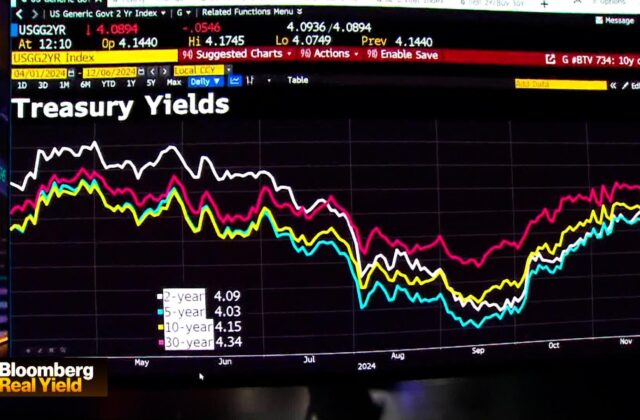
U.S. Treasury Doubles Bond Buybacks: Why Markets Are Still Worried About Rising Yields
The Treasury Just Sent Two Messages to Wall Street At first glance, this looks like a straightforward market-support operation. Treasury says: We want to improve liquidity in longer-dated Treasury securities. Investors hear: Washington is increasingly concerned about the rise in long-term borrowing costs. And that second interpretation is what makes this story important. The Treasury...
 Commodities
Oil Nears $95: Could the Iran War Trigger a New U.S. Inflation Shock?
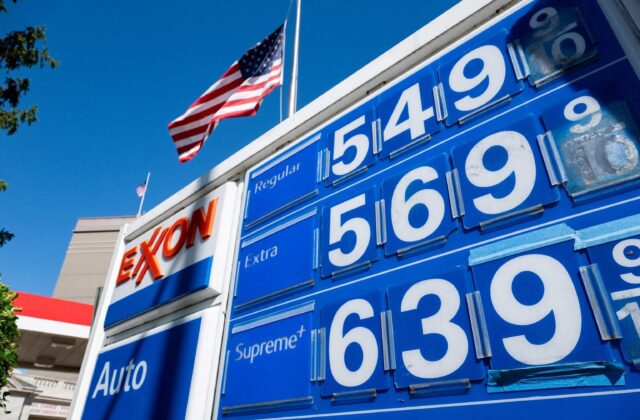
Oil at $95 Is Not the Real Story A crude-oil headline is easy to write: “Oil prices rise as Iran tensions escalate.” Reuters, Bloomberg, CNBC and WSJ can publish that story within minutes. But for TheBusinessNow, that isn’t enough. The bigger question is: What happens to the American economy if oil stays near $95 —...
Comments (0)