
Dow Surges Nearly 800 Points as Hormuz Deal Hopes Collide With Iran Denial and SpaceX Earnings
Dow Surges Nearly 800 Points as Hormuz Deal Hopes Collide With Iran Denial and SpaceX Earnings Wall Street is racing higher as investors digest two powerful catalysts at once: renewed hopes that the Strait of Hormuz could reopen and a blockbuster earnings reaction from Palantir, while SpaceX prepares to deliver its first earnings report as...
JK Triloki
Aug 4, 2026 · 3 min Read
Key Highlights
- 📈 Dow jumps 768.56 points and reaches a fresh intraday record.
- 🚀 Palantir surges roughly 26% after reporting stronger-than-expected results and raising its revenue outlook.
- 🛰️ SpaceX prepares for its first earnings report as a public company, with options markets pricing an unusually large potential move.
- 🛢️ Oil falls nearly 4% as hopes rise for a reopening of the Strait of Hormuz.
- 🇮🇷 Iran disputes the U.S. characterization of negotiations, saying it is dealing with Oman.
- 🇺🇸 U.S. officials continue to signal that an agreement could be imminent.
Dow Surges Nearly 800 Points as Hormuz Deal Hopes Collide With Iran Denial and SpaceX Earnings
Wall Street is racing higher as investors digest two powerful catalysts at once: renewed hopes that the Strait of Hormuz could reopen and a blockbuster earnings reaction from Palantir, while SpaceX prepares to deliver its first earnings report as a public company. But Iran’s denial that it is engaged in direct negotiations with Washington is keeping the biggest geopolitical risk firmly in focus.
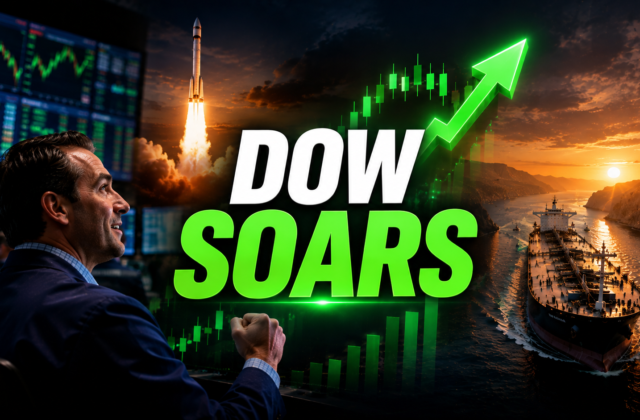
The Dow Jones Industrial Average climbed 768.56 points, or 1.44%, to 53,946.83, while the S&P 500 and Nasdaq also advanced to record levels during Tuesday trading. The rally came as investors responded to strong AI-related earnings and optimism that the Middle East conflict could move toward a diplomatic resolution.
At the same time, oil prices dropped sharply as reports of progress toward a possible Hormuz agreement reduced fears of an extended supply disruption. But the diplomatic picture remains unsettled: U.S. officials have suggested a deal could be close, while Iran says it is negotiating with Oman rather than directly with the United States.
That contradiction is exactly why markets could remain highly volatile.
Why Is the Dow Up Nearly 800 Points?
The market rally is not being driven by a single story.
Investors are responding to strong corporate earnings, optimism around AI spending and hopes that geopolitical risks could ease.
Palantir has been one of the biggest catalysts.
The company’s shares jumped about 26% after it reported quarterly revenue that nearly doubled and raised its annual outlook. CEO Alex Karp highlighted strong demand for the company’s AI-related products.
Caterpillar also gained strongly after raising its annual revenue-growth outlook, with demand linked partly to the construction of AI data centers supporting its equipment business.
That combination has strengthened a broader market narrative:
AI investment is translating into real corporate revenue.
For investors who had begun questioning whether the enormous spending on artificial intelligence could eventually generate sufficient returns, strong earnings are providing fresh reassurance.
The Hormuz Story Is Driving a Second Market Rally
The other major catalyst is geopolitical.
Reports that negotiations could lead to the reopening of the Strait of Hormuz have pushed oil prices sharply lower.
Reuters reported that Brent crude fell almost 4%, while WTI also dropped sharply after optimism surrounding a possible agreement increased.
That matters far beyond energy stocks.
Lower crude prices can reduce concerns about:
- gasoline prices
- transportation costs
- industrial input costs
- inflation
- consumer spending pressure
- corporate operating expenses
For equity investors, the ideal scenario is therefore relatively straightforward:
Lower oil + lower geopolitical risk + strong corporate earnings = stronger risk appetite.
But there is a major problem.
Iran says there is no direct U.S.-Iran negotiation.
U.S. Says Progress Is Being Made — Iran Pushes Back
The conflicting statements are making the market’s reaction particularly fragile.
U.S. officials have suggested that negotiations are progressing and that an agreement to reopen the waterway could potentially be reached soon.
AP reported that Iran and Oman were making progress toward a potential arrangement under which vessels could enter through an Iranian-controlled route and exit through an Omani-controlled route. The proposal remains contingent on broader conditions, including the U.S. blockade of Iranian ports.
Iran, however, has emphasized that it is negotiating with Oman, rather than engaging in direct talks with Washington.
Reuters also reported that Iran’s Foreign Ministry confirmed there were no active negotiations despite President Trump’s suggestion that talks were underway.
That difference could become crucial.
Markets are currently pricing the possibility of a deal, not a completed deal.
Why the Strait of Hormuz Matters So Much
Hormuz is one of the world’s most important energy chokepoints.
If shipping through the Strait remains restricted, global energy markets face the possibility of prolonged supply disruption.
If the route reopens reliably, the opposite happens.
The market can begin removing some of the geopolitical premium from crude.
But reopening a waterway is not the same as restoring normal shipping.
Reuters reported that only six vessels — three tankers and three bulk carriers — passed through the Strait on Monday, compared with seven the previous day. All were using the Iranian route.
That is why traders should watch physical tanker traffic, not just diplomatic headlines.
Oil Prices Are Sending a Clear Signal
Oil’s reaction provides one of the clearest indications of what investors currently believe.
WTI fell more than 4% toward the $77-per-barrel area, while Brent moved toward roughly $81, according to market reporting.
The move indicates that traders are assigning a greater probability to restored shipping.
But the decline also creates an important risk.
If negotiations fail, the market could quickly reprice the possibility of continued supply disruption.
That means oil could become one of the most sensitive assets to every new headline.
What SpaceX Earnings Could Mean for Markets
SpaceX is providing a completely different source of volatility.
The company’s first earnings report as a public company is scheduled after the market close.
Investors are particularly interested in whether SpaceX’s financial performance can justify its enormous valuation.
Reuters reported that options markets were pricing an approximately 15% move in SpaceX shares in either direction, equivalent to roughly $225 billion in potential market-value movement.
That is extraordinary volatility for a newly public mega-cap company.
Investors will be watching:
Revenue
Starlink performance
Profitability
Cash flow
Launch economics
AI and space infrastructure investment
The reaction could influence broader technology sentiment, particularly because SpaceX sits at the intersection of space, AI, satellites and advanced infrastructure.
Palantir Is Giving AI Investors a Major Boost
Palantir’s earnings have already provided a major signal.
The company reported nearly doubled quarterly revenue and increased its outlook, sending shares sharply higher.
That matters because investors have spent much of 2026 questioning whether AI-related valuations can be justified by actual business performance.
Palantir’s results provide another example of AI demand translating into substantial commercial growth.
The question now becomes whether other AI-linked companies can produce similarly strong results.
If they do, the current rally could broaden.
If earnings disappoint elsewhere, investors could begin questioning whether Palantir is an exception rather than evidence of a wider trend.
The Fed Is Still Part of the Story
The geopolitical rally does not eliminate monetary-policy concerns.
Reuters reported that traders were pricing a 58.6% probability of a Federal Reserve rate hike in September, according to CME Group’s FedWatch tool.
That creates an interesting tension.
On one side:
Lower oil → potentially less inflation pressure.
On the other:
Strong economic and corporate data → potentially less need for monetary easing.
Investors therefore need to watch both the inflation implications of lower oil and the economic implications of strong earnings and labor-market data.
What Happens If a Hormuz Deal Is Finalized?
A confirmed and durable agreement could produce several market effects.
Oil
Crude could face additional downward pressure as supply fears ease.
Airlines
Lower jet-fuel costs could improve expectations for airline profitability.
Transportation
Lower diesel and gasoline costs could reduce operating expenses.
Consumers
Cheaper fuel could leave households with more disposable income.
Inflation
Lower energy prices could reduce headline inflation pressure.
Stocks
Reduced geopolitical uncertainty could support risk appetite.
Energy Producers
Oil companies could face pressure from lower crude prices.
The key word is durable.
A temporary reopening would not have the same effect as sustained, reliable tanker traffic.
What Happens If Iran Rejects the Deal?
This is the biggest downside risk to the current market rally.
If diplomatic progress breaks down, investors could quickly reassess:
Oil supply → inflation → interest rates → corporate earnings → stock valuations
A renewed surge in crude could hit companies that depend heavily on fuel.
It could also revive inflation concerns and complicate the Federal Reserve’s policy outlook.
Stocks that have rallied because of lower oil could give back some gains.
That does not necessarily mean the entire equity rally would collapse.
Strong earnings could continue supporting technology and AI stocks.
But the market would likely become much more selective.
Next Outlook: What Should Investors Watch?
The next phase of the market will likely depend on whether optimism becomes something tangible.
1. Hormuz Shipping Data
This is perhaps the most important indicator.
If tanker traffic rises consistently, confidence in reopening should increase.
If traffic remains extremely limited, the market may conclude that diplomatic progress is mostly headline-driven.
2. Iran’s Official Position
Watch statements from Tehran carefully.
A clear confirmation of negotiations would carry considerably more weight than comments from outside officials.
3. U.S. Administration Statements
The Trump administration’s next comments could immediately influence crude prices and equity futures.
4. Oil Around the $80 Area
Brent’s reaction around this level could provide an important signal about how much geopolitical premium remains in the market.
5. SpaceX Earnings
The company’s first public earnings report could create significant volatility in technology and growth stocks.
6. AI Earnings
Palantir’s results have raised the bar.
Investors will want to see whether other AI-related companies can deliver comparable growth.
Three Possible Market Scenarios
🟢 Bull Case — Hormuz Reopens + Earnings Stay Strong
This would be the most supportive combination.
Oil falls, geopolitical risk declines and corporate earnings continue beating expectations.
Potential result: continued strength in equities, particularly technology and growth stocks.
🟡 Base Case — Talks Continue Without a Final Agreement
Markets remain optimistic but cautious.
Oil remains volatile while stocks continue to react primarily to earnings.
Potential result: higher volatility and greater sector rotation.
🔴 Bear Case — Talks Collapse + Shipping Risk Returns
Oil rebounds, inflation concerns return and investors reassess the impact on interest rates.
Potential result: pressure on broad equities, especially highly valued growth stocks.
Why This Rally Could Be More Complicated Than It Looks
The Dow’s nearly 800-point advance is impressive, but investors should not assume that every part of the market is responding to the same catalyst.
Technology is reacting to earnings.
Energy is reacting to crude prices.
Industrials are reacting to economic and AI infrastructure demand.
The broader market is reacting to reduced geopolitical risk.
That makes the current rally unusually dependent on several variables remaining favorable simultaneously.
If one breaks — particularly the Hormuz narrative — volatility could return quickly.
Final Thoughts
Wall Street is having one of its strongest sessions as investors combine record-setting equity moves, powerful AI earnings and hopes for a diplomatic breakthrough in the Middle East.
The Dow rose 768.56 points, while the S&P 500 and Nasdaq also reached record territory during Tuesday trading.
Palantir has emerged as one of the day’s biggest winners after reporting strong growth and raising its outlook, while SpaceX is preparing to deliver its first earnings report as a public company.
Meanwhile, oil has fallen sharply because investors increasingly believe the Strait of Hormuz could reopen.
But there is still a major question mark.
Washington says progress is being made. Tehran says it is not negotiating directly with Washington.
That means the market is currently trading on expectations rather than certainty.
Next outlook
The next major market move could depend on three things happening together:
A credible Hormuz agreement, sustained tanker traffic and continued strength in corporate earnings.
If those conditions materialize, the current risk-on rally could extend.
If the diplomatic story falls apart, oil could rebound and force investors to reconsider today’s optimism.
For now, the market is celebrating the possibility of normalization.
The next test will be whether that possibility becomes reality.
❓ FAQs
Why is the Dow up nearly 800 points?
The Dow’s rally has been supported by strong corporate earnings, optimism around AI-related demand and hopes that the Middle East conflict could move toward a diplomatic resolution.
Why are oil prices falling?
Oil prices have declined as expectations for a possible reopening of the Strait of Hormuz have increased.
Is Iran negotiating directly with the United States?
Iran has disputed the characterization of direct U.S.-Iran negotiations. Recent reporting says Iran is negotiating through Oman, while U.S. officials have suggested broader talks are progressing.
Why is SpaceX important to the stock market?
SpaceX is preparing for its first earnings report as a public company. Options markets are pricing an unusually large potential stock move, making the report a major event for technology investors.
Why did Palantir stock surge?
Palantir reported strong quarterly growth and raised its outlook, causing its shares to jump roughly 26% in Tuesday trading.
Could oil prices rise again?
Yes. If negotiations fail or shipping disruptions continue, crude could regain some of the geopolitical risk premium that has recently been removed.
What should investors watch next?
The most important indicators include Hormuz shipping activity, official U.S. and Iranian statements, crude prices, SpaceX earnings and upcoming corporate results.
📰 About The Business Now
The Business Now covers global business, finance, markets, commodities, technology, AI, stocks and major economic developments with a focus on factual reporting and market impact.
🪙 Check Live Gold Prices
Track live Gold, Silver, Platinum and Palladium prices, historical charts, calculators and market updates at:
🌐 External Resources
Keep reading
Related Articles
 Crypto
₿ Bitcoin Breaks Above $72,000: Why Trump’s Crypto Push Is Sending Crypto Stocks Higher
Bitcoin’s $72,000 Move Is Bigger Than Bitcoin A typical crypto headline would be: Bitcoin jumps above $72,000. But that misses the most important part of today’s move. The interesting part is the simultaneous rally in: Bitcoin ↓ Coinbase ↓ Strategy ↓ Circle ↓ Robinhood ↓ Bitcoin miners ↓ Crypto infrastructure That tells us investors aren’t...
 Markets
U.S. Treasury Doubles Bond Buybacks: Why Markets Are Still Worried About Rising Yields
The Treasury Just Sent Two Messages to Wall Street At first glance, this looks like a straightforward market-support operation. Treasury says: We want to improve liquidity in longer-dated Treasury securities. Investors hear: Washington is increasingly concerned about the rise in long-term borrowing costs. And that second interpretation is what makes this story important. The Treasury...
 Finance
Walmart Stock Plunges 6%: What Its Weak Outlook Says About the U.S. Consumer
Walmart Stock Plunges 6% — But the Earnings Were Not Actually Bad This is where the headline can be misleading. Walmart did not report a disastrous quarter. Quite the opposite. Revenue rose 5.9%, operating income increased 28.8%, e-commerce remained extremely strong and Walmart raised its full-year sales and profit expectations. Yet investors immediately sold the...
Comments (0)