
AI Hedge Fund Faces Fresh Capital Pressure After July Tech Rout Hits Leopold Aschenbrenner’s $20 Billion Strategy
AI Hedge Fund Faces Fresh Capital Pressure After July Tech Rout Hits Leopold Aschenbrenner’s $20 Billion Strategy Leopold Aschenbrenner’s Situational Awareness LP, the AI-focused hedge fund that became one of the most closely watched investment stories of 2026, is reportedly seeking fresh capital after a sharp July sell-off battered some of its technology and artificial-intelligence...
John Cream
Jul 30, 2026 · 3 min Read
Key Highlights
- 🤖 Leopold Aschenbrenner’s Situational Awareness reportedly manages around $20 billion.
- 📉 The fund has suffered losses during July’s sharp AI and technology sell-off.
- 💰 Situational Awareness is reportedly seeking additional capital from investors and lenders.
- 📊 The fund had gained roughly 439% through June before the latest market reversal.
- ⚠️ Leverage reportedly amplified both the fund’s earlier gains and its recent losses.
- 🚀 Aschenbrenner continues to argue that the AI sell-off could create attractive buying opportunities.
AI Hedge Fund Faces Fresh Capital Pressure After July Tech Rout Hits Leopold Aschenbrenner’s $20 Billion Strategy
Leopold Aschenbrenner’s Situational Awareness LP, the AI-focused hedge fund that became one of the most closely watched investment stories of 2026, is reportedly seeking fresh capital after a sharp July sell-off battered some of its technology and artificial-intelligence investments.
The fund, which manages roughly $20 billion, has approached existing investors and lenders for additional capital following significant losses during the recent AI-driven market rout, according to the Financial Times. The development comes only weeks after the fund had posted extraordinary gains and reportedly reached a 439% return through June.
What Happened to Leopold Aschenbrenner’s AI Hedge Fund?
The latest development marks a dramatic change in fortunes for Situational Awareness LP.
Founded by former OpenAI researcher Leopold Aschenbrenner, the fund built a reputation around a highly concentrated investment strategy focused on the companies and infrastructure expected to benefit from the AI boom.
According to the Financial Times, the fund has recently approached investors and lenders for fresh capital after its portfolio was hit by a sharp downturn in AI-related stocks.
Importantly, the reporting does not say that Situational Awareness is insolvent or shutting down. Instead, the capital discussions are described as efforts to strengthen the fund following the recent market losses.
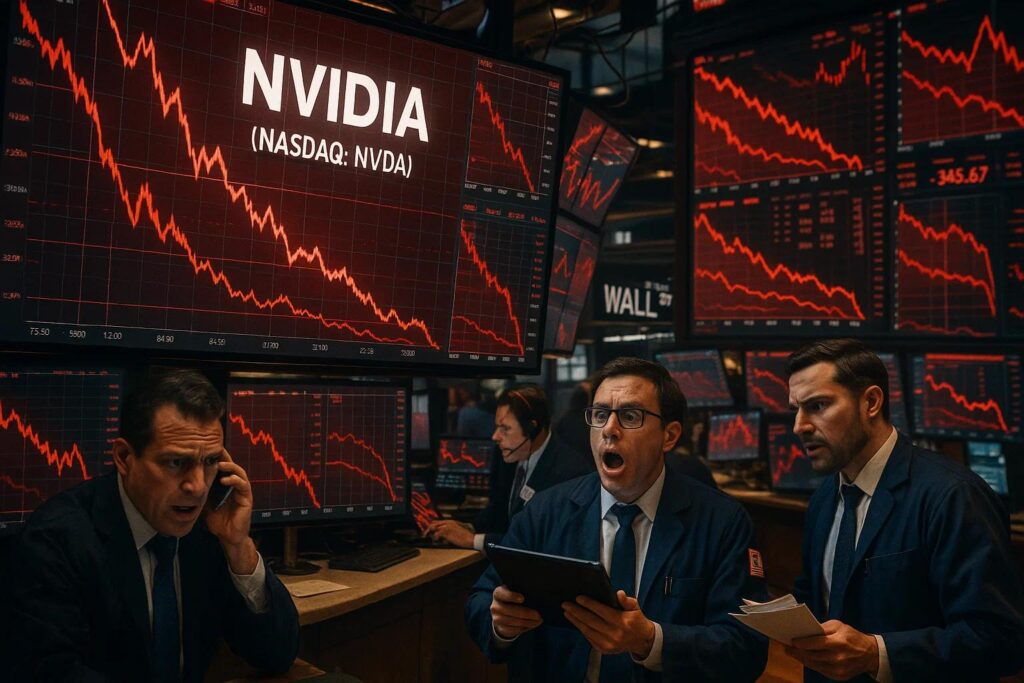
From 439% Gains to a Brutal July
The timing is particularly striking.
Situational Awareness had reportedly delivered a 439% gain through June 2026, putting it among the most extraordinary hedge-fund success stories of the year.
But July brought a sharp reversal for many AI-related investments.
The Nasdaq 100 suffered a major decline during the sell-off, while several stocks connected to AI infrastructure and semiconductor demand fell substantially.
That reversal illustrates one of the most important principles of leveraged investing:
The same strategy that magnifies gains can magnify losses.
Why AI Stocks Hurt the Fund
Situational Awareness built much of its investment thesis around the continued expansion of artificial intelligence.
Its exposure has included companies connected to areas such as:
- AI chips
- Data centers
- Cloud computing
- Semiconductor memory
- Energy infrastructure
- Computing capacity
- AI software
Earlier reports have identified positions or exposure involving companies including Nebius, SanDisk, Bloom Energy, Core Scientific and CoreWeave.
When AI-linked stocks rallied aggressively, the strategy generated enormous gains.
But when investors suddenly began selling technology and AI shares, the concentrated portfolio faced the opposite effect.
Leverage Makes the Situation More Complicated
One of the most important details in the latest reporting is the fund’s use of leverage.
Leverage allows an investment fund to control a larger position than it could using only its own capital.
That can dramatically increase returns when investments rise.
But if the underlying assets fall quickly, losses can also accelerate.
The Financial Times reports that Situational Awareness used leverage through multiple major prime brokers, increasing the impact of the recent market decline.
This is why the current capital-raising effort is attracting attention across Wall Street.
Is the $20 Billion Fund in Trouble?
The situation should not automatically be interpreted as a collapse.
Reports indicate that Situational Awareness is seeking additional capital, but there is no indication from the cited reporting that the fund has become insolvent.
The distinction is important.
A hedge fund can raise additional capital for several reasons, including:
- Meeting liquidity requirements
- Taking advantage of falling asset prices
- Supporting leveraged positions
- Rebalancing portfolios
- Providing additional capital to existing investments
- Preparing for new opportunities
Aschenbrenner has reportedly presented the recent market correction as an opportunity rather than simply a crisis.
Aschenbrenner Sees the AI Sell-Off Differently
Despite the losses, Aschenbrenner’s investment thesis appears largely intact.
In a recent investor communication, he reportedly argued that the market decline has created some of the most attractive AI investment opportunities since early 2025.
The fund has also pointed toward potential catalysts for the second half of the year, including developments surrounding Anthropic.
That creates an important question for investors:
Is the AI trade fundamentally broken, or is this simply a major correction within a much larger technology cycle?
The AI Investment Boom Faces a Reality Check
The Situational Awareness story comes at a critical moment for the broader AI investment market.
For several years, investors have poured enormous amounts of capital into:
- AI chipmakers
- Data-center operators
- Cloud providers
- AI model developers
- Semiconductor manufacturers
- Power infrastructure
- AI software companies
The market rewarded many of those investments spectacularly.
But increasingly expensive valuations also created vulnerability.
When expectations become extremely high, even a modest change in earnings forecasts, interest rates or investor sentiment can trigger a significant correction.
What Happens to Nvidia and Other AI Stocks?
The recent volatility has also placed major AI stocks under pressure.
Nvidia remains one of the most important companies in the AI infrastructure ecosystem, while semiconductor and memory companies have become increasingly tied to expectations for AI data-center spending.
Other companies associated with Aschenbrenner’s strategy have also experienced substantial volatility.

6
The sell-off demonstrates that even companies benefiting from a powerful long-term technological trend can experience severe short-term declines.
Could This Be an Opportunity for AI Investors?
Aschenbrenner clearly appears to believe so.
His investment thesis is based on the idea that artificial intelligence will require enormous amounts of computing power, electricity, memory, data-center capacity and infrastructure.
If that long-term thesis proves correct, a temporary market correction could eventually become an attractive entry point.
But there is an important counterargument.
Even if AI adoption continues to accelerate, investors can still lose money if they purchase companies at valuations that already assume extraordinary future growth.
Great technology does not automatically mean every related stock is a great investment.
Why Wall Street Is Watching Situational Awareness
The fund’s story is unusual because of the speed at which it grew.
Aschenbrenner launched Situational Awareness after leaving OpenAI and built the investment firm around his conviction that AI would transform the global economy.
By June, reports indicated that the fund had surpassed $20 billion in assets under management, after generating extraordinary returns.
That made Aschenbrenner one of the most closely watched young figures in the hedge-fund industry.
The July reversal now provides the first major test of whether his strategy can withstand a prolonged period of market volatility.
What Investors Should Watch Next
Several developments could determine what happens next.
📈 AI Stock Recovery
If technology and semiconductor stocks rebound, the fund’s concentrated positions could recover quickly.
💵 New Capital
The success of the capital-raising effort could provide additional flexibility.
🏦 Leverage
Investors will closely monitor how the fund manages leveraged positions during continued volatility.
🤖 AI Spending
Continued spending by major technology companies on AI infrastructure could support the long-term thesis.
📊 Earnings
Actual revenue and earnings growth will increasingly determine whether AI valuations can be justified.
🚀 Anthropic and AI IPO Activity
Potential major AI-company listings could provide another catalyst for the sector.
The Bigger Picture
The Situational Awareness story is bigger than one hedge fund.
It illustrates the extraordinary boom-and-bust dynamics that can occur when enormous amounts of capital chase a single technological theme.
The AI revolution may still be in its early stages.
But markets are now demanding something more than exciting technology.
They want earnings, cash flow and sustainable returns on AI investment.
For Aschenbrenner and Situational Awareness, the next few months could determine whether the July sell-off becomes a painful temporary setback or the beginning of a much larger challenge.
Conclusion
Leopold Aschenbrenner’s Situational Awareness hedge fund is seeking fresh capital after suffering losses during the July AI market rout, according to reporting from the Financial Times.
The development is particularly striking because the fund had reportedly gained 439% through June and grown to around $20 billion in assets.
The recent losses do not necessarily mean the fund is collapsing. Instead, they highlight the risks of concentrated and leveraged bets on one of the world’s most volatile investment themes.
Aschenbrenner continues to see the sell-off as a potential opportunity.
The bigger question now is whether the AI investment boom is experiencing a healthy correction — or whether Wall Street is finally demanding proof that the enormous AI spending cycle can produce equally enormous profits.
❓ FAQs
Who is Leopold Aschenbrenner?
Leopold Aschenbrenner is a former OpenAI researcher who later founded the AI-focused hedge fund Situational Awareness. He is also known for his 2024 essay series “Situational Awareness: The Decade Ahead.”
How much money does Situational Awareness manage?
Recent reporting places the fund at approximately $20 billion in assets under management.
Why is Situational Awareness seeking more capital?
According to the Financial Times, the fund has approached investors and lenders following losses caused by the sharp July downturn in AI and technology stocks.
Did the hedge fund collapse?
There is no indication in the cited reporting that Situational Awareness has collapsed or become insolvent. The reported development is a search for additional capital following losses.
What stocks are connected to the fund?
Public filings and reports have linked the fund’s investment strategy to AI infrastructure and technology companies including Nebius, SanDisk, Core Scientific, Bloom Energy and CoreWeave.
Why did AI stocks fall?
The July sell-off reflected a broader reassessment of technology and AI valuations, with investors becoming more sensitive to high valuations, earnings expectations and the sustainability of massive AI spending.
📰 About The Business Now
The Business Now delivers coverage of global business, finance, AI, technology, markets, stocks and trending world news with fact-based reporting and analysis.
🪙 Check Live Gold Prices
Track Gold, Silver, Platinum and Palladium prices, historical charts, calculators and daily market updates at:
🌐 External Resources
Keep reading
Related Articles
 Crypto
₿ Bitcoin Breaks Above $72,000: Why Trump’s Crypto Push Is Sending Crypto Stocks Higher
Bitcoin’s $72,000 Move Is Bigger Than Bitcoin A typical crypto headline would be: Bitcoin jumps above $72,000. But that misses the most important part of today’s move. The interesting part is the simultaneous rally in: Bitcoin ↓ Coinbase ↓ Strategy ↓ Circle ↓ Robinhood ↓ Bitcoin miners ↓ Crypto infrastructure That tells us investors aren’t...
 Markets
U.S. Treasury Doubles Bond Buybacks: Why Markets Are Still Worried About Rising Yields
The Treasury Just Sent Two Messages to Wall Street At first glance, this looks like a straightforward market-support operation. Treasury says: We want to improve liquidity in longer-dated Treasury securities. Investors hear: Washington is increasingly concerned about the rise in long-term borrowing costs. And that second interpretation is what makes this story important. The Treasury...
 Commodities
Oil Nears $95: Could the Iran War Trigger a New U.S. Inflation Shock?
Oil at $95 Is Not the Real Story A crude-oil headline is easy to write: “Oil prices rise as Iran tensions escalate.” Reuters, Bloomberg, CNBC and WSJ can publish that story within minutes. But for TheBusinessNow, that isn’t enough. The bigger question is: What happens to the American economy if oil stays near $95 —...
Comments (0)